Business Main
Hoteliers warn proposed Tourism Act will trigger severe red tape and two-year industry stagnation
15 May 2026
 1
1
570
The formal hospitality sector has strongly pushed back against the government’s proposed new Tourism Act, warning that repealing the existing legislation will strangle the industry with fresh layers of bureaucracy and trigger a crippling two-year period of legislative stagnation.

Hotels lobby for crackdown on unregistered listings on global booking platforms
14 May 2026
0
82
The Tourist Hotels Association of Sri Lanka (THASL) has called on the government to introduce a simple legislative amendment mandating the global online travel agencies, including Booking.com, Agoda and Expedia, to exclusively list the accommodations registered with the Sri Lanka Tourism Development Authority (SLTDA).

Hoteliers urge minimum US$ 50mn annual marketing spend to hit 2030 targets
13 May 2026
0
320
The Tourist Hotels Association of Sri Lanka (THASL) is calling for a consistent, minimum annual marketing investment of US$ 50 million to steer the industry toward its ambitious target of 5 million arrivals and US$ 10 billion in income by 2030.
Sri Lanka’s wheat consumption rises on economic and tourism revival
12 May 2026
0
325
Sri Lanka’s appetite for wheat, the island’s second staple food, is on a steady upward trajectory, fuelled by a recovering economy and a booming tourism sector but yet to reach the pre-crisis levels.

Foreign reserves fall by US$ 295mn in April as war-driven oil shock pressures external sector
11 May 2026
0
337
Sri Lanka’s foreign currency reserves fell by US$ 295 million in April, reflecting mounting pressure on the country’s external sector from higher oil import costs and slowing inflows from exports and tourism as the Iran war disrupted global trade and energy markets
Sri Lanka’s elevated risk profile to trigger higher tariffs in future state energy tenders
09 May 2026
0
217
Sri Lanka’s renewable energy sector is warning of a severe long-term fallout from the ongoing financial crisis, cautioning that the government’s blatant disregard for the existing payment agreements will drastically drive up the cost of future clean energy projects.
Govt. starves clean energy of Rs. 10bn to fund emergency thermal power amid coal scandal
08 May 2026
0
288
The Federation of Renewable Energy Developers has warned that Sri Lanka’s domestic renewable energy sector is on the brink of collapse, as the government continues to prioritise payments for expensive
Manufacturers demand renewable power access as electricity costs surge
07 May 2026
0
496
The export manufacturers yesterday warned that imposing another extraordinary electricity tariff hike on the industry, without activating the long-promised power wheeling reforms, would deepen the country’s competitive disadvantage against the regional rivals and risk disrupting the export contracts already under negotiation for late 2026.
Hilton Colombo sale on hold as policy shift stalls IMF-linked divestment
06 May 2026
0
3349
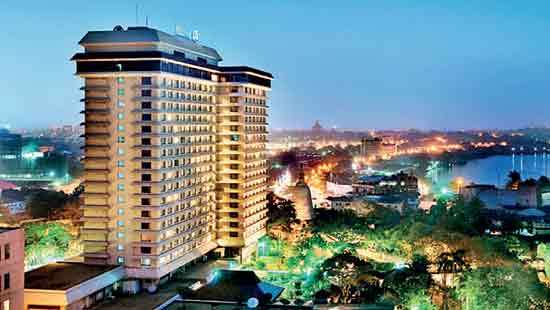
Uncertainty over the stalled sale of Hotel Developers (Lanka) Ltd is starting to ripple through the company’s operations, as delays in finalising its ownership structure cloud strategic decision-making.
India trade push could boost Sri Lanka exports by half: ADB
05 May 2026
0
261
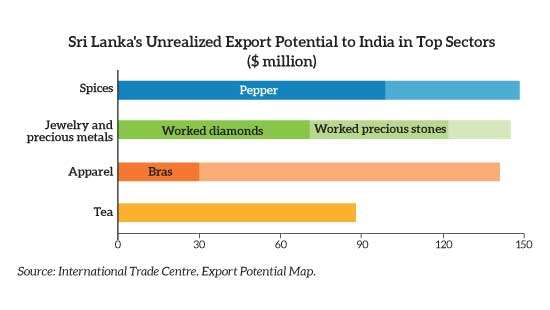
Sri Lanka could expand its exports by as much as 50 percent by deepening the trade ties with India, the Asian Development Bank (ADB) said, while it went on to warn that the island nation’s continued reliance on the Western markets is leaving it exposed to external shocks and constraining growth.
Sri Lanka’s rice production poised for recovery amid lingering climate and global supply hurdles - USDA
04 May 2026
0
397
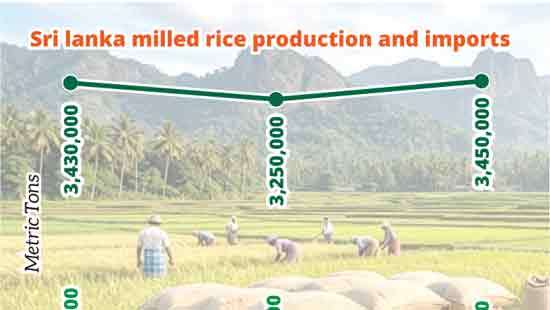
Sri Lanka’s rice industry is charting a path to recovery. For the upcoming 2026/2027 marketing year (October–September), milled rice production is forecast to reach 3.45 million metric tons, representing a solid rebound from the revised estimate of 3.25 million metric tons recorded during the 2025/2026 period, according to According to latest report published by the United States Department of Agriculture (USDA) Foreign Agricultural Service.
Colombo consumer prices jump above CB’s 5% target as higher fuel prices reverberates through economy
01 May 2026
0
499
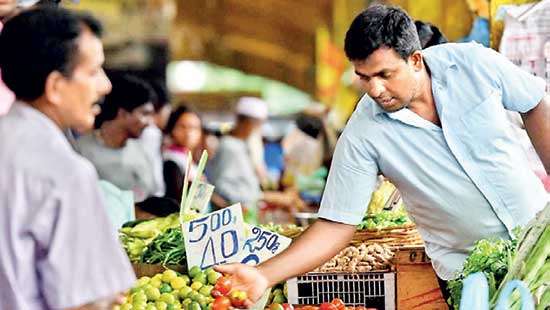
The consumer inflation measured by the Colombo Consumer Price Index (CCPI) jumped in April as the higher fuel prices caused by the war in Iran fed quickly through the rest of the economy sending the prices
Government on verge of lifting palm oil ban
30 Apr 2026
0
673
The government is on the verge of lifting the existing ban on oil palm cultivation, pending the final Cabinet approval, setting the stage for a major agricultural revival.
Middle East crisis, a wakeup call for structural reforms: Aryasinha
29 Apr 2026
0
240
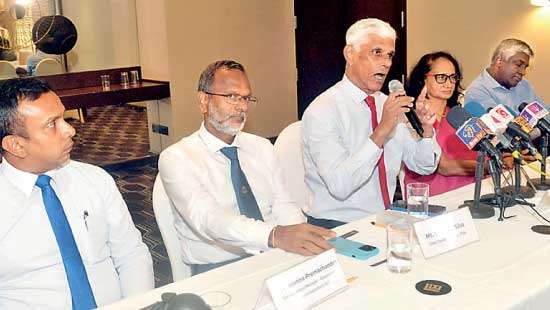
The ongoing Middle East crisis should serve as a critical wakeup call for Sri Lanka to implement long-overdue fundamental structural economic reforms, according to Regional Centre for Strategic Studies Executive Director Ravinatha Aryasinha.

Tourism success questioned as Sri Lanka leans on volume over value
28 Apr 2026
2
875
Sri Lanka’s tourism sector recorded a historic 2.3 million international arrivals in 2025 but the industry analysts are urging a pivot in how success is measured within the island’s economic framework.

March vehicle registrations expand over 15% as EV adoption accelerates
27 Apr 2026
0
682
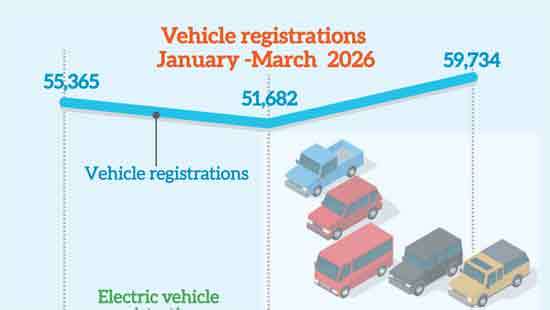
Sri Lanka’s local automotive market recorded a substantial influx of vehicle imports in March, with total motor vehicle registrations expanding by 15.6 percent month-on-month to reach 59,734 units, according to the latest registration data compiled by JB Securities.
CRIB to integrate telco data by year-end
25 Apr 2026
0
257
The Credit Information Bureau of Sri Lanka (CRIB) is steering towards a major transformation in its data ecosystem, finalising plans to integrate telecommunications data by the end of this year, followed by utility payments next year.
Export momentum flickers in March as risks mount
24 Apr 2026
0
258
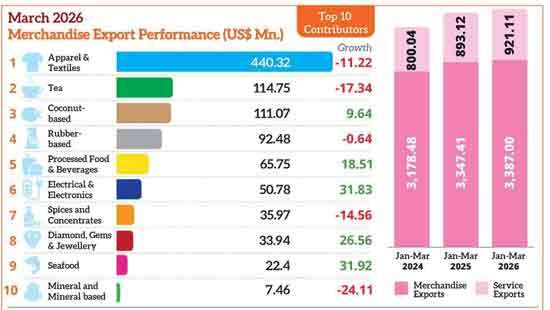
Sri Lanka’s export sector showed a tentative recovery in March, however beneath the monthly rebound, a sharper year-on-year decline indicates a growing external pressure as global trade conditions
SriLankan Airlines whistleblower exposes massive financial leakages
23 Apr 2026
1
6122
Fresh evidence has emerged detailing the deep-rooted financial mismanagement and systemic governance failures at SriLankan Airlines.
SL recovery on edge as Middle East shock ripples through economy: CBSL
22 Apr 2026
0
678
Sri Lanka’s economic recovery is entering a more fragile phase, with the Central Bank warning that rising geopolitical tensions in the Middle East are beginning to test the resilience built through recent stabilisation efforts, even as domestic conditions remain broadly supportive of growth.
SL’s rebound fades into slower growth as energy costs, structural gaps weigh: WB
21 Apr 2026
0
448
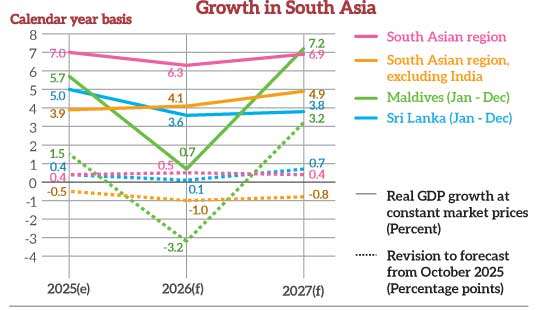
Sri Lanka’s post-crisis rebound is set to lose momentum in 2026, with the growth moderating as the higher energy costs, structural bottlenecks and external risks begin to weigh on the economy, the World Bank said. The World Bank’s outlook also echoes that of the International Monetary Fund (IMF) and Asian Development Bank (ADB) earlier this month.
Tourism earnings plunge to five-month low as the Middle East conflict derails targets
20 Apr 2026
0
847
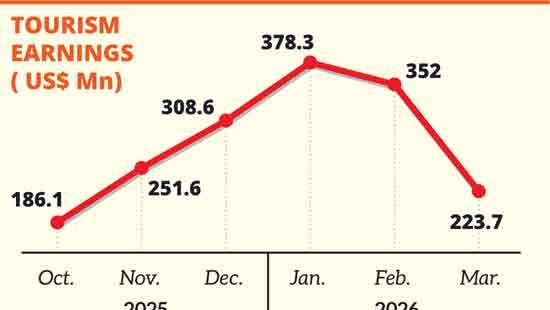
Sri Lanka’s foreign exchange earnings from tourism suffered a severe blow in March 2026, plummeting 37 percent year-on-year to US$ 223.7 million.
ADB pegs conflict impact on Sri Lanka growth
11 Apr 2026
0
396
Sri Lanka’s recovery outlook has come under sharper scrutiny, with the Asian Development Bank (ADB) quantifying the economic fallout from the Middle East conflict, affirming the risks flagged by the International Monetary Fund (IMF) earlier this week, as higher energy costs, softer remittances and tourism disruptions begin to filter through the economy.
IMF warns of fresh risks to SL’s growth as global tensions intensify
10 Apr 2026
0
492
Sri Lanka’s economic recovery is facing renewed uncertainty as rising global tensions, particularly the ongoing conflict in the Middle East, threaten to disrupt growth momentum just as the country advances

Central Bank introduces stringent rules on bank outsourcing
09 Apr 2026
1
4296
The Central Bank of Sri Lanka has introduced a comprehensive set of new regulations governing how the licensed commercial and specialised banks manage the outsourcing of their business operations.
Tourist arrivals cross 750,000 mark
08 Apr 2026
0
838
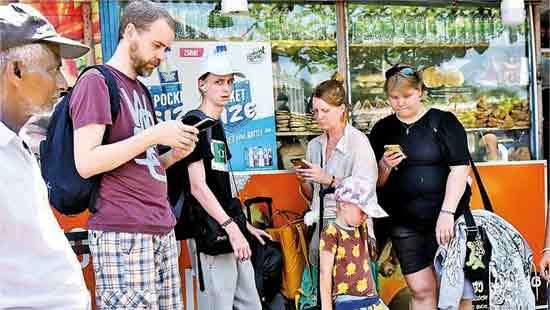
Sri Lanka’s tourism sector successfully crossed the three-quarter million milestone during the first week of April, with cumulative arrivals for the year reaching 767,434 by 5 April.
NDB fraud exposes control gaps as losses climb to Rs.13.2bn
07 Apr 2026
25
15610
A control failure that began beneath the surface has now forced National Development Bank PLC (NDB) to confront a multi-billion-rupee fraud, testing both its governance framework and the broader confidence in the banking system.
Tourist arrivals plunge 20% in March as Middle East crisis disrupts global transit routes
06 Apr 2026
0
424
Sri Lanka’s tourism sector suffered a sharp reversal of fortunes in March, with international arrivals plunging 19.7 percent year-on-year to 183,979 as the escalating conflict in the Middle East severely disrupted global aviation networks.

US$ 2bn World Bank-backed plan to power Sri Lanka’s next growth phase
03 Apr 2026
0
827
The World Bank Group and the Government of Sri Lanka launched a new five-year Country Partnership Framework (CPF) to support Sri Lanka’s continued recovery, help achieve its 7 percent medium-term
Remittance surge cushions widening external cracks in February
02 Apr 2026
0
699
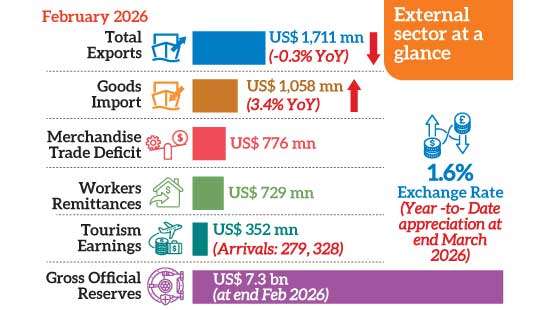
Sri Lanka’s external account remained in surplus for a fourth straight month in February.