Reply To:
Name - Reply Comment
By Nishel Fernando
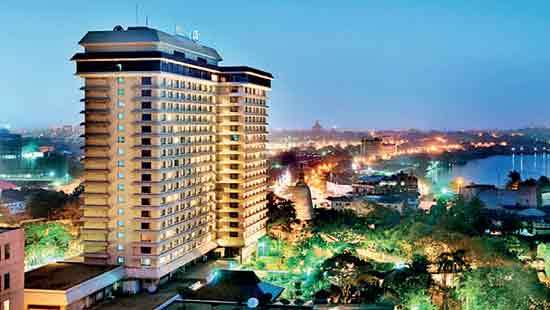
Uncertainty over the stalled sale of Hotel Developers (Lanka) Ltd is starting to ripple through the company’s operations, as delays in finalising its ownership structure cloud strategic decision-making.
The proposed divestiture of the state-owned operator of the Hilton Colombo, seen as a key plank of Sri Lanka’s state enterprise reforms under its IMF-backed Extended Fund Facility programme, remains on hold.
The company’s annual report states that the divestment has been put on hold pending new policy direction from the government. The Secretary to the Treasury continues to hold a 100 percent stake in the entity.
Despite the ownership limbo, the company posted a strong operational turnaround for the financial year ended 31 December 2024. Total revenue grew 24.1 percent to Rs. 5.39 billion, up from Rs. 4.34 billion in 2023. Growth was driven by a 62.5 percent surge in room revenue to Rs. 1.84 billion and a 10.1 percent increase in food and beverage revenue to Rs. 3.34 billion. Operating profit before depreciation rose 433 percent to Rs. 872 million, from Rs. 163 million a year earlier.
A key driver of the turnaround was the near-completion of a decade-long renovation project, which saw 264 guest rooms upgraded and restored the property’s operational inventory to its full capacity of 368 rooms by November 2024. Higher capacity and improved efficiency helped narrow the loss before tax to Rs. 268.3 million, from Rs. 784.3 million a year earlier. The loss after tax declined to Rs. 339.8 million from Rs. 688.7 million in 2023.
Occupancy also improved, with Hilton Colombo reporting a rate of 51 percent in 2024, up from 33 percent in the previous year. This broadly tracked the wider recovery in Colombo’s hospitality sector, where city hotels averaged an occupancy rate of about 53 percent over the same period. Management said renovation costs were capitalised based on estimated costs to completion provided by the cost consultant, as final contractor invoices remain pending.
The company’s balance sheet shows a stronger asset base alongside rising short-term obligations. Total assets increased 4.2 percent to Rs. 21.42 billion, driven by a 24 percent rise in property, plant and equipment to Rs. 14.32 billion following the capitalisation of room renovations. Capital work-in-progress fell sharply by 94.8 percent to Rs. 89 million, while cash and bank balances declined 62.4 percent to Rs. 104 million, mainly due to capital expenditure and debt servicing.
Total liabilities rose 14.6 percent to Rs. 9.51 billion. Non-current liabilities increased 7.6 percent to Rs. 5.04 billion, reflecting the full drawdown of long-term interest-bearing borrowings, which reached Rs. 3.35 billion. Current liabilities climbed 23.6 percent to Rs. 4.46 billion, driven by loan maturities following the end of grace periods and higher trade and other payables in line with increased business activity. Shareholders’ equity edged down 2.9 percent to Rs. 11.91 billion, reflecting the year’s post-tax losses.