Reply To:
Name - Reply Comment
By Shabiya Ali Ahlam
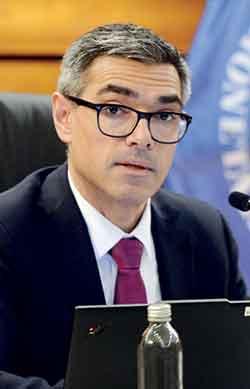 |
| Evan Papageorgiou - Pic by Pradeep Pathirana |
Sri Lanka’s economic recovery is facing renewed uncertainty as rising global tensions, particularly the ongoing conflict in the Middle East, threaten to disrupt growth momentum just as the country advances towards the next phase of its IMF programme.
The International Monetary Fund (IMF) warned that Sri Lanka is “significantly exposed” to the conflict, citing its impact on energy prices, tourism flows and overseas employment, three key pillars of the country’s external sector. The Fund noted that higher fuel costs and disruptions to a key air travel hub are already feeding into domestic pressures, with broader implications for economic activity.
IMF Mission Chief for Sri Lanka Evan Papageorgiou said the scale and duration of the shock would be critical in shaping the country’s outlook, with growth projections now subject to reassessment as the effects filter through trade, remittances and tourism channels.
The warning comes despite a strong rebound in 2025, when the economy grew by 5 percent year-on-year, supported by improved macroeconomic stability under the IMF-backed reform programme. Inflation has also returned to positive territory, while gross official reserves rose to US$ 7 billion by end-March 2026, reflecting gains from ongoing policy adjustments.
However, the IMF cautioned that heightened downside risks, including global uncertainty, climate-related shocks such as Cyclone Ditwah, and geopolitical tensions, highlight the need to accelerate reforms to safeguard stability and maintain the recovery path.
As these pressures build, IMF staff and Sri Lankan authorities have reached a staff-level agreement on the combined fifth and sixth reviews under the four-year Extended Fund Facility (EFF) programme, which provides access to about US$ 3 billion in financing. The agreement remains subject to Executive Board approval and is contingent on key policy actions, including restoring cost-recovery energy pricing while protecting vulnerable groups and completing financing assurances linked to debt restructuring.
Upon approval, Sri Lanka would gain access to about US$ 700 million, bringing total disbursements under the programme to approximately US$ 2.4 billion.
The IMF stressed that maintaining reform momentum remains critical, particularly in strengthening revenue collection, managing fiscal risks and improving governance. It also highlighted the importance of rebuilding reserves, ensuring monetary policy remains responsive to shocks and addressing vulnerabilities in the financial sector, including non-performing loans.
While authorities have taken steps to secure fuel supplies and limit disruptions to economic activity, the Fund warned that the evolving global situation could continue to weigh on Sri Lanka’s recovery, reinforcing the need for disciplined policy implementation and targeted support for those most affected.