Reply To:
Name - Reply Comment
By Shabiya Ali Ahlam
Sri Lanka’s recovery outlook has come under sharper scrutiny, with the Asian Development Bank (ADB) quantifying the economic fallout from the Middle East conflict, affirming the risks flagged by the International Monetary Fund (IMF) earlier this week, as higher energy costs, softer remittances and tourism disruptions begin to filter through the economy.
The ADB, in its latest outlook report, projects growth to moderate to 4.0 percent in 2026 before edging up to 4.2 percent in 2027.
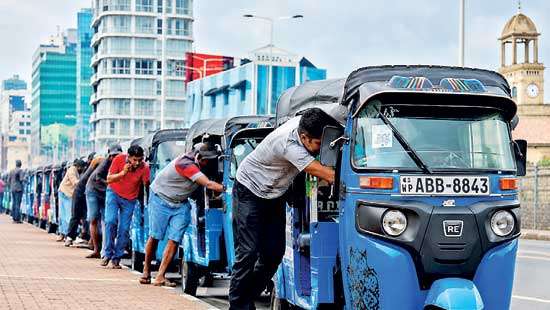
However, it cautioned that the outlook is subject to a “very high degree of uncertainty”, with the Middle East conflict alone estimated to shave around 0.4 percentage points off growth through multiple channels. This includes elevated oil prices, weaker inflows from Gulf economies, reduced tourist arrivals due to disrupted air connectivity and potential exchange rate depreciation.
While the early 2026 indicators point to continued momentum, manufacturing and services activity remain in expansion territory and industrial output rose year-on-year, the ADB warned that the rising energy and input costs are likely to weigh on industry, even as construction rebounds on the resumption of the previously stalled projects. However, agricultural output is expected to remain subdued following the cyclone-related damage to the Maha season, which accounts for the bulk of annual production.
Inflation is projected to accelerate to 5.2 percent in 2026 before easing to 4.0 percent in 2027, driven in part by the Middle East-related energy price pressures, exchange rate pass-through and anticipated electricity tariff adjustments. The external shock alone is estimated to contribute between 1.5 and 2.0 percentage points to inflation, underscoring the growing role of imported cost pressures even as the domestic demand recovers on the back of wage increases and relief measures.
Private consumption is expected to remain the main driver of growth, supported by public sector wage hikes and post-cyclone relief spending, while private investment is projected to recover only gradually amid uncertainty, regulatory rigidities and a narrow export base. Net exports are likely to weigh on growth as import demand strengthens alongside reconstruction and consumption.
Fiscal policy is set to remain anchored in consolidation, although post-cyclone reconstruction spending and welfare demands are expected to test discipline. A supplementary allocation equivalent to 1.5 percent of GDP has lifted planned expenditure for 2026, while capital spending is projected to rise despite the persistent execution bottlenecks. Revenue performance is expected to moderate as import-related tax gains normalise, with the primary surplus narrowing to around one percent of GDP.
Externally, the current account remains supported by resilient remittance inflows, which rose sharply at the start of the year, although risks are mounting. With around 40 percent of remittances originating from Gulf economies and more than 30 percent of tourist arrivals routed through Gulf carriers, a prolonged disruption could weaken the external buffers.
Despite the reserves improving to around US $ 7.2 billion—equivalent to about four months of imports—the ADB cautions that higher fuel import costs and softer inflows could pressure the external position.
Financial conditions are expected to remain sensitive to global shocks, with the lending rates trending upward and private sector credit showing signs of moderation. The government bond yields have also exhibited volatility in response to the Middle East-related risk sentiment, even as macroeconomic fundamentals improve.
Overall, the ADB warns that risks to the outlook are tilted to the downside, dominated by external factors including a potential escalation of the Middle East conflict, global trade uncertainty and weather-related disruptions.
A more severe or prolonged shock could amplify inflationary pressures, weaken remittances and tourism earnings, widen external imbalances and prompt tighter monetary policy, further weighing on growth.