Reply To:
Name - Reply Comment
By Shannine Daniel
|
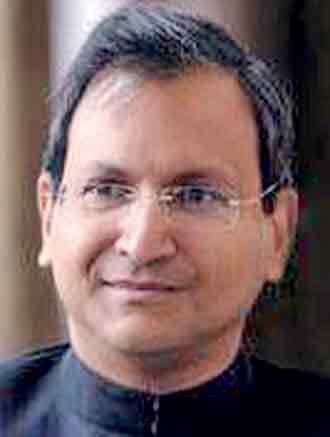
Ravinatha Aryasinha |
The ongoing Middle East crisis should serve as a critical wakeup call for Sri Lanka to implement long-overdue fundamental structural economic reforms, according to Regional Centre for Strategic Studies Executive Director Ravinatha Aryasinha.
Aryasinha emphasised the need for greater product and market diversification, noting that such measures should have been prioritised earlier, particularly following trade disruptions triggered by policies such as the Trump tariffs.
“Many of Sri Lanka’s problems, such as limited export diversification and insufficient foreign direct investment, have been present time and again, and are not caused by the current middle east crisis,” Aryasingha noted, while speaking at a webinar hosted by the International Chamber of Commerce Sri Lanka (ICCSL) and the Association of Chartered Certified Accountants (ACCA).
He added that Sri Lanka should provide support for air or maritime traffic, if needed, to keep trade, sea and air routes functioning, but should not capitalise on the situation and reposition itself as a global aviation or maritime hub.
“The international community as a whole will appreciate this,” he asserted.
Aryasinha also highlighted the need to reassess Sri Lanka’s foreign policy approach.
He noted Sri Lanka had historically distanced itself from countries like Russia and Iran to avoid antagonising other countries, but such decisions have at times constrained the country’s imports including the supply of crude oil and other necessities.
“This situation provides an opportunity for us to correct those anomalies, and this is not the time for us to hitch our bandwagon on to any one country,” he stated, emphasising that the present geopolitical situation is unpredictable.
Aryasinha also observed that Sri Lanka’s positive response to the crisis, including its stance on the ceasefire efforts and ongoing negotiations, has helped maintain balanced diplomatic relations.
He also noted that in terms of its foreign policy, Sri Lanka has managed to keep communication channels open across multiple stakeholders, and is in a favourable position where it can ‘navigate through storm.’
“I think Sri Lanka’s problem is ‘pendulum swinging.’ There have been times when we have gone only after the United States and at their behest, we have shut out certain other countries. But at other times at China’s or India’s requests we have done the same,” Aryasinha opined.
He emphasised the importance of a consistent foreign policy, adding that Sri Lanka should leverage its neutral positioning to remain constructive and supportive in the international arena.
Referring to the country’s 2022 economic crisis, Aryasinha noted that it had helped reposition Sri Lanka towards a more neutral geopolitical stance.
He stressed that this position should be strengthened rather than undermined by ad-hoc “quick deals” that may not be sustainable in the long term.