Opinion
New medicine price formula, a step in the right direction?
23 Oct 2025
 0
0
349
The passage of the new pricing formula for imported pharmaceutical drugs in Parliament could be considered a key strategy to address shortages of medicine and to ensure transparency in the provision of medicines to the public. Unregulated costs of medicines have become a burden to the average citizen, who finds it a challenge to allocate a considerable amount of their expenses to purchase medicines. In most instances, patients are inconvenienced

Decoding ‘76 years of curse’
23 Oct 2025
2
1703
Recent rave social media reviews by Indian visitors about Sri Lanka, especially about our roads and civic sense, might make a Sri Lankan blush. One should agree that such assessments are a subjective experience. But there is also a genuine appreciation, though South Asians in general are good at trash-talking their own countries.
Still Waiting: Families of Murdered Journalists Demand Action
23 Oct 2025
0
140
Decades have passed since some of Sri Lanka’s most controversial killings of Lasantha, Ekneligoda, Raviraj, Shri Ram, Wasim and hundreds of others, whose deaths have not seen a decent inquiry or prosecution. Instead of delivering justice to these killings, since 2010, at each election trial, this has become a political game where the families and loved ones of these victims continue to be spectators waiting in anguish and frustration, watching ev

Tea stains from the tea trail
22 Oct 2025
2
505
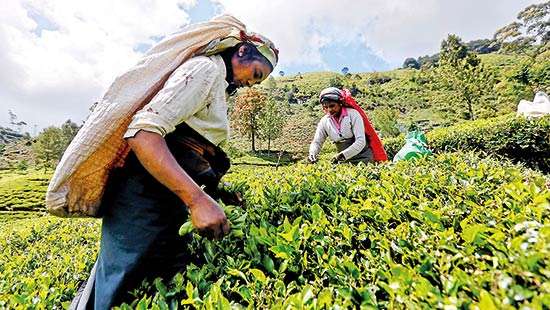
When you earn a daily wage you simply plan your life around the concept ‘one day at a time’. Thinking long-term for them would mean getting through the 30 days of the month.
A political whirlpool in Palk Strait
21 Oct 2025
0
601
Tamil Nadu Chief Minister MK Stalin on Thursday wrote a letter to Prime Minister Narendra Modi, urging him to raise the concerns of Indian fishermen with Sri Lankan Prime Minister Harini Amarasuriya during her three-day visit to India. Stalin highlighted repeated incidents of alleged harassment of Indian fishermen by the Sri Lankan Navy, according to Indian media.

“Who Will Rid Us of This Pestilent Industry?” Tobacco: Mother of Narcotics & suavely packaged death
21 Oct 2025
1
416
Nicotine is one of the most powerfully addictive substances known to science. Long before modern neuroscience explained how drugs hijack the brain’s reward systems, tobacco users directly experienced addiction’s compulsive nature, the difficulty quitting despite wanting to, physical withdrawal symptoms, and psychological cravings. This made tobacco humanity’s first systematic encounter with understanding chemical addiction.
Leading a Fulfilling Life After Service for Sri Lanka’s Armed Forces Veterans
21 Oct 2025
2
848
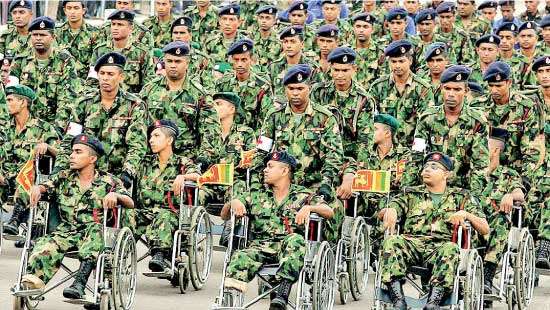
Sri Lankan armed forces veterans participated in a lengthy and intense conflict known as the Eelam War, culminating in a significant victory in 2009. Despite this achievement, many veterans emerged from the conflict with lasting physical injuries that continue to affect their lives long after their military service has ended. Additionally, numerous veterans were confronted with the harsh realities of war, leading to mental health challenges such
The end of Socialism in Sri Lanka
21 Oct 2025
0
813
Anura Kumara Dissanayake became the pallbearer at the funeral of Socialism in Sri Lanka. In the coffin lay the Communist Party, LSSP, NLSSP, MEP — and the JVP itself.

Rationale for Government’s choice of cooperation over confrontation
21 Oct 2025
0
166
In contrast to intolerance in governance and towards others who are deemed to be outsiders that is increasingly being manifested in the world, Sri Lanka is taking a different path. It is adopting an inclusive approach to all communities that is in the national interest and is winning international support. The country’s recent conduct at the UN Human Rights Council (UNHRC) is a case in point. Rather than forcing a vote that would have been divisi

The Stories That Bind Us
20 Oct 2025
0
402
From ancient myth to modern cinema, the same universal story continues to unfold. What Joseph Campbell called “the hero’s journey” is not only found in books and films, but also in the lives we live and the stories we tell in Sri Lanka and beyond.
Hitting the poor and sparing the wealthy IMF Engineered Dispossession as Social Stability
20 Oct 2025
2
1005
The 2020s has become a decade of distress in the Global South. Half the developing countries are now in debt trouble, with the situation having deteriorated considerably since 2010.
Government’s “Big Kuchchan” and people’s “Bing Chun”
20 Oct 2025
0
812
Members of the opposition political parties, both minority and majority, have been making fun out a mispronunciation of two English words by a prominent Cabinet Member of a NPP government.
Bank staff clueless about Blue Bonds
20 Oct 2025
0
331
A leading local development bank recently announced the launch of its much-publicised Blue Bond, proudly claiming to be the first Sri Lankan bank to issue one.

Mass Expulsion of Northern Muslims in 1990: Why did the LTTE do it?
18 Oct 2025
0
5907
October 1990 was the month in which the Tamil-speaking Muslims of the Northern province were forcibly expelled en masse by the Liberation Tigers of Tamil Eelam (LTTE), 35 years ago.
Pros and cons of social media Is criminal defamation to come again in disguise?
18 Oct 2025
0
611
Unlike leaders of other political parties in the country, the National People’s Power (NPP) leaders have been lodging complaints with the Criminal Investigation Department (CID) on defamation against them, especially in social media, for over a year.
Port Access Elevated Highway -- snail’s speed development
18 Oct 2025
3
507
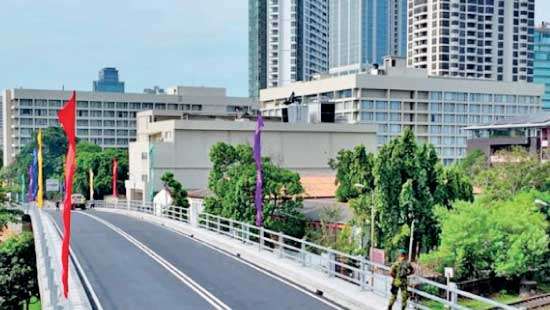
Recent revelation that the construction of the Port Access Elevated Highway (PAEH) -- much needed 5.3 km road connection built on posts expected to connect the Harbour to New Kelani Bridge, entrance and thence to the country’s expressway -- might get delayed for another two years is a clear reflection on Sri Lanka’s snail-speed development.
Think Pink — A Simple, Cost-Effective Way to Show You Care
18 Oct 2025
0
200
Every year, October is observed globally as Breast Cancer Awareness Month, and Sri Lanka too, has joined this noble cause.
Wind, solar or nuclear: speedy action needed
17 Oct 2025
1
329
When the economy collapsed in 2022, one of the hardest lessons was that energy insecurity can cripple the entire system. Power cuts, fuel queues, and import shortages didn’t just darken homes but also the country’s economic prospects. Two years later, the government has stabilised the energy supply, but the underlying vulnerability remains. Sri Lanka still imports nearly all its fuel, spends billions in foreign exchange on petroleum and coal, and

The Palestinian story outshines flattery and triumphalism
17 Oct 2025
0
298
What a sham at Sharm el-Sheikh! A spectacle choreographed to satiate one man’s thirst for glory. The same performance was on display in West Jerusalem just hours before the so-called world leaders’ summit at the Egyptian resort town on Monday.
The End of Socialist Politics in Sri Lanka
17 Oct 2025
0
328
The President’s recent remark that “the Government cannot do business” has driven the final nail into socialist politics in Sri Lanka. This marks a watershed moment—a long-overdue recognition that economic progress depends on private sector–led growth, not state control. For the first time in decades, a consensus appears to be emerging across the

Daily wage of plantation workers still hangs in the balance
16 Oct 2025
0
304
When the New Vithanakande Tea Factory recently broke the Guinness World Record for their premium Ceylon Black Tea sold at the highest price of 125,000 Yen or USD 835 per kilogram at a Japanese tea auction, it didn’t come in as a surprise for many. Ceylon Tea has earned global recognition for its distinct flavours and rich aroma and is a beverage celebrated the world over.
Beyond Compliance: Sustainability as a Driver of Competitiveness
16 Oct 2025
0
307
Sustainability is increasingly becoming non-negotiable in international trade and supply chains. Companies and countries are integrating sustainable practices into their policies and mandates. For smaller developing countries like Sri Lanka, the shift poses both a challenge and an opportunity. The primary challenge is higher compliance costs, which can restrict market access, especially for small and medium-sized enterprises (SMEs).
Don’t Leave Without Your Receipt – It Could Cost You!
16 Oct 2025
5
461
Recently, I had an unforgettable experience (on my way home!) at a leading supermarket close to my residence, which I believe is worth sharing for the benefit of other customers.

Learning the Art of Negotiation
15 Oct 2025
1
670
For years I mistook people pleasing for diplomacy. It took time, training and humility to realise that negotiation is not conflict but connection.

Sri Lanka’s future does not revolve around the UNHRC
15 Oct 2025
1
605
Another session of the United Nations Human Rights Council, which concerned Sri Lanka, concluded last week, this time thankfully without making a spectacle at home.
Rural women and their contribution to the economy
15 Oct 2025
2
279
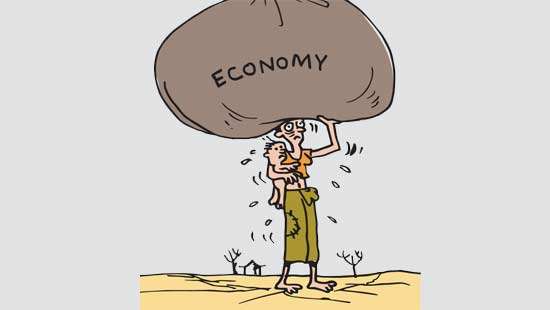
Women in rural areas make a huge contribution to the economy, but their contributions often go unnoticed. Hence, since today (October 15) is ‘International Day of Rural Women’, let’s focus on rural women and their work.
Gullies sans Covers: Deadly Hazards in Armour Street Flat
15 Oct 2025
0
217
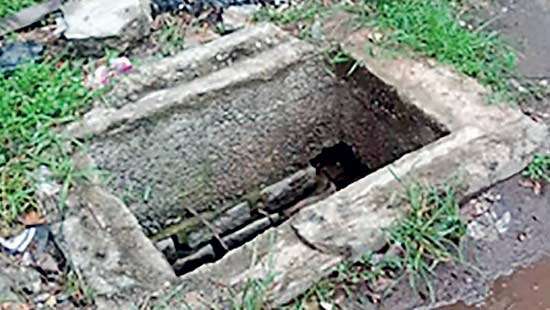
Several uncovered gullies along Sri Sumanatissa Mawatha, Armour Street, Colombo 12, have become serious death traps for pedestrians and motorists alike.
For better for worse, whose decision was worse
14 Oct 2025
1
289
In our history we have innumerable instances of politicians making pre-election promises which they have never kept after coming into power. Perhaps they never intended to keep those promises or were forced into the realisation that implementation of the same would be detrimental to the good of the country.

Parliamentary protection laws now tools for abuse
14 Oct 2025
1
188
The Parliament (Powers and Privileges) Act 1953 was designed to protect lawmakers from political intimidation and ensure legislative freedom. However, this is increasingly being used as a blanket privilege by MPs to slander their spouses and children, spread false statements about Government officials, to leak ongoing investigations and misinformation about business tycoons without consequence.
The politics of Nobel Laureate Maria Machado Will take Venezuela to the US camp if elected President
14 Oct 2025
0
241
Maria Corina Machado (58), who was awarded the Nobel Peace Prize this year, got it for her indefatigable fight for democracy and the rule of law in Venezuela. This South American country, like many others in the Global South, has had elected leaders who turned out to be dictators, including the current President, Nicolas Maduro.