Opinion
Advising the tourists about wild jumbo attacks
21 Feb 2026
 1
1
606
The recent unfortunate incidents of tourists being attacked by wild elephants, have gripped the attention of the media.

Cutting MPs’ pensions - at what cost?
20 Feb 2026
0
845
Few political promises generate as much public applause as cutting the privileges of politicians. In a country battered by economic collapse, tax hikes and austerity, any move to trim parliamentary perks appears morally justified. It is more so because the ruling National People’s Power (NPP) has portrayed politicians in a bad light, holding them responsible for all the ills the country is grappling with. President Anura Kumara Dissanayake’s de

War clouds over Iran-US talks: A Game of Chicken
20 Feb 2026
1
732
The United States is adopting a dangerous strategy in its bid to force Iran to yield. Washington seeks nothing less than the total submission of Iran’s sovereignty. To achieve its objectives, it engages in talks while keeping a gun to Iran’s leadership—believing, mistakenly, that gunboat diplomacy will compel Iran to surrender. The dispatch of the USS Abraham Lincoln to the Persian Gulf ahead of talks in Muscat, Oman, was a clear signal of coerci
Begin teaching road discipline in the schools
20 Feb 2026
0
516
The Police must enforce road discipline to counter accidents. The best is a very strenuous training in Prevention, Detection. and proper prosecution. These are the three main ingredients the Police should concentrate on if the police is to achieve desired success. The Police Department should have a long term plan and a short term plan in handling and creating road discipline. The long term plan should commence with the Schools and they must incu

‘Democracy dies in darkness’: Jeff Bezos vs The Washington Post
19 Feb 2026
1
698
In a shocking development, the owner of the ‘Washington Post’ newspaper has fired thirty per cent of its staff. That owner is billionaire Jeff Bezos, who has owned the Post since 2013. The ‘Washington Post’ is 149 years old. Founded by Stilson Hutchins on December 6, 1877, it is the oldest and most widely circulated daily newspaper in Washington, D.C.

Justice Held Hostage: Why Lawyer Strikes Betray the Public Trust
19 Feb 2026
1
811
The recent decision by the Bar Association of Sri Lanka (BASL) to stage a nationwide boycott of court proceedings following the tragic murder of Attorney-at-Law Buddhika Mallawarachchi and his wife has reignited a crucial debate: Do lawyers have the right to hold the justice system hostage to express their grievances, no matter how legitimate those grievances might be?
Bribery, the greatest enemy of a democratic nation
19 Feb 2026
0
626
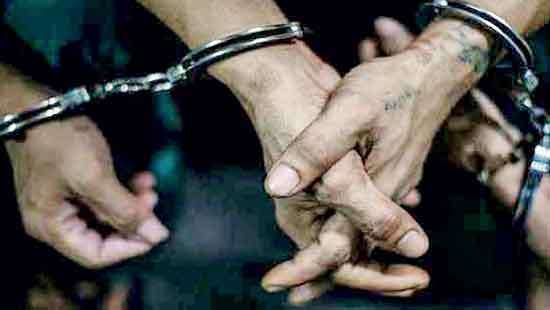
A recent news item read that an Acting Registrar of Births and Deaths attached to the Alayadivembu Divisional Secretariat in Akkaraipattu was arrested for allegedly accepting Rs. 500 as a bribe to issue a birth certificate. Incidents of this nature reminds people that the system hasn’t really changed even after all these years.

Tenant Protection Bill: A cure worse than the disease
19 Feb 2026
1
549
Quite rightly, the Government has agreed in court to reconsider the proposed Tenant Protection Bill. As currently worded, the Bill dangerously tilts the balance in favour of tenants, including those who default on rent, damage property, and fail to pay electricity and water bills, while leaving landlords virtually powerless.

Killing of the attorney-at-law sparks fresh worries But claims of a ‘national security threat’ are hyperbole
18 Feb 2026
0
753
Law and order, and judicial fairness in Sri Lanka, were under scrutiny last week over two separate incidents. First, a lawyer and his spouse were gunned down in the car park of a supermarket complex in Akuregoda in a suspected underworld shooting.
Becoming gender sensitive in post-Ditwah SL
18 Feb 2026
0
535
Life stands still for many people affected by cyclone Ditwah, especially in the outskirts. The disaster cannot be described as a sudden occurrence when looking at existing gaps in disaster communication to begin with.

Repaint the crossings before lives are lost
18 Feb 2026
0
511
Pedestrian crossings are not decorative road markings — they are critical safety features designed to protect human lives. Yet, across Colombo, several pedestrian crossings remain without clearly visible zebra stripes, particularly pelican crossings with traffic signals.

Crimes, not isolated incidents
17 Feb 2026
2
497
The Bar Association of Sri Lanka (BASL) on Sunday had decided not to appear before courts island-wide on Monday in protest over the fatal shooting of attorney-at-law Buddhika Mallawarachchi and his wife W.A. Nisansala in Akuregoda.

XI Jinping asserts civilian supremacy in the PLA
17 Feb 2026
0
676
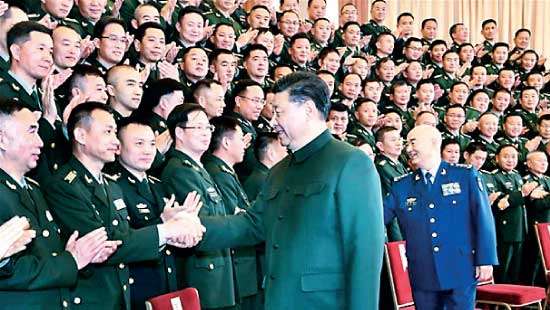
Through a series of purges, Chinese President Xi Jinping has been trying to curb the power and autonomy of the generals of the People’s Liberation Army (PLA) and assert his -- or the Communist Party’s -- supremacy in the Central Military Commission (CMC), PLA’s top-most decision-making body.
Legislators’ pensions: Denying a legitimate expectation
17 Feb 2026
0
518
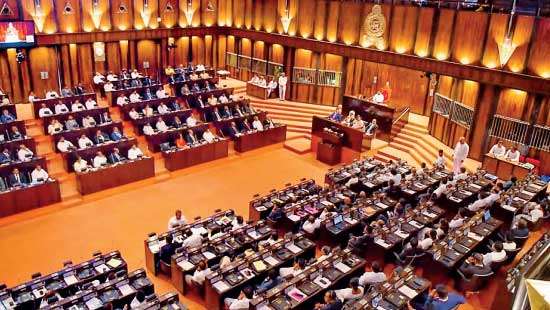
In 1976, the late Felix R. Dias Bandaranaike initiated the legislation that would provide a person who had retired after serving in the national Legislature for a minimum period of five years with a pension during his or her lifetime. The Parliamentary Pensions Act No.1 of 1977 is applicable to any Sri Lankan citizen who had served in the Legislature since July 7, 1931.
Need to cultivate positive attitudes
17 Feb 2026
0
222
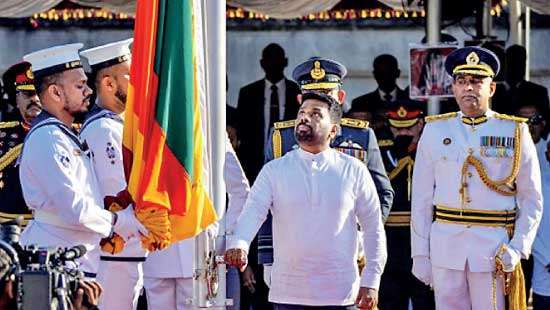
The Independence Day editorial of the ‘Daily Mirror’ had correctly and clearly illustrated facts that hindered Sri Lanka’s economic, social and political progress, despite attaining so-called freedom some 78 years ago.
The strategic paradox:Why the 2002 peace process was the LTTE’s beginning of the end
16 Feb 2026
1
1249
The seminar held on February 12, 2026, at the Sri Lanka Foundation Institute, organised by senior lawyer and respected political activist Shiral Lakthilake, provided a rare intellectual collision regarding the legacy of Prof. GL Peiris’ work: “The Sri Lanka Peace Process : An Inside View”.
Justice & Its Uneven Memory-’83 Black July
16 Feb 2026
1
731
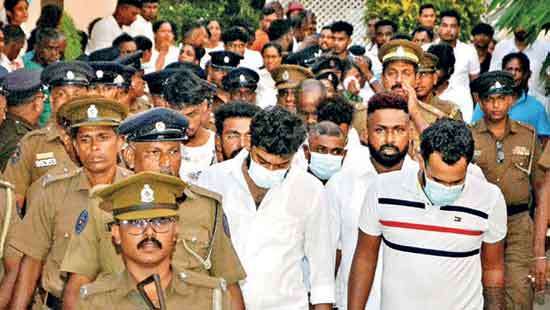
Nearly four years after the violence that scarred Sri Lanka on 9 May 2022, the Gampaha High Court has delivered one of the most consequential verdicts arising from the ‘Aragalaya’ period.
French action against UN Rapporteur - a ruse to divert attention
16 Feb 2026
0
281
Four days ago, the French Foreign Minister Jean-Noël Barrot condemned in the French National Assembly what he termed the “…outrageous and reprehensible remarks of Ms. Francesca Albanese”, the United Nations Special Rapporteur for the Palestinian territories. Barrot called for Albanese’s resignation.
Whither national security?
16 Feb 2026
0
103
The spate of shootings believed to be done by underworld groups have once again come to the fore. The double murder at Akuregoda on Friday is a reminder that national security isn’t just a buzzword.

Politicisation of Rule Of Law
14 Feb 2026
1
380
Rule of Law is considered as a concept consisting of predominant principles required to be followed in the process of making and implementation of laws in democratic states.
Does corruption index reflect the reality ?
14 Feb 2026
1
681
After ten years of negative performance, Sri Lanka has risen from 121stplace to 107th place on Transparency International’s Corruption Perceptions Index for 2025.
Broken promises and Protection of the State from Terrorism Act
14 Feb 2026
2
370
Power corrupts, and absolute power corrupts absolutely, is an aphorism. It warns that holding high authority, especially without checks and balances, leads to immoral behaviour.
Darkness by Dispute: Who Will Take Responsibility?
14 Feb 2026
1
296
The street light in front of No. 1, Charlemont Road, Wellawatte has remained out of order for an extended period. This particular stretch becomes completely dark in the late evening once nearby shops and establishments — including the iconic Savoy Theatre — switch off their lights.

Is Sri Lanka Ready for Mega Trade Integration?
13 Feb 2026
1
571
Sri Lanka stands at a critical point in its economic diplomacy. As a country, Sri Lanka has now stabilised its macroeconomic fundamentals under the IMF Extended Fund Facility. Yet, the country now faces a far more important question: what next? Stabilisation alone cannot deliver prosperity. In fact, growth must follow. Trade integration is key in this regard. Market-diversification is also needed for Sri Lanka in a global context where dominant

Behind the hijab: Epstein files expose Middle East’s moral decay
13 Feb 2026
5
3168
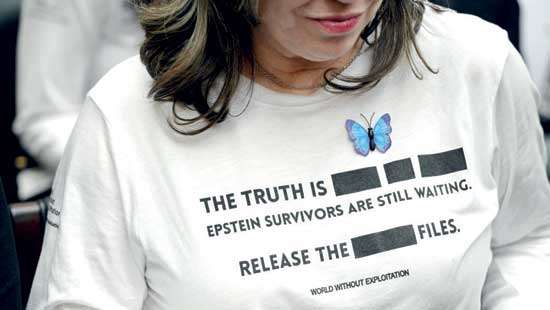
When poverty enters through the door, religion and morality fly out of the window. This adage applies equally to wealth; in reverse logic, we may say, “Religion and morality fly out of the window when wealth appears at the door.”
Tenant Protection Bill: A Cure Worse Than the Disease
13 Feb 2026
1
584
Quite rightly, the Government has agreed in court to reconsider the proposed Tenant Protection Bill. As currently worded, the Bill dangerously tilts the balance in favour of tenants, including those who default on rent, damage property, and fail to pay electricity and water bills — while leaving landlords virtually powerless.

Grand vision vs the daily wage: Why 2048 feels a lifetime away from Sri Lanka!
13 Feb 2026
6
1578
In the complex landscape of Sri Lankan politics, a profound paradox exists: a nation with a 2,500-year-old civilization and a history of engineering marvels such as the world’s most advanced ancient irrigation systems now finds its modern electorate seemingly trapped in a cycle of short-term survival. The disconnect between a “Grand Vision” and the “Daily Wage” has never been more apparent than in the political fate of Ranil Wickremesinghe and hi
A reform agenda:Rebuilding Sri Lanka’s farming after Cyclone Ditwah
13 Feb 2026
0
388
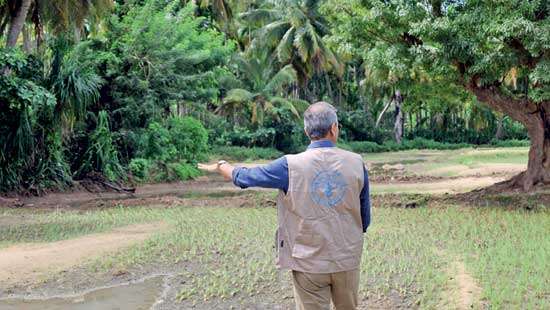
Three months after Cyclone Ditwah swept across Sri Lanka in late November 2025, the headlines have moved on. In many places, the floodwaters have receded, emergency support has reached affected communities, and farmers are doing what they always do, trying to salvage what they can and prepare for the next season.
Policymakers: Are they ready to work with Gen Z
12 Feb 2026
1
565
Sri Lanka has witnessed protests of various kinds. These vary from protests that end following government’s responses towards people’s demands to mass scale people’s movements such as the aragalaya to pseudo-satyagraha campaigns launched by politicians and actual satyagraha done by people. The right to peaceful assembly is a right guaranteed by the Constitution and therefore, people have a right to take to the streets and protest peacefully if th

Insights from SSA Cyclone Ditwah Survey: More State support needed for Malaiyaha community
12 Feb 2026
1
564
When climate disasters strike, they don’t affect everyone equally. Marginalised communities typically face worse outcomes, and Cyclone Ditwah is no exception. Especially in a context where normalcy is far from ‘normal’, the idea of returning to normalcy or restoring a life of normalcy makes very little sense.