Opinion
No one can predict how rivers will overflow Disaster warnings alone would not save human lives
13 Dec 2025
 3
3
417
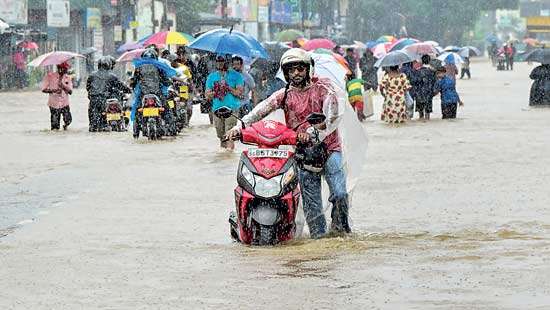
The Cyclone Ditwah that was formed in Southwest Bay of Bengal on November 26 and made landfall in Sri Lanka on November 28 has claimed at least 635 lives, leaving another around 200 persons disappeared by December 9. The numbers might slightly rise up.
Cyclone Ditwah and the politics of disaster
13 Dec 2025
0
260
In November ‘Cyclone Ditwah’ hit our country in all its fury. With wind speeds of over 80 kmph, it brought with it 150–500 mm of rainfall for three consecutive days, triggering the worst landslides and flooding in the country in 20 years. Power outages, floods/wash away of major roads and landslides resulted.

URGENT SUMMONS
13 Dec 2025
0
184
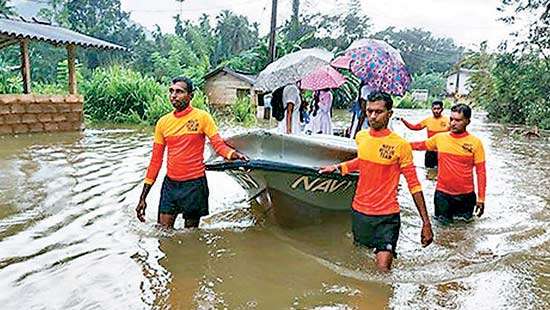
The plight of our people and of our country at present is summoning us, the citizens of Sri Lanka, in a special way, to collaborate to promote the common good of our people and of our country in pain and need.
Justice delayed is justice denied
12 Dec 2025
0
364
Chairman of the United National Party (UNP) Wajira Abeywardena has said that Sri Lanka’s conviction rate remains as low as two percent, as reported in the media. While Sri Lanka records only a two-percent conviction rate, Japan’s stands as high as 98 percent, according to him.

Disaster geopolitics in Ditwah’s wake
12 Dec 2025
2
867
Just as Canada’s social justice activist and writer Naomi Klein, in her highly celebrated book The Shock Doctrine: The Rise of Disaster Capitalism, explains the relations between disasters—manmade or natural—and vulgar capitalism driven by inhumane greed, so too can we see an inviting link between disasters and geopolitics. In her 2007 book, she argues that disasters and wars are like honeypots for capitalist bees—or flies.
Lessons to be learnt from Cyclone Ditwah!
12 Dec 2025
0
197
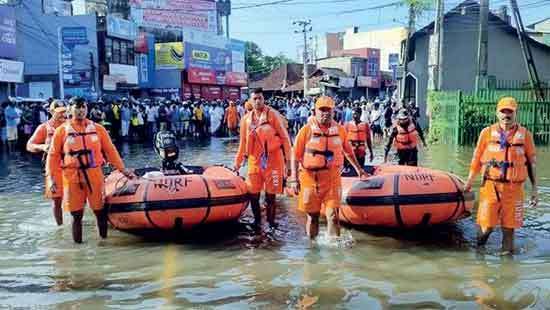
In the aftermath of the catastrophic cyclone which overwhelmed our motherland with devastating consequence, causing loss of life and property across the country, we witnessed the commitment and compassion that was demonstrated by our citizenry to help humanity. This sublime gesture that transcended the diversity of creed and ethnicity of our populace by extending their heartfelt care and concern, is a defining characteristic that we as a natio

Coordinated efforts matter, at least during a natural disaster
11 Dec 2025
0
185
One lesson taught by Cyclone Ditwah is that people need to respect the environment more. With the high demand for real estate, people are convinced to purchase locations with the best view, proximity to the nearest town and other features often ignoring the sensitivity of these locations. Most high risk landslide-prone areas are in close proximity to forest reserves. The demarcation of boundaries and the use of such lands for commercial purposes

Dear Mother Lanka
11 Dec 2025
0
376
I’m writing you this letter with a heartbeat for a pen, ’Cause you’ve been fighting through the storms again and again. Little island of mine, wrapped in green like a queen, Mountains standing guard while the monsoons scream.

Size matters when cyclones hit: Are our expatriate communities doing anything to help?
11 Dec 2025
6
766
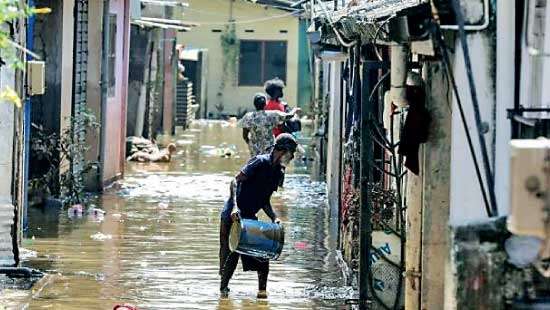
The world’s worst cyclone-hit countries are mainly in South and Southeast Asia – Bangladesh, India, Vietnam, the Philippines, Indonesia and Malaysia. Now Sri Lanka and Thailand too, are in that sombre list.
Positioning Sri Lanka in an emerging multipolar world order
11 Dec 2025
2
913
Over the past four years, geopolitical, economic, and technological shifts have progressed at a pace unmatched in the previous three decades. The world we face today is fundamentally different from the one we knew before. War has returned to Europe, shattering the assumption that major interstate conflict on the continent was a thing of the past. The Middle East is once again engulfed in overlapping crises that draw in both regional actors and gl

Psychological Support for flood disaster victims: Almsgiving, community meals, prayer, kindness - all this can help
10 Dec 2025
1
535
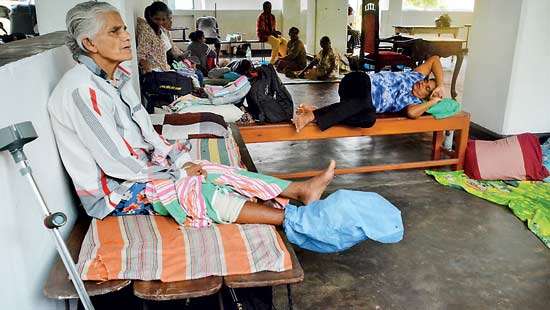
The recent floods in Sri Lanka have left individuals and communities facing profound emotional, psychological, and practical challenges.
Post-cyclone reconstruction: Hold an international donor summit before the world forgets
10 Dec 2025
2
712
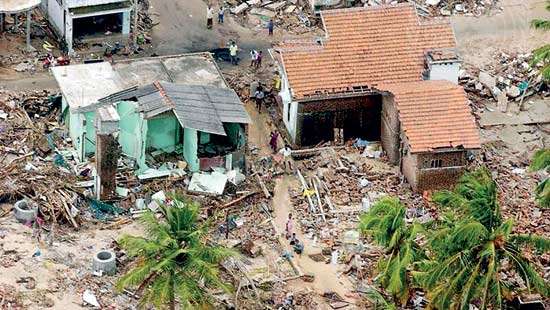
As Sri Lanka assesses the scale of the devastation of Cyclone Ditwah, the worst-ever natural disaster since the Indian Ocean tsunami of 2004, it should also plan for the next phase of reconstruction in earnest.
Is Sri Lanka’s national survival truly threatened?
09 Dec 2025
1
673
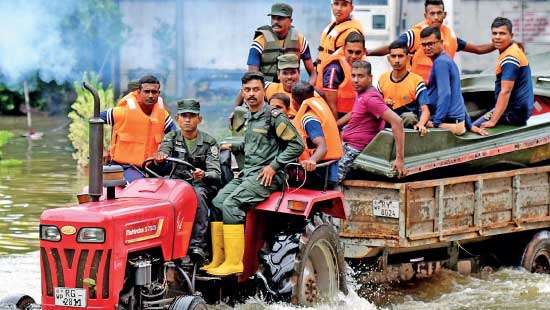
Sri Lanka, the Pearl of the Indian Ocean, boasts of a history stretching back over 2,500 years, rich with cultural heritage and resilience forged through centuries, including foreign rule from 1505 to 1948.
The hidden crisis How floods, slides threaten health of Sri Lanka’s elderly
08 Dec 2025
1
1434
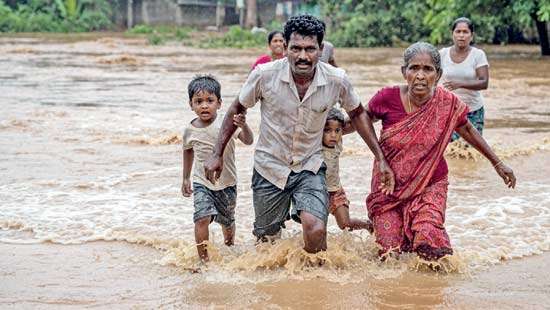
When Cyclone Ditwah swept across Sri Lanka in late November 2025, the force of nature felt almost unreal. Hundreds of people died, thousands remain unaccounted for, and more than 147,000 were pushed from the places they once called home.
Review of the publication ‘Sinharaja’ A book that converts science into a story that nudges readers to visit Sinharaja
08 Dec 2025
2
855
The legendary Sinharaja rainforest is one of the last remaining vestiges of widespread lowland rainforests that pay homage to an exceptionally concentrated biome consisting of endemic and threatened species.

Will Sri Lanka ever learn?
05 Dec 2025
5
1196
The era of global warming, no country is immune from extreme climate events such as cyclones, floods, or heatwaves. Yet nations with stronger disaster-preparedness systems consistently mitigate damage and reduce death tolls. The global lesson is clear: countries must learn from past catastrophes and adapt their response mechanisms accordingly.

Don’t blame Ditwah—blame our environmental sins
05 Dec 2025
4
1280
It goes without saying that Sri Lanka is one of the most vulnerable countries to climate change. In recent decades, the country has been regularly lashed by extreme weather conditions in the form of either prolonged droughts or relentless rains.
Extracts from a sad farmer’s diary
05 Dec 2025
0
377
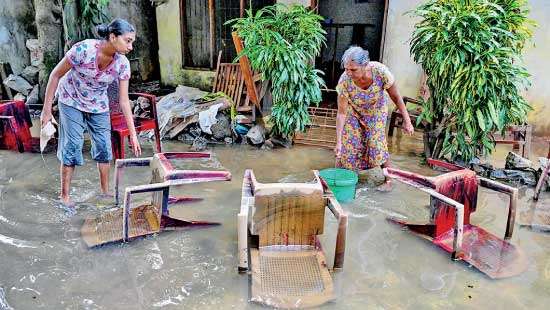
Sri Lanka’s rice industry is similar to Yo-yo dieting; sometimes it gains and it equally loses. Hence a close look at Sri Lanka’s rice industry merits an in-depth analysis, especially during adverse weather conditions experienced at present.
Cyclone Ditwah and her devastation
05 Dec 2025
0
308
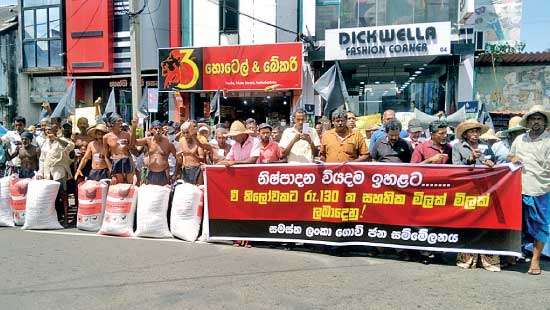
We Sri Lankans are reeling from the unimaginable consequences of what Cyclone Ditwah left in her trail. The human suffering through death and isolation, hunger and homelessness, loss of property and sources of income, the bleakness of any hope for tomorrow. In addition, the country’s infrastructure, such as roads, rail tracks, factories, water sources, agricultural lands, which are vital for the daily turning of the economic wheel have been ruine

Why disaster management should now be the govt.’s top priority
03 Dec 2025
1
501
Cyclone Ditwah has passed. But the damage it has caused is irreversible. With over 400 recorded deaths and more people still marked as missing, the Cyclone had affected over a million people in the country. Following the 2004 tsunami, people became aware of the extent of a natural disaster. In fact the name tsunami itself was unheard of for a majority of people in the country. It was following the tsunami that policymakers started taking disaste
Not the blame game, but there are many questions to answer
03 Dec 2025
3
1512
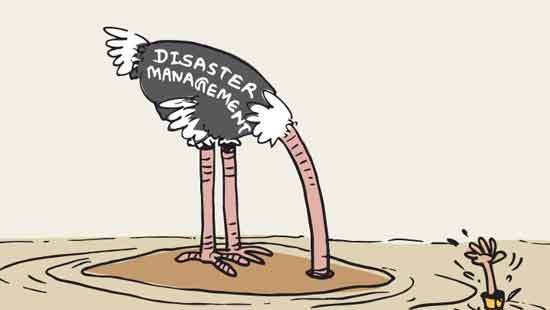
As Sri Lanka reels from the worst-ever natural disaster since the 2004 Indian Ocean tsunami, there are legitimate questions about whether a better organised pre-emptive disaster response could have saved many hundreds of lives lost to landslides and floods in the wake of Cyclone Ditwah.
Can we truly place a value on human life in Sri Lanka?
03 Dec 2025
1
286
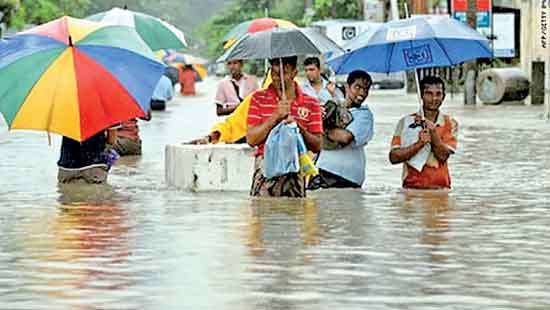
Judging by the conduct of our politicians and top administrators during major disasters in the recent past, the answer is a firm no. We had clear advance warnings before the 2004 Tsunami, yet over 30,000 Sri Lankans died because the system failed to act. The Easter Sunday attacks followed the same tragic script: credible alerts were ignored, and over 290 lives were lost. Most recently, despite more than 10 days of warnings, a severe storm devast

Tilvin Silva’s Encounter with the Tamil Diaspora in London Protests by a few sections had no impact
02 Dec 2025
0
8499
Everyone is climate vulnerable now Urgent need for better disaster relief
02 Dec 2025
0
1473
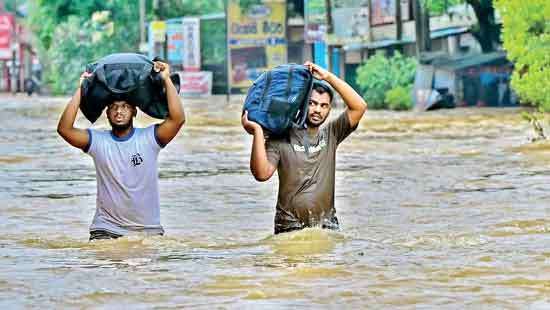
Cyclone Ditwah which created terror during four frightening days finally moved away. It made landfall on Wednesday, November 26. The death toll is now put at 300, with almost 200 missing, displacing 78,000 and causing enough destruction to bring back vivid memories of the 2004 tsunami.
Ditwah’s Fury Exposes...: Decades of Building Houses in Rain
02 Dec 2025
0
3177
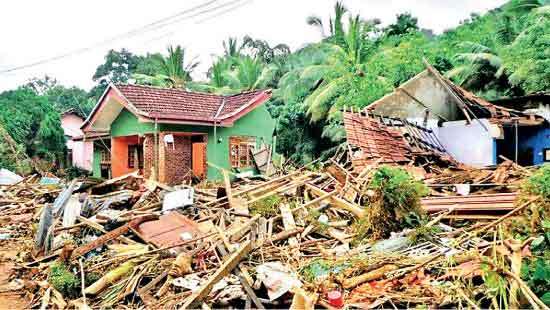
Concerning disaster management, successive Sri Lankan governments have behaved like monkeys attempting to build houses during a rainstorm, a damning but apt comparison for decades of reactive, haphazard crisis response.
From Easter Sunday to Climatic catastrophe: The Deadly Symmetry of Inaction in Sri Lanka
01 Dec 2025
11
2838
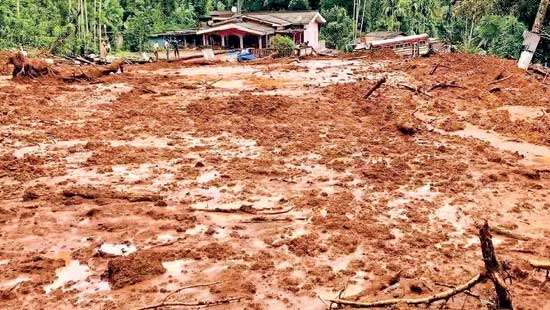
The recent climatic disaster that ravaged Sri Lanka, causing immense human suffering and resource crises, has tragically exposed a familiar and dangerous pattern of negligence, incompetence, and failure of the government within the corridors of power. This is not merely a natural calamity but a devastating echo of the 2019 Easter Sunday attacks, a man-made disaster enabled by a systemic failure to act on ample and timely intelligence. The fundame
Make free education more meaningful!
28 Nov 2025
3
458
The Supreme Court, in a judgment delivered on a Fundamental Rights petition filed by 66 graduates from foreign universities, observed that they too, are proud citizens of this country, just like those graduating from state universities. It is a landmark observation by the highest court of Sri Lanka. Education is a fundamental right of individuals. It is a universally acknowledged right. Whatever the background, anyone is entitled to pursue educa

Solidarity with Palestinians: UN Day demands justice despite NAM’s betrayal
28 Nov 2025
0
353
Tomorrow is the United Nations Day of Solidarity with Palestine. Diplomatically, it delivers a powerful message, urging the world community to take the measures necessary to end Israel’s occupation of Palestinian territory. Yet, in practice, the day passes without bringing any tangible change on the ground. In the early years, the Non-Aligned Movement (NAM) and Arab and Islamic states carried the Palestinian torch, burning with the zeal that fue
What is the purpose of massive drug hauls?
28 Nov 2025
0
345
Despite headlines claiming that the “value” of drugs detected in Sri Lanka being huge, prompting us to think there is such a big demand, the reality is very different. These massive hauls do not reflect local consumption. Sri Lanka has become a transit hub on one of the world’s busiest narcotics routes linking South Asia, East Africa,

Sri Lanka’s sugar paradox
27 Nov 2025
1
642
Sri Lanka has experienced the best and the worst when it comes to privatisation attempts. Privatisation affected many industries including the sugar industry which eventually led governments to import sugar, impose taxes and pushed farmers towards a crisis.