23 Jun 2025 - {{hitsCtrl.values.hits}}
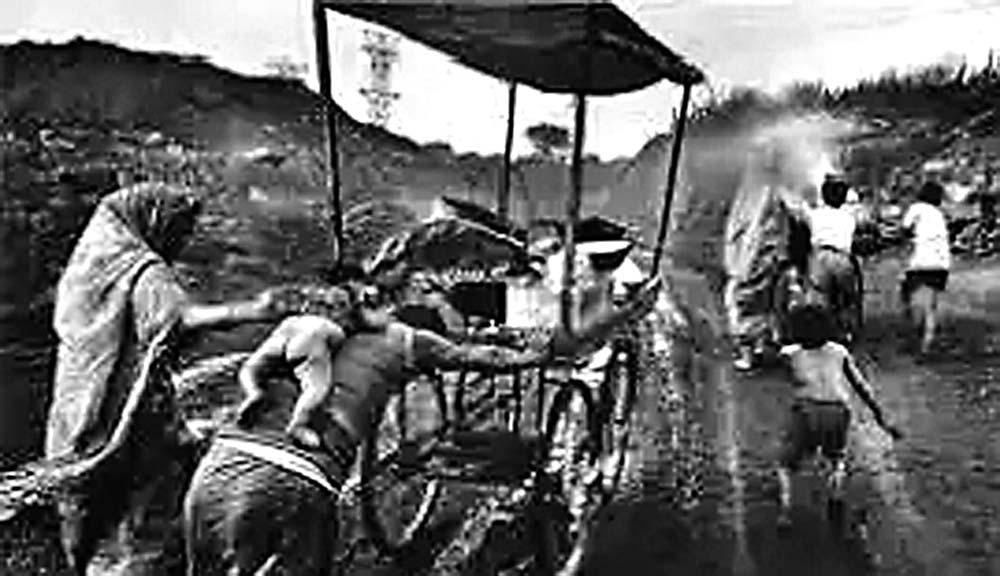
Reproduced are some of the best photographs
taken by Sebastiao Salgado
 In 1994 Salgado and his wife Lélia established their own exclusive agency named Amazonas Images
Being so widely travelled, Salgado had ample opportunity for picture opportunities
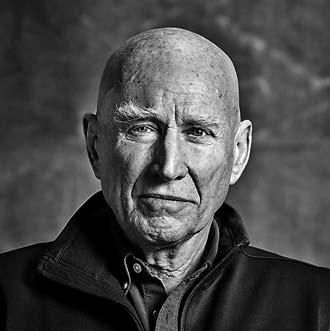
 The great Brazilian documentary photographer Sebastiao Salgado died on May 23, 2025 at age 81. After Mexico’s Manuel Alvarez Bravo (1902-2002), he’s the best known Latin American and third world photographer to achieved worldwide recognition.
|
The great Brazilian documentary photographer Sebastiao Salgado died at age 81 |
Photographers do not become household names like film actors. Whether they are art photographers, photojournalists or fashion photographers, some achieve fame within specific cultures and markets. In this context, Western photographers have headed the list because the West has dominated the global dissemination of information, art, culture, music and much else for two centuries or more.
If we take an example from Europe, Hungarian-born Robert Capa (an assumed name) became well-known for his Spanish Civil War photographs in the late 1930s, and his active career ended in Vietnam when he was killed by a landmine. Dmitri Baltermants (1912-1990) was a Soviet photojournalist famous for his coverage of the Eastern Front from 1941-45. But the nature of their societies and those organisations they worked for meant that Capa got more international exposure and travel/work opportunities. Arguably, he’s better known than Baltamants because of these factors, not because he was a better photographer than the latter.
Marketability a crucial factor
 This is not nitpicking, but an attempt to analyse why certain photographers (or practioners of other media) become better known than others. Mobility, social or otherwise, and marketability, are crucial factors in the composition of fame as much as talent and hard work. Endre Friedmann may have changed his name to the ‘easier’ Robert Capa to be more marketable in the Western world.
Capa died in Vietnam when he stepped on a landmine. Interestingly, there are two photographs which stand out among the millions taken during the Vietnam war – one, that of a Viet Cong suspect being summarily executed by a South Vietnamese general, was taken by American photographer Eddie Adams, While the other, that of a South Vietnamese shedding her burning clothes and running after a Napalm attack, was taken by South Vietnamese photographer Nick Ut. These are telling images of the horrors of war, as good as any that Capa took, but both Adams and Ut are much less well known than Capa, though both worked for AP, an American news agency with worldwide clout, and Ut won a Pulitzer prize for his photograph.
None of the above is meant to detract from the reputations of such talents, but simply an attempt to answer a question which has intrigued me for a long time. One can argue too, that it isn’t every Western photographer who becomes as successful and famous as Capa or, indeed, Salgado. (Adams and Ut can be taken as examples to support the above argument).
Being Western isn’t necessarily a recipe for success But, given market place imperatives and one’s ability to fulfil the basics of getting started off (equipment, training, motivation), the odds favour those in the Western hemisphere more than in the third world. Nor should we confuse material success at the market place with fame and artistic achievement. Tens of thousands of photographers from the developing world achieve financial success as commercial photographers, and a degree of fame within their communities and countries, but not worldwide fame as Salgado did (this is true of many Western photographers as well).
From what can be gleaned from biographical facts available in the internet, Sebastiao Salgado had the odds stacked in his favour from the start. He didn’t have to struggle like Capa or ‘go through the mill’ as starting photojournalists often have to. He discovered a latent passion and talent for photography instinctively when he was already working at a successful career.
An economist by training, Salgado borrowed his wife’s camera in 1971 while working in London for the International Coffee Organisation. During a trip to Africa, he took photos of workers and rural life. “Four days later I had an obsession,” Salgado later said. “A fortnight later, I had a camera of my own. Within a month I had a darkroom.”
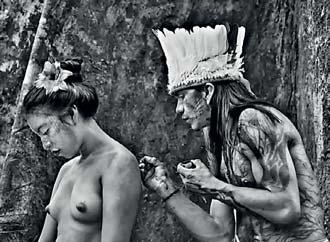
Very soon, he quit his well-paid job and started working for photo agencies such as Sygma and Magnum. Following internal disagreements with the latter agency, in 1994 Salgado and his wife Lélia established their own exclusive agency named Amazonas Images. Travelling to more than 120 countries, he photographed indigenous peoples, cultures, poverty and conflicts, including the invasion of Iraq.
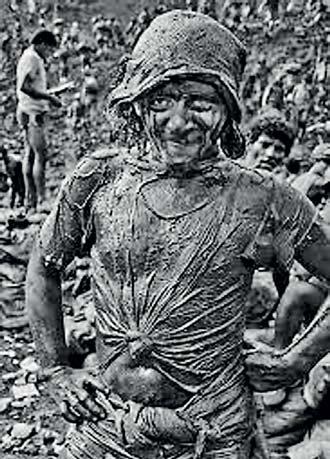 Salgado was sometimes accused of “exploiting or aestheticising misery”, an accusation he strongly refuted. “Why should the poor world be uglier than the rich world, he once asked an interviewer. “The light here is the same as there. The dignity here is the same as there. The flaw my critics have, I don’t. It’s the feeling of guilt … I came from the third world … The pictures I took, I took from my side, from my world, from where I come.”
Being so widely travelled, Salgado had ample opportunity for picture opportunities. An average photographer can travel as widely as Salgado did (more than 120 countries) and can still end up with thousands of average pictures. But an exceptional one like Salgado will take exceptional images. Not everyone who works for big name agencies becomes a great photographer. Magnum photographers were among the Paparazzi who chased Princess Diana that fateful night. Salgado would never have done that. He found indigenous people far more photogenic than celebrities. He celebrated the diversity of life in its most organic forms, at grassroots levels and humans unspoilt by multiple layers of technology and innovation. The celebrities he photographed lived quietly and shyly in the forests.
10 Jul 2026 31 minute ago
10 Jul 2026 1 hours ago
10 Jul 2026 2 hours ago
10 Jul 2026 2 hours ago
10 Jul 2026 4 hours ago