Reply To:
Name - Reply Comment
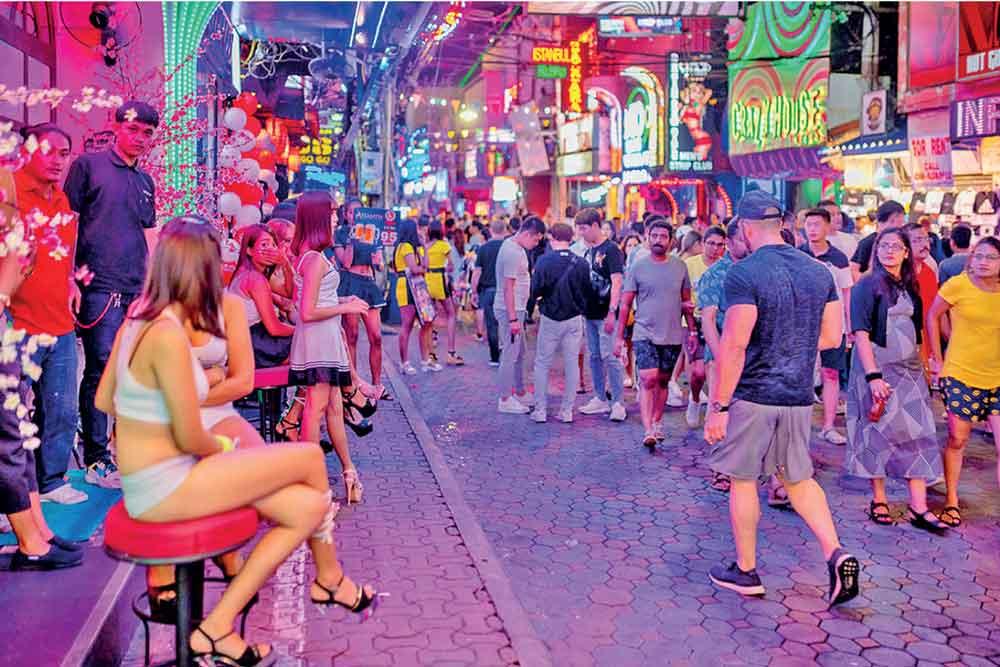
Thai attitudes towards tourists have become harder
 Tourism has two sides or images which complement each other like the two faces of a coin. First comes the visitors’ perception of a country and its people. Unless they like what they see, they won’t come.
Then there is the not-so-obvious other side of the coin – the local perception of what the tourists are like. If they don’t behave, they are not going to be welcomed.
Sri Lanka is generally well liked as a tourist destination. With few exceptions, visitors looking for authenticity and genuine warmth leave with a good impression, and make positive comments which encourage others to visit. Even when something goes wrong, people rarely making scathing comments on social media. A British couple who were robbed of nearly Rs. 4 million in cash and valuables recently were full of praise after the police caught the thief and recovered nearly everything within two days.
Looking at tourists from the islanders’ view point, complaints of bad or boorish behaviour by tourists is rare. Somehow, the island seems to bring out the visitors’ best behaviour. But elsewhere across Asia, from Thailand to Indonesia and the Philippines, it’s a different story. Social media is full of harrowing tales of boorish, drunken tourists and even those who commit murder.
In 2016, Australian Sara Connor and her British partner David Taylor were arrested in Bali for fatally beating Balinese police officer Wayan Sudarsa. Following separate trials in 2017, Taylor was convicted of group assault leading to death and sentenced to six years in prison, while Connor was sentenced to four years. Both were released and returned to their home countries by 2021, which looks like surprisingly mild sentences for committing murder.
Right now, a 45-year-old Australian named Simon Peter Carmen has been charged with the murder of a 17-year-old Thai girl. Her body was found stuffed into a suitcase.
But these are extreme cases. From Thailand to Bali, western tourists offend and outrage the local population by getting into drunken brawls, insulting locals, and disobeying the police. One video shows an Australian who rode a motorcycle without shirt and helmet, and with no driving license, arguing violently with the Balinese traffic policemen who stopped him.
Something deeply submerged in the psyche of some people, that they are somehow above the laws and conventions of the country they are visiting, seems to come out and demonise such people when they go abroad, especially to developing countries. Is it because of contempt for different cultures? Or contempt for different non-Western cultures? Would they behave in the same way in Greece, Italy or France?
Many of these videos are made by other Western tourists aware of the problem their compatriots are causing. As one vlogger put it: “The high season is starting, and the idiots start coming in.”
One Thai TV commentator put it this way: “Thailand is becoming the worst destination for the worst tourists.”
In Pattaya, one young westerner clad only in shorts, with upper body bare, is shown provoking several security guards outside a bar. He makes verbal fun of them and does mock kung fu moves, and pushes away all those who try to restrain him. Finally, he gets close to one security guard and tries to push him away; the guard punches him in the nose. As the stunned man lies on the street with a bleeding nose, a group of Thai bar girls run and attack him as he’d been insulting them before starting this brawl.
Tourists who refuse to pay restaurant bills and attack policemen who intervene are shown. A Thai man gets assaulted when he complains about the smoke to one tourist smoking weed on the beach; Several European couples are caught on video swimming nude in the sea at night and having sex. A Spanish man and his Peruvian girlfriend who had oral sex in the back of a tuctuc as it travelled city streets in daytime were caught, and deported. Compared to this, the video clip of a female tourist pouring two bottles of milk on her head inside a supermarket may seem mild.
It maybe that Thailand’s permissive bar culture where visitors can buy sex makes these people that ‘anything goes in Thailand.’ But this is not the case. It’s a country with a conservative, deep-rooted culture going back many centuries, and people value their way of life and customs deeply. Being disrespectful to the monarchy in public results in stiff jail terms. People from countries worshipping technology may develop a contempt for slower, less-than-cutting edge socio-economic systems. But culture isn’t about speed. It offers a space for people to slow down. Those unable to bridge this gap may express their bewilderment in contempt and violence.
But it isn’t just Western tourists who are getting a bad reputation. Thailand has far greater numbers of Chinese, South Korean and Indian visitors. There seem to be no complaints about the former two, except about South Korean drug gangs in Phuket, and various foreign nationals including Indians operating illegal businesses and scam operations. Indians are said to be running a crime network in Thailand. Thai authorities have started cracking down on them.
Indians in the limelight
Right now, it’s the Indian tourists who are getting criticised most for bad behaviour. This ranges from dancing in public streets (one viral video shows an Indian girl dancing in a street covering herself with a bath towel) to littering beaches and sleeping on them at night. There is a very large Indian presence in Pattaya, parts of which have been dubbed ‘Little India.’
Such behaviour is attributed to Indians not just in Thailand but all over the world, and there is a debate going on about this in India right now, even though one TV anchor dismissed the phenomenon by saying ‘all over the world, it isn’t just Indians who get blamed for this.’
Thailand received 2.49 million Indian visitors in 2025 and India was the fastest growing market for tourism in Thailand. Right now, Thailand is undergoing a tourism slump. The country expected 40 million tourists in 2026, but at current arrival rates, the number may not exceed 33 million. Even so, Thai attitudes have become harder towards foreign visitors. Indians were previously allowed 60-day visa free stays, but now this has been reduced to 30 days.
It isn’t just Thailand that is having problems with Indian tourists. A video from Vietnam shows an Indian family causing trouble inside an Indian-owned restaurant. The children start throwing paper towels all over. When staff try to restrain the children, the mother gives them more towels to throw, and the father is seen attacking one staffer.
Sri Lanka somehow seems blissfully immune to such problems. What we hear instead are occasional complaints by visitors, including cases of sexual molestation or complaints of three wheeler fares. Fortunately, such incidents are rare and the island’s good name remains intact.