30 May 2025 - {{hitsCtrl.values.hits}}
Sri Lankans spend around Rs. 520 million a day to purchase cigarettes, easily the most sellable item made of tobacco. When it comes to the health economic costs of smoking, the figure was Rs. 214 billion in 2019. This is according to statistics maintained by the Alcohol and Drug Information Centre (ADIC)
From all the days that we celebrate, ‘World No Tobacco Day’ takes great importance for many reasons. One reason could be that we must protect the fathers who indulge in smoking products made of tobacco. There are many who say that ‘World No Tobacco Day’ is more important than ‘World Mothers’ Day’ because the former can be used to save the lives of those addicted to tobacco and also millions of rupees. ‘World No Tobacco Day’ falls on May 31 (Saturday).
Such a day was advocated by the World Health Organization in 1987 to raise awareness about the harmful effects of tobacco use. This day is also used to underscore that there is a tobacco epidemic and spread the message that the diseases it causes are preventable.
This year, the theme for ‘World No Tobacco Day’ is ‘Unmasking the Appeal’ for products containing tobacco and nicotine. We know that deceptive tactics are used by tobacco companies to lure in new users and to retain old ‘customers’.
The fight to shield people from trying out tobacco containing products is more challenging than climbing the Everest Mountain range. Our ancestors state that during the British colonial times, cigarettes were thrown onto the ground, so that people could pick them up and try them out. They were given for free during these promotion rounds. Those who got hooked on cigarettes were trapped in a quagmire for life. As a result, smoking has continued for generations.
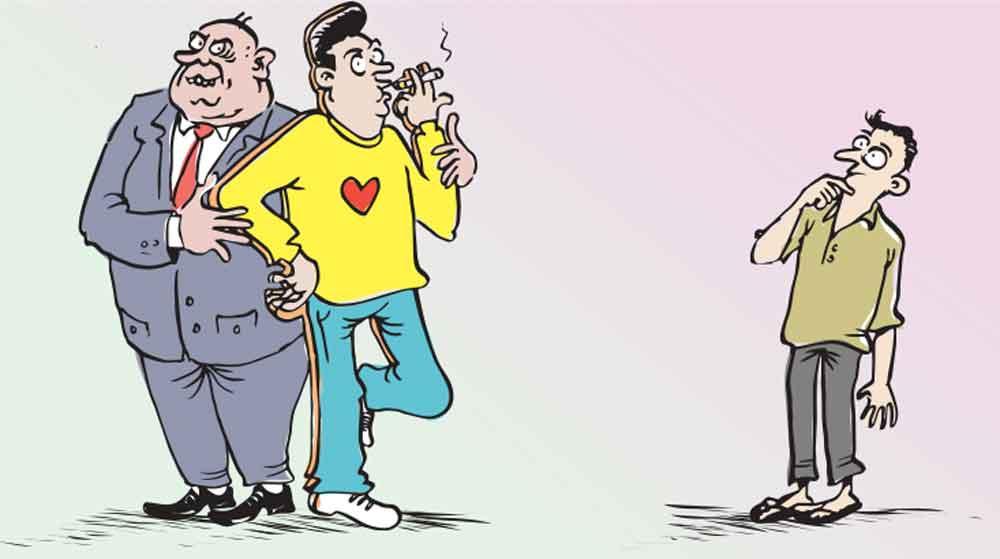
Then we remember the days when cigarette companies employed smartly dressed youth to stand in front of cinema halls and even schools to engage in ‘having a puff’. These scenes really had a ‘pulling effect’. And the worse thing was that there was no authority to stop such propaganda.
Now we have sizeable problems regarding tobacco smoking in our country. Sri Lankans spend around Rs. 520 million a day to purchase cigarettes, easily the most sellable item made of tobacco. When it comes to the health economic costs of smoking, the figure was Rs. 214 billion in 2019. This is according to statistics maintained by the Alcohol and Drug Information Centre (ADIC). Such official surveys are not done annually and regularly; hence, this makes the fight against tobacco use an enormous challenge.
Last year, the theme for ‘World No Tobacco Day’ was ‘Urge Youth to Step in and Speak out’ to urge the government to shield them (youth) from tobacco companies. The question many ask is whether efforts taken by governments to deter smoking is adequate in comparison to the propaganda machine that is at work and throwing its weight behind tobacco companies?
This new regime must take the research figure, which reveals that ‘Sri Lankans spend around Rs. 520 million a day to purchase cigarettes’. Why? This is because Sri Lanka is now rated as a country where the majority of its citizens cannot afford three square meals a day! This shows that Sri Lanka is a country where smokers of cigarettes have got their priorities mixed up.
There are of course success stories about smokers who give up and acquire health enhancing activities. They say that you have to lose your way in life before finding the path that takes you to the correct destination. Some unlucky ones never find their way through the smoke.
Some stubborn individuals cannot be reformed where their association with tobacco is concerned. This writer recalls one telling advertisement that is still rated as one of the best advertisements made to date. It reads ‘Cancer cures smoking’.
Let’s hope that governments globally take all the initiatives possible to unmask the appeal for tobacco related products and protect youth against propaganda used by tobacco companies.
10 Jul 2026 53 minute ago
10 Jul 2026 1 hours ago
10 Jul 2026 2 hours ago
10 Jul 2026 2 hours ago
10 Jul 2026 4 hours ago