14 Nov 2025 - {{hitsCtrl.values.hits}}
 During our early days in journalism, we looked to the media in Western democracies as our guide and mentor. Western media appeared as a fearless champion of truth, unlike the government mouthpieces that spread propaganda behind the Communist Iron Curtain during the Cold War. In workshops we attended, Western experts lectured us on the importance of truth-telling and journalistic ethics. Little did we realise then that Western journalism had its own imperialistic agenda.
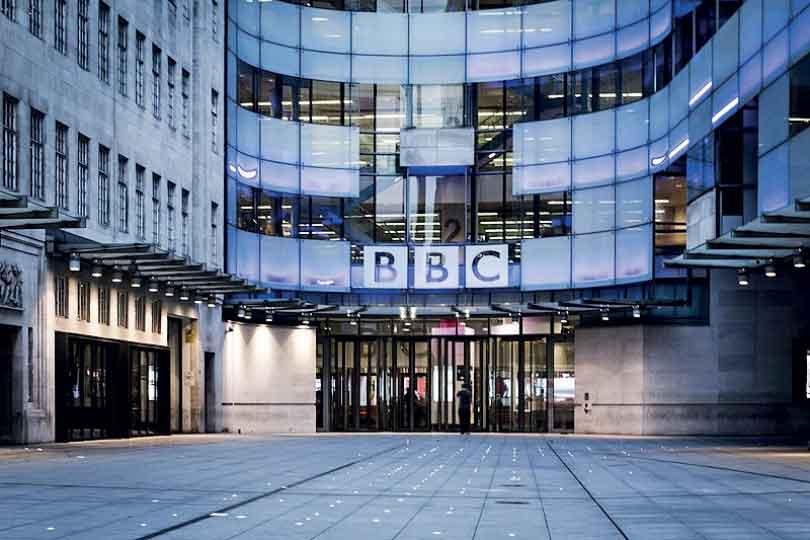
This week, the BBC — once admired by us for its fearless journalism — stood exposed for unethical content manipulation. Two heads rolled after a leaked memo revealed that Britain’s premier broadcaster spliced together two segments of Trump’s speech, separated by 50 minutes, to make it appear he had urged supporters to rebel in 2021. Furious, the US President threatened to sue the BBC for US$1 million and blasted its chiefs on his social media platform, Truth Social, as “very dishonest people”.
But the BBC’s unethical doctoring of content goes beyond the Trump speech. A leaked memo from BBC journalist Michael Prescott—a consultant to the Editorial Guidelines and Standards Board—alleged that the broadcaster’s bias extended to transgender issues and racism, which he described as one‑sided and ill‑researched, and most notably to its coverage of Israel’s war on Gaza.
The Prescott memo accuses the BBC Arabic service of anti-Israeli bias. Please note that the BBC regularly faces accusations from the Zionist lobby that its coverage of the Israeli-Palestinian issue amounts to anti-Semitism. Media critics see such accusations as a smokescreen to hide the BBC’s anti-Palestinian bias. Ask the BBC’s staff with integrity. They will tell you the truth.
The organisation is so profoundly pro-Israel that it prompted about 100 BBC employees to sign a protest letter this year and led to the resignation of the BBC’s Middle East specialist, Karishma Patel. The letter, also signed by some 300 media professionals and addressed to Director General Tim Davie—the man at the centre of the Trump speech manipulation—complained about the corporation becoming a mouthpiece for Israel.
The letter pummelled the BBC for its failure to reflect the reality of the situation in Gaza and argued that reporting “falls short” of editorial standards. “All too often it has felt that the BBC has been performing PR for the Israeli government and military. This should be a cause of great shame and concern for everyone at the BBC,” the letter said.
Patel decided to quit the BBC in disgust following the BBC’s perceived reluctance to cover the tragedy of five-year-old Hind Rajab as it was unfolding. Patel followed the Gaza Red Crescent’s constant updates as they tried to save her. “The BBC department I worked for chose not to cover her story that day. It was only after the Israeli military killed her, shooting the car 300 times with her inside, that our public broadcaster chose to say her name. And when it did, the article headline didn’t even make clear who had done what. It shied away from coming to a conclusion,” Patel wrote in her article for the London Independent newspaper.
She added, “The BBC failed Hind. And it has failed Palestinian children again in pulling the documentary ‘Gaza: How to Survive a Warzone’, following external pressure over a 13-year-old narrator being related to a deputy agriculture minister in the Gaza Strip, which is administered by Hamas.”
It is not the first time the BBC has been condemned for breaching its own code of ethics and editorial guidelines—rules it devised to guarantee accuracy, integrity, impartiality, and independence. Two scandals stand out for eroding its reputation: journalist Martin Bashir’s unethical tactics in luring Princess Diana into the explosive 1995 interview where she revealed her husband’s infidelity and the BBC report that contributed to the death of a senior British government scientist in 2003 after he was exposed as the source of a bombshell article alleging the government had lied to sell the war.
Yet the scandal-hit BBC still struts about the media world as a leading truth-teller, although the award-winning broadcaster has dwelt in deception and news manipulation, probably since its inception in 1922.
The BBC’s content manipulation fits the definition of yellow journalism—a 19th‑century concept in which sensationalism takes precedence over accuracy to increase revenue. At the height of yellow journalism in the United States, the New York Sun carried a series of stories based on the travels of renowned astronomer Sir John Herschel to the Cape of Good Hope in South Africa with his massive telescope. He was there to observe Halley’s Comet, but the newspaper claimed he discovered winged humanoids, hairy bat‑like beings called Vespertilio‑homo, on the moon. Dismissed in journalism studies as the “Great Moon Hoax”, the story can be lumped together with the BBC’s Trump speech distortion.
What the BBC did with Trump’s speech is nothing less than yellow journalism. It deserves a place in journalism curricula to teach students how news organisations that claim independence and truthfulness can distort reality. Although the BBC has still not revealed the motive behind its speech-editing mischief—an unethical practice now liberally embraced by many YouTube channels and even local mainstream TV stations—the bigger picture is an imperialist agenda, as is clearly evident in the BBC’s Gaza coverage.
A report published by the Centre for Media Monitoring in June mapped the BBC’s anti-Palestinian bias in minute detail. It found that despite Gaza suffering 34 times more casualties than Israel, the BBC gave Israeli deaths 33 times more coverage per fatality. The report adds that the BBC used emotive terms four times more for Israeli victims. It notes that BBC presenters shut down genocide claims in over 100 documented instances while making no mention of Israeli leaders’ genocidal statements, including Netanyahu’s biblical Amalek reference. The report also found that the BBC interviewed significantly fewer Palestinians than Israelis (1,085 vs. 2,350) on TV and radio, while presenters shared the Israeli perspective 11 times more frequently than the Palestinian perspective (2,340 vs. 217).
Now that a ceasefire has taken hold in Gaza—fragile though it may be—it is striking that no Western media outlet has sent journalists to gather first‑hand accounts of Israel’s scorched‑earth war on the territory.
Award‑winning Australian journalist and documentary filmmaker John Pilger, who died in 2023, was a strong critic of the BBC. Accusing the BBC of having a profound systemic bias, he argued that it functioned as a mouthpiece for the British government and Western establishment power rather than a truly impartial news source. He claimed the BBC presents “received establishment wisdom dressed as news.”
During the general strike in the late 1920s in Britain, “[Prime Minister Stanley] Baldwin … saw that if they preserved the BBC’s independence, it would be much easier for them to get their way on important questions and use it to broadcast government propaganda,” Pilger noted.
The one that seems the most independent is often the most manipulative. If a Western news outlet’s independence is too good to be true, be wary of its deception. Most Western media outlets are mouthpieces of Western imperialism and Zionism. And more often than not, the two work hand in hand.
The Western media practise embedded journalism. They prostitute journalism and produce bastardised news. No wonder some critics call journalists or media outlets that provide biased coverage or engage in agenda‑driven journalism presstitutes.
11 Jul 2026 47 minute ago
11 Jul 2026 1 hours ago
11 Jul 2026 2 hours ago
11 Jul 2026 3 hours ago
11 Jul 2026 4 hours ago