02 Aug 2018 - {{hitsCtrl.values.hits}}
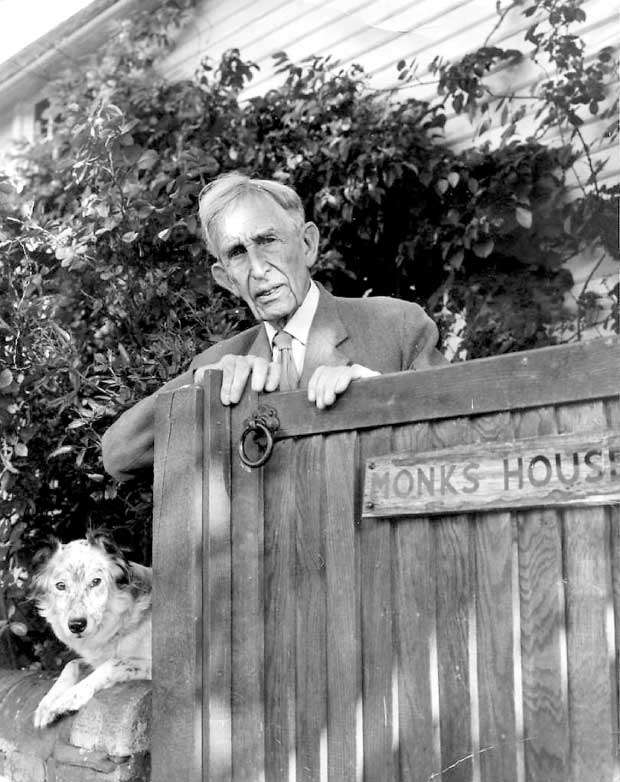

In the West, Leonard Woolf is celebrated as a political theorist, publisher, anti-imperialist, socialist, and of course, the husband to the far more popular Virginia Woolf. In Sri Lanka, he is celebrated for The Village in the Jungle, which has become something of a sacrosanct text in the eyes of our literati, so much so that any attempt made at reinterpreting it, in whatever form or media, is eventually criticised.
Lester James Peries discovered this for himself when his adaptation, warmly received in Europe, was castigated and virtually torn to pieces by representatives of the “English Department” here. It seems impossible therefore to assess a work like Village without assessing the time in which it was set, but two schools of thought have analysed the novel from two completely different standpoints. Before delving into that, however, let me offer my own thoughts on the novel, the author, and the politics behind both.
The Village in the Jungle was published in 1913, right before the First World War would break out. It predicted and preceded the period for which Woolf would best be known in the West, as the co-founder of the Hogarth Press, which introduced the works of the Bloomsbury Group as well as translations of Freud and Dostoyevsky to British society. When it first appeared, however, the novel did not make much of an impact on that society. Indeed, it was sidelined in favour of Woolf’s other works to such an extent that upon his death, his obituary did not even mention that he had written such a novel. All this merely adds to the belief, held by several Sri Lankan scholars, that Village was a milestone in English literature, because no other Englishman abroad, in the colonies, had authored such a work before. To assess this aspect of The Village in the Jungle in detail, it is necessary to compare it with E. M. Forster’s Passage to India.
When it first appeared, however, the novel did not make much of an impact on that society. Indeed, it was sidelined in favour of Woolf’s other works to such an extent that upon his death, his obituary did not even mention that he had written such a novel. All this merely adds to the belief
A Passage to India became over the decades a prescribed text for students of English literature, and it is prescribed in our schools and universities alongside Woolf’s novel. What distinguishes Woolf from Forster, however, is that the former was convinced that while British society was corrupting Indian society, the only salvation for Indians was the liberalism of Forster’s prototype in the novel, Mr Fielding. The rift between Fielding and the protagonist, Azeez, accelerates towards the end to such an extent that, in the final paragraph, the belittled Indian declares openly that only when the British leaves India’s shores will the two be able to become friends again. It is clear that while Forster accepted Azeez’s cynicism, he was also more accommodative of Fielding’s liberalism. And that was it: there was no attempt at bridging the rift, only at pointing out its inevitability in the face of hardening attitudes in both coloniser and enslaved.
Woolf was not a liberal in the conventional sense of that term. His experience as an outsider in his home country (being a Jew, married to a woman who had entertained anti-Semitic thoughts) would have convinced him that liberalism alone would not have done. The Village in the Jungle, in that sense, is an almost unconditional indictment on British society, on what it had done to Sri Lankan society. Forster does suggest that colonialism must be eradicated (after all Azeez is his protagonist), but he tempers it by implying that the route to be taken by those agitating for independence must be from imperialism to quasi-dependency, corresponding to a shift from Crown Colony to Dominion. When Fielding taunts Azeez by contending that Indians cannot govern themselves (“India a nation! What an apotheosis! Last corner to the drab nineteenth-century sisterhood! Waddling in at this hour of the world to take her seat! She, whose only peer was the Holy Roman Empire, she shall rank with Guatemala and Belgium perhaps!”), he is qualifying his sympathies with the Indian independence movement, which at the time of the publication of Passage was gaining strength.
It is an irony of fate that this route, from Dependency to Dominion, would come about, not in India, but in Sri Lanka, mainly on account of the fact that we did not have the kind of nationalist bourgeoisie which India had. “India a nation!” - hidden beneath the veneer of mockery there was the assumption that British civilization, despite its destructive character, was nevertheless the only civilization that could keep colonial societies from deteriorating into self-destruction. Forster’s great achievement in A Passage to India was his portrait of the English in their Crown Colony: drab, dreary, conventional, and at the end of the day, bigoted. In Mrs Moore he finds the ideal symbol for oneness and unity, and in Adela Quested he finds the ideal symbol for the transformation from love to condescension to hate with respect to the natives. But Forster’s biggest weakness was his inability to overcome the oneness of Mrs Moore’s vision, the unity and the holism which finds its antithesis in the Marabar Caves. The echo that Adela hears in the Caves is an echo that, as Regi Siriwardena once noted, was nothing more than a contrivance which inflates the novel with a “portentous hint of profundities.” As with Fielding’s liberal sympathies, so too then with Mrs Moore’s belief in oneness and Adela’s despair at not recognising that echo.
A Passage to India is a definitive novel of the 1920s (it was published in 1924). This was the decade of Sons and Lovers, Women in Love, Mrs Dalloway, and To the Lighthouse, which resorted to expressing despair as an act of liberation. It is despair and meaninglessness, therefore, that colours much of the plot in Passage, and where it coincides with Forster’s liberalism, the novel is at its weakest. There is nothing really concrete in the book. On the contrary, it stops short of a complete condemnation of the British system and instead ponders on the possibility of reconciliation between the two cultures - coloniser and enslaved - as a means of liberation for India. This sort of romanticism and moderation was better vented out, as I suggested before, in Sri Lankan society, and it needed for its success the absence of a nationalist bourgeoisie, the bourgeoisie which in India had prevented Azeez from embracing Fielding.
Just as there is nothing really concrete in Passage, there is nothing really abstract in Village. The only attempt at depicting abstractions in Woolf’s novel is the sequence of the pilgrimage to Beragama, and even there the sense of mysticism, so pervasive in Forster’s India, is tempered by the possibility that it is nothing more than a convenient deception. That Woolf understood this aspect of Sinhalese society, during his tenure in Hambantota, thus did not prevent him from indicting not just the colonial system, but also the myths and legends that had prevented the Sinhalese from transcending their own exploitative structures.
The British made use of those structures, particularly those relating to power relations between village elders and common folk, to tighten their grip. Consequently, there is no effort by Woolf to romanticise feudal society or the structures of power which had made up that society before the advent of the British
The British made use of those structures, particularly those relating to power relations between village elders and common folk, to tighten their grip. Consequently, there is no effort by Woolf to romanticise feudal society or the structures of power which had made up that society before the advent of the British.
However, at the same time, he did not turn his critique of feudal insularity into an excuse to celebrate British openness and liberalism. On the contrary, he seems to have inferred a link, rather than an opposition, between those two. As such he avoided the pitfall that Forster led himself to in Passage: critiquing the Empire without really delving into the processes that had facilitated the continuation of that Empire in the first place. Forster was a liberal cosmopolitan entranced by the myth of oneness and wholeness in Oriental society; Woolf was a realist who preferred neither of them.
What Woolf did not miss out was the fact that the rural savagery that horrified the liberal was the result of that same British presence. Consequently, he finds in both the grip of the colonial judicial system and the hegemony of Babehami and Fernando the two faces of British imperialism: exploitative, and rife with opportunity for the poor to be robbed and the rich to escape scot-free. This does not mean that Woolf was flawless, and in a later piece, I will explore what is missing in Village. For now, however, I am done.
04 Jul 2026 37 minute ago
04 Jul 2026 1 hours ago
04 Jul 2026 2 hours ago
04 Jul 2026 2 hours ago
04 Jul 2026 2 hours ago