 Moiz Mustafa
 Reply To:
Name - Reply Comment
By Moiz Mustafa
If you have had a fever in Sri Lanka during the monsoon, there is a reasonable chance someone in your house has asked whether it could be dengue. The honest answer from the people who treat it every day is that you cannot tell from home. Dengue and seasonal influenza look almost identical for the first two or three days, and that overlap costs lives every single year, not just during outbreak years.
Quick Answer:
Dengue is a mosquito-borne viral illness common in Sri Lanka year-round, with two seasonal peaks tied to the monsoons. Early symptoms (fever, headache, body aches) overlap heavily with flu, so doctors recommend a Full Blood Count test if the fever lasts more than two days. The most dangerous phase often begins after the fever breaks, not before. Prevention centres on removing standing water around the home every week.
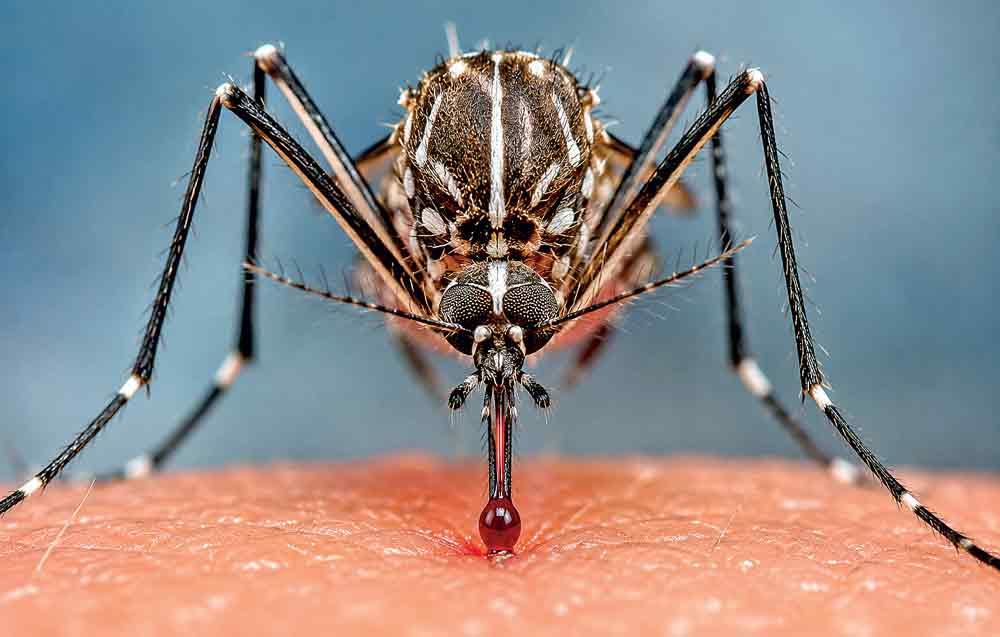
Dengue is a viral infection spread through the bite of an infected Aedes mosquito, the same family of day-biting mosquitoes responsible for chikungunya and Zika elsewhere in the world. In Sri Lanka, both Aedes aegypti and Aedes albopictus are established, native species, which is part of why the disease has become so difficult to eliminate. The virus cannot spread directly from person to person. It needs a mosquito to bite an infected person and then bite someone else days later, which is why breaking the mosquito’s breeding cycle, not just treating sick patients, sits at the centre of national control efforts.
Once bitten, a person typically develops symptoms within four to ten days. The illness usually runs its course in under a week, though recovery and the platelet count returning to normal can take longer. Most cases are mild to moderate. A smaller share progresses to severe dengue, which is the phase that requires hospital monitoring and, occasionally, intensive care.
Dengue or flu? How to actually tell the difference
With both illnesses circulating through much of the year in Sri Lanka, doctors raise a specific, recurring concern: families try to diagnose themselves at home, and get it wrong. Consultant Paediatrician Dr. Maheshaka Wijayawardena has been blunt about where that decision should actually be made.
“Dengue or influenza, decide it at the dispensary, not at home. If fever lasts more than two days, consult a doctor. Symptoms can overlap initially. A Full Blood Count helps to differentiate, “says Dr. Maheshaka Wijayawardena, Consultant Paediatrician.
The reasoning is straightforward. In the first one to two days, dengue and flu can both present as fever, headache, body aches and general fatigue. There is no reliable way to separate the two by symptoms alone in that early window, and a simple Full Blood Count test is what actually tells a doctor whether platelets are dropping or the blood picture looks like dengue rather than a viral flu. Waiting at home to “see how it goes” delays the one test that would have given a clear answer days earlier.
This overlap is not a rare coincidence. Influenza in Sri Lanka has its own seasonal peaks, typically from April to June and again from November to January, which lines up closely with the two periods when dengue transmission also tends to rise. Whatever year it is, this is the window where confusion between the two illnesses is most likely, which is exactly why health authorities run targeted surveillance in high-risk areas through both monsoon periods every year.
When fever is not the whole story
Get to a hospital or clinic immediately, even without a high fever, if you or someone in your care has any of the following:
These warning signs often appear as the fever is settling, not while it is at its highest. That is exactly when many families relax. Doctors in Sri Lanka are clear that this is the most dangerous moment in the illness, not the safest one.
If there is one message Sri Lankan health authorities repeat every single year, it is this: the settling of fever is not a sign of recovery in dengue. Plasma leakage and bleeding complications, the features that make dengue dangerous, tend to show up in the 24 to 48 hours after the fever comes down, not before. A patient who looks like they are getting better is sometimes entering the riskiest phase of the illness.

With fogging trucks a familiar sight in most Sri Lankan neighbourhoods at some point every year, it is worth being clear about what actually controls dengue and what only feels like it does.
Sri Lanka's health authorities have built their entire prevention message around one practical habit: spend thirty minutes a week looking for standing water around your home, school or workplace, and removing it. It sounds small. It is the single most effective thing an individual household can control, in any year, outbreak or not.
Thirty minutes, once a week
The household routine recommended by Sri Lanka's National Dengue Control Unit
Discard
Get rid of tins, cups, coconut shells, broken pots and old tyres that can collect rainwater, even in small amounts.
Cover
Keep water tanks, barrels, wells, buckets and toilet cisterns properly covered so mosquitoes cannot lay eggs inside.
Clean
Clear roof gutters, flower pot trays, refrigerator drip trays and bird baths, the small overlooked spots most homes forget.
Store
Keep reusable items like tyres, buckets and wheelbarrows turned over or under shelter so they cannot fill with rain.
Construction sites and schools deserve particular attention, since government inspections during control drives have repeatedly found mosquito larvae in a meaningful share of factory premises and construction sites checked, often among the highest contamination rates recorded anywhere in a given sweep. If you manage a worksite, a school compound, or even just a building under renovation nearby, a five-minute check after rain is far cheaper than the outbreak that follows if you skip it.
Dengue is not new to Sri Lanka, and it is not going away on its own. The virus was first confirmed in the country in 1962, and since 1989, it has become firmly endemic, meaning it circulates continuously rather than appearing in isolated incidents. Large epidemics tend to arrive every few years, usually when monsoon conditions, urban breeding sites, and population-level immunity to a particular dengue serotype line up at the same time.
The first confirmed island-wide outbreak, linked to two early dengue virus types, with 51 reported cases and 15 deaths over the period.
A major outbreak year with close to 9,000 cases, at the time one of the largest the country had recorded.
Cases climbed further to over 15,000, continuing a clear upward trend in scale and geographic spread.
Another large epidemic year, part of a pattern of recurring major outbreaks roughly once every few years.
The largest dengue outbreak in Sri Lankan history, with more than 186,000 reported cases nationwide.
A second severe epidemic year, with case numbers in the region of 100,000, reinforcing the country's recurring high-transmission cycle.
Dengue remains endemic across all districts of Sri Lanka, with two seasonal peaks each year tied to the southwest and northeast monsoons. See the current outbreak tracker below for this year's figures.
The Western Province, particularly Colombo, Gampaha, and Kalutara, has consistently carried the country's highest dengue burden, driven by dense population, rapid urbanisation, construction activity, and the kind of environmental conditions mosquitoes thrive in. That pattern has held across nearly every epidemic year on record, which is exactly why prevention guidance keeps returning to the same households and the same simple weekly habit, regardless of which year's case count is making headlines.
Where this year's outbreak stands right now
Health authorities have confirmed Sri Lanka's 2026 dengue outbreak has reached epidemic level, with national case counts crossing 50,000 for the year, the country's most serious season since the 2019 epidemic. The figures below reflect the most recent confirmed data at the time of publishing and will be superseded by later NDCU bulletins as the season develops.
50,000+ Cases confirmed nationally, epidemic level declared
28+ Deaths since January, including five children
~700 Patients a day straining hospitals, per late June figures
55% Of all cases concentrated in Western Province
Officials trace this season's surge to a specific trigger layered on top of the usual monsoon pattern. Dr. Prashila Samaraweera, a consultant community physician and spokesperson for the NDCU, has pointed to Cyclone Ditwah, which struck the island in late November, as the turning point. The storm left behind widespread debris, and that debris quietly became thousands of new breeding sites for mosquitoes.
"We noticed this increase after the cyclone. A lot of debris was in our environment, so we noticed a lot of mosquito breeding places, and our entomological indices were high from that time." — Dr. Prashila Samaraweera, Consultant Community Physician, National Dengue Control Unit
Dengue returns to Sri Lanka every year, and so do the same costly mistakes: mistaking it for flu, relaxing once the fever breaks, and missing the warning signs that matter most. None of the forces driving a bad season, whether it is a cyclone's debris or a heavy monsoon, are within an individual household's control. What is within your control is smaller and more immediate: checking your own surroundings every week, taking a fever seriously after two days instead of guessing at home, and watching most closely in the day or two after the fever breaks, not before it.
Sri Lanka's doctors have been saying the same thing for decades. Whatever year you are reading this in, it is still worth listening.
If you suspect dengue: Visit your nearest government hospital, MOH clinic or private dispensary for a Full Blood Count test, especially if fever has lasted more than two days. Do not rely on home remedies or wait for warning signs to confirm themselves.
What is the difference between dengue and flu?
In the first one to two days, dengue and flu can look almost identical, both causing fever, headache, body aches and fatigue. There is no reliable way to tell them apart by symptoms alone in that early window. A Full Blood Count test is what actually shows whether platelets are dropping or the blood picture matches dengue rather than a viral flu.
Is dengue more dangerous after the fever breaks?
Yes. The settling of fever is not a sign of recovery. Plasma leakage and bleeding complications tend to appear in the 24 to 48 hours after the fever comes down, not before, which is why monitoring should continue closely through this window even if the patient seems to be improving.
How can I prevent dengue at home?
Spend thirty minutes a week discarding containers that collect rainwater, covering water tanks and cisterns, clearing gutters and drip trays, and storing reusable items like buckets and tyres so they cannot fill with rain. The mosquito breeds in small amounts of still water, including clean water, not just dirty puddles.
Does fogging stop dengue outbreaks?
Fogging only kills adult mosquitoes briefly under the right conditions and does nothing to larvae already developing in containers and gutters. It is one part of a wider control strategy, not a standalone fix.
Does dengue only affect children?
No. National guidelines describe dengue in Sri Lanka as predominantly an adult disease, even though children remain a meaningful share of cases and severe outcomes. Adults who assume they are at lower risk are often the ones who delay getting tested.
How often does Sri Lanka have dengue epidemics?
Large epidemics have arrived roughly every few years since dengue became endemic, with major outbreaks in 2002, 2004, 2009, 2017 and 2019. The 2017 outbreak remains the largest on record, with more than 186,000 reported cases. Transmission follows a seasonal pattern tied to the two annual monsoons.