26 Nov 2025 - {{hitsCtrl.values.hits}}
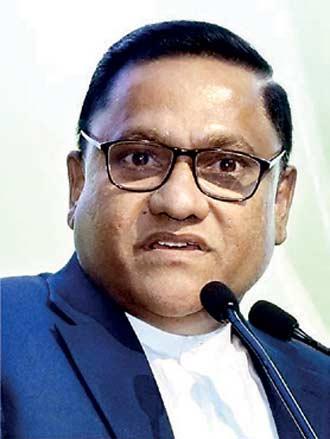
Vijitha Herath
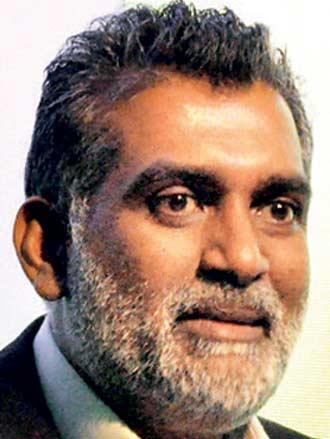
Buddhika Hewawasam
By Shabiya Ali Ahlam
Sri Lanka is on track for a record year in tourist arrivals, but revenue from the sector remains flat. Senior officials this week acknowledged the issue. However, they went on to attribute the shortfall to structural issues and exchange rate fluctuations, rather than admitting gaps in policy or strategy.
Tourism Minister Vijitha Herath and Sri Lanka Tourism Development Authority (SLTDA) Chairman Buddhika Hewawasam, speaking at the 60th Annual General Meeting of The Hotels Association of Sri Lanka (THASL) this week, offered industry stakeholders justifications and explanations, while concrete plans to convert rising arrivals into higher earnings remain absent.
Minister Herath was quick to link the rising tourist arrivals to the political and economic stability. “When there is good and strong stability in the country without ethnic conflicts, religious conflicts and riots, tourists will want to come to Sri Lanka,” he said.
Tourist earnings for October were recorded at US$ 186.1 million, barely above last year’s US$ 185.6 million, even as arrivals jumped to 165,193 from 135,907 a year ago. The mismatch, first evident in September, has drawn criticism from industry stakeholders.
“The facts were presented, and even though we increased the quantity, the income did not increase proportionally. There is a truth to that. There are several reasons for that. In addition to the facts presented, there is another one.
“The fluctuation of our dollar has also affected this. In addition to that, when calculating it, it was said that we would spend US$ 171 per day, and today it has become US$ 148. Then the purchasing power has changed, the inflation rate is also a factor that affected this calculation, and in the end, when you calculate it, it shows a decrease,” Herath explained.
The minister emphasised that the private sector carries the main burden of driving tourism. “It is not the Ministry of Tourism that brings tourists, but private institutions, you, our travel agencies, and hotel owners. You are the one who is doing the main heavy lifting related to this.”
Herath outlined infrastructure and investment initiatives, including the expansion of Katunayake Airport, development of domestic flights, and allocation of land for new hotels. These initiatives remain at an early stage, and the government’s nation branding campaign, aimed at attracting high-spending tourists, is not expected to be launched until next year. “We have made a rough plan. We will develop it, get it approved by the Cabinet, complete the procurement process for providing the necessary financial facilities for it, and start it. We hope that we can start a nation branding campaign by the first quarter of next year,” he said. Similarly, SLTDA Chairman Hewawasam also highlighted structural and external challenges affecting tourism revenue.
“One of the key issues in the low revenue we must consider is the difference in exchange rate conditions between 2018 and 2025.
These shifts have had a direct impact on our revenue calculations,” he said.
He also stressed that marketing alone will not solve the problem without a clear brand strategy. “This is why, instead of focusing solely on a ‘global marketing campaign,’ what Sri Lanka truly needs is a global brand-positioning campaign. Marketing alone is not enough; it must be anchored in a strong, clear brand strategy.” Hewawasam flagged uneven accommodation distribution and poor accessibility as major barriers.
He noted that the primary reason is an uneven distribution of accommodation. While Colombo alone accounts for nearly 16,000 rooms, several districts with strong tourism potential have fewer than 1,000 rooms, and in some cases under 800. “These shortages stem largely from poor accessibility.” He asserted that efforts are underway to fast-track proposals for new properties, which are expected to be cleared before the end of the year.
“With improved accessibility and more accommodation across districts, we expect new tourism zones to open up from next year,” Hewawasam said.
He also noted that efforts must be made to stabilise tourist arrivals at around 150,000 per month to strengthen revenue and ensure sustainable growth in the tourism sector. While peak-season arrivals have exceeded 180,000, accommodation shortages in districts outside Colombo limit the sector’s potential.
He noted that Improving accessibility and transport links is also a priority, alongside expanding alternative source markets such as Saudi Arabia, South Korea, and Eastern Europe.
Pix by Nimalsiri Edirisinghe
07 Jul 2026 2 hours ago
07 Jul 2026 3 hours ago
07 Jul 2026 3 hours ago
07 Jul 2026 3 hours ago
07 Jul 2026 4 hours ago