12 Jul 2025 - {{hitsCtrl.values.hits}}
By Nishel Fernando
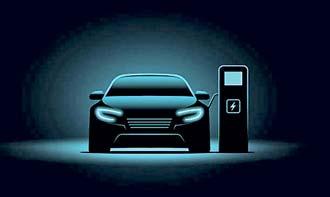 A significant shift is underway in Sri Lanka’s newly reopened vehicle market, with consumer demand increasingly favouring electric models.
This trend is reshaping the competitive landscape, giving a substantial advantage to the early movers in the electric vehicle (EV) space, according to a July 2025 report by HNB Stockbrokers.
Spearheading this charge is BYD, distributed by John Keells Holdings (JKH), which has quickly captured a significant share of the market for both cars and SUVs since the import restrictions were lifted on February 1, 2025.
After a nearly five-year hiatus on vehicle imports, the market has seen a steady rise in registrations, with a notable concentration of initial activity in the passenger segment. While the market is fragmented, with a mix of listed and unlisted dealers, the initial data points to a strong preference for affordable EVs.
From March to May 2025, a total of 49,095 vehicles were registered across all categories. Within the brand-new passenger vehicle segment, the trend towards electrification is particularly stark.
BYD has emerged as a formidable player, securing a dominant position in the brand-new SUV and crossover segment. The company accounted for 72 percent of this market, with 1,204 units registered between March and May. BYD Atto 3, a compact electric SUV and the mid-sized Sealion 6 have been standout performers, with 677 and 526 registrations, respectively.
In the brand-new car segment, while Perodua led with 60 percent of the market share (352 units), BYD’s rapid growth signals a shift in consumer preference. BYD captured 30 percent of the market with 178 units sold. The popularity of its models like the electric hatchback BYD Dolphin (78 units) and fully electric mid-sized sedan BYD Seal (95 units) underscores the growing interest in EVs. This acceleration in EV registrations, especially from BYD, may indicate a potential erosion of the legacy dominance of traditional internal combustion engine (ICE) models in the medium term.
The report by HNB Stockbrokers anticipates that JKH will be a key beneficiary in the vehicle retail space, likely taking a substantial market share from the legacy brands.
The emerging trends are actively reshaping the competitive landscape. Browns & Company (BRWN) has strategically entered the value end of the EV market, targeting the budget-conscious consumers with brands such as BAW and Wuling, offering prices from Rs.4.5 million. This move positions BRWN as a significant contender in the budget vehicle segment, particularly against the traditional ICE vehicles.
DIMO is preparing to launch TATA’s electric vehicle line-up, which includes compact hatchbacks and entry-level SUVs. The report indicates that DIMO could become a credible challenger, if its pricing and availability meet the market expectations. However, it also highlights that TATA’s EVs have a limited track record outside of India and will face strong competition from the feature-rich Chinese models.
United Motors, representing Perodua, is experiencing growing pressure. Despite Perodua’s brand familiarity, its ICE-only product range is susceptible to being replaced, particularly in the sub-Rs.10 million price segment, where the EVs are becoming more cost-effective.
The legacy luxury brands, distributed by companies such as DIMO (Mercedes-Benz) and Access Engineering (Land Rover/Jaguar), may face difficulties in achieving volume growth, due to the current tax structure, which has substantially increased the prices of luxury vehicles.
The sub-Rs.25 million segment, which constitutes the bulk of passenger vehicle demand, has become highly competitive with a wide variety of models, especially the EVs. The report highlights that the Rs.10-20 million range is currently the most competitive band.
This structural shift towards EVs is being driven by the advances in battery technology, lower operating costs and a growing list of features that make them an attractive proposition for the urban consumers.
08 Jun 2026 3 hours ago
08 Jun 2026 3 hours ago
08 Jun 2026 3 hours ago
08 Jun 2026 3 hours ago
08 Jun 2026 5 hours ago