Reply To:
Name - Reply Comment

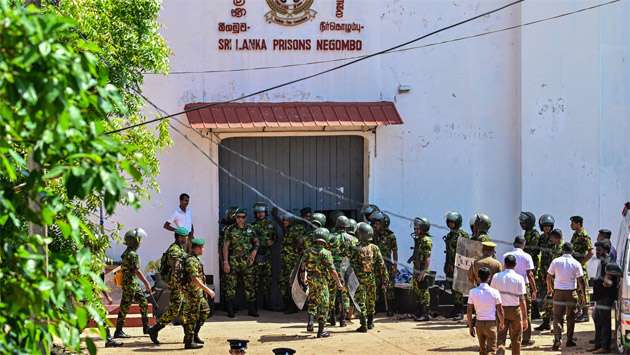
The idea of national security has greatly expanded from solely military threats and border protection to include political stability, economic strength, and social health. File photo
 The recent statement by the Secretary of Defence that underworld activities do not pose a threat to national security is a point of contention that demands a rigorous and fact-based examination. This perspective, which seemingly compartmentalises criminal activity
from the broader security framework,
is at odds with the modern understanding of national security. The evidence, both anecdotal and statistical, points to a clear and direct link between the proliferation of organised crime and the erosion of a nation’s security, stability, and prosperity.
The concept of national security has evolved significantly from a narrow focus on military threats and border defence to a comprehensive doctrine that encompasses political stability, economic resilience, and social well-being. In Sri Lanka, a nation that has endured decades of internal conflict, the definition of national security is particularly sensitive and multifaceted. While the country’s defence establishment has successfully neutralised separatist terrorism, a new and insidious threat has been steadily growing from within: the underworld. Recent events, marked by a surge in daylight killings, drug trafficking, and a general climate of fear, have brought this issue to the forefront of national discourse.
The Social Fabric: A Foundation Under Siege
At its core, national security is about the safety and security of a nation’s citizens. The primary impact of underworld activities is the direct and tangible threat they pose to the public. Daylight killings and drive-by shootings are not just isolated incidents of criminal rivalry; they are acts of terror that create a pervasive sense of insecurity. Parents are consumed with worry for their children’s safety, fearing they may become victims of either stray bullets or the drug trade’s sinister grip. This fear has tangible consequences, as some families, seeking a safer environment, choose to migrate. This “brain drain” of skilled and educated individuals represents a significant loss of human capital, which is a vital component of a nation’s long-term security and development.
The underworld’s influence extends far beyond street-level violence. It corrodes the very foundation of social trust and order. When citizens feel that the rule of law is weak and that criminal elements operate with impunity, their faith in state institutions, particularly the police and judiciary, begins to waver. This is exacerbated by reports of political patronage and the alleged infiltration of state security institutions by criminal elements, as even admitted by high-ranking officials. A society where criminals are perceived to have political protection is one that is vulnerable to instability and social unrest. This social vulnerability is a critical component of national security.
Economic Consequences: Undermining Prosperity
The notion that underworld activities are purely a matter for public security and have no bearing on national security fails to account for their profound economic impact. A stable and peaceful environment is a prerequisite for economic development. The underworld’s influence on the economy is felt in several key areas:
Strategic and Geopolitical Implications
The argument that underworld activities are not a national security threat also overlooks the potential for these criminal networks to be exploited by external actors. In an increasingly complex geopolitical landscape, criminal organisations can be used as proxies to destabilise a country. They can be co-opted to carry out acts of sabotage, gather intelligence, or create a climate of chaos that serves the interests of foreign powers. The links between some underworld figures and international crime syndicates, particularly in the realm of drug trafficking, suggest a transnational dimension to this threat that cannot be ignored.
Furthermore, the narcotics trade is often intertwined with other transnational security threats, including terrorism. The UNODC has noted the potential for drug trafficking to fund terrorist activities. While Sri Lanka’s main terrorist threat has been militarily defeated, the possibility of new extremist groups emerging, or old ones re-emerging and using drug money to finance their operations, is a clear and present danger that falls squarely within the purview of national security.
The Need for a Comprehensive Strategy
The statement that underworld activities are not a national security threat is not only misleading but also dangerous. It fosters a narrow and inadequate response to a multifaceted problem. A holistic and effective approach to this issue requires a paradigm shift in thinking. The problem cannot be solved by law enforcement alone; it requires a comprehensive strategy that addresses the social, economic, and strategic dimensions of the threat. This strategy must include:
In conclusion, to deny the link between underworld activities and national security is to ignore the lessons of history and the realities of the modern world. The terror instilled in citizens, the erosion of social cohesion, the undermining of the economy, and the potential for exploitation by foreign and extremist actors all demonstrate that the underworld poses a fundamental threat to Sri Lanka’s security. The country cannot afford to be complacent; a robust and integrated national security strategy that recognises and confronts this challenge is not merely desirable, it is essential for a peaceful and prosperous future.
The writer is an Infantry officer who served the Sri Lanka Army for over 36 years, a former Security Forces Commander of the Wanni Region and Eastern Province, and he holds a PhD in economics. He can be reached at:[email protected]