Reply To:
Name - Reply Comment
Government ministers are being flayed on social media for actions that run counter to the positions they professed while in the opposition before last year’s presidential and general elections. The left-leaning, JVP-led political force, the National People’s Power (NPP), was once a harsh critic of the International Monetary Fund (IMF). Yet, upon assuming office, the NPP decided forthwith to keep the IMF programme intact as initiated by the previous administration — a decision that carries merit under the circumstances.
Still, the NPP government faces fire for the current stark contrast with its earlier rhetoric. Even countries with communist rule, such as Vietnam and China, now follow economic models driven largely by market forces; only their governing structures retain communist hallmarks. The NPP, willingly or otherwise, is now pursuing an economic path which is not markedly different from that followed by successive governments since 1977.
On another front, the NPP leadership is in trouble over their recently published asset declarations under the Anti-Corruption Act. They long projected themselves as volunteers living a hand-to-mouth existence, portraying a movement with no wealth to flaunt. People, weary of glamorous politics, found that image appealing. But with details of their assets now in the public domain, a clear mismatch has emerged between rhetoric and reality.
There is nothing wrong in possessing wealth, so long as it is not ill-gotten. Yet when words and deeds diverge, public trust inevitably erodes. The opposition has seized on this contradiction, and the NPP today finds itself a victim of its own rhetoric, receiving a volley of blows from all sides.
It offers lessons for parties and individuals across the spectrum. In their eagerness to capture power, lies are told and reality suppressed if disadvantageous. Once in power, their deeds differ from words, a common paradox in democratic politics. Promises are made with little or no understanding of practical difficulties involved in delivery on the ground. A party can conceptualise anything for implementation with good intentions and desire for the greater interests of society. Still, progress in implementation depends on a myriad of other factors. For a government, policy implementation depends on efficiency of bureaucracy, institutional support, global circumstances, international cooperation etc.
The current government is facing this dire predicament today. It is unable to deliver what it promised at a quick pace because the system does not move in the way it expects. Or else, it lacks finesse in getting things done.
Especially, economic promises have met the hard edge of implementation. They have proved even more challenging. The NPP promised sweeping salary increases for public servants and a broad expansion of social-welfare programmes. The government took action in some aspects. But an economy still struggling with high debt, tight IMF targets and fragile revenues simply cannot finance such largesse in the way it expects without risking a return to crisis.
These disappointments are not solely the fault of the government’s political will. They highlight the structural constraints that confront any administration in a developing democracy. Policy execution depends on a capable and motivated bureaucracy, sound institutions, and, above all, fiscal space.
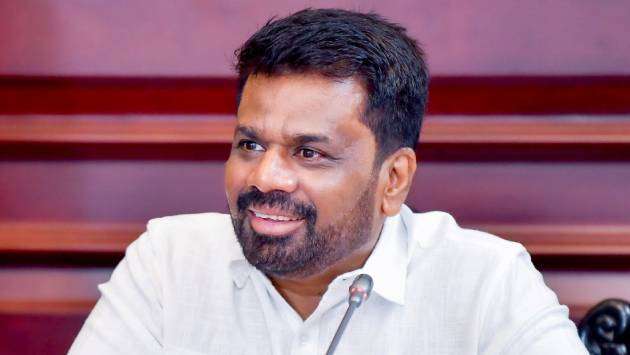
Now, President Anura Kumara Dissanayake has promised to end corruption and fraud. Rhetoric alone will not address the issue. Of course, wrongdoers should be booked. Yet, it won’t suffice; the systems should be developed, ironing out loopholes that pave the way for indulgence in corruption by politicians and bureaucrats.
Though eradication of corruption is fundamental for the forward march of any society, it alone will not bring economic prosperity. Corruption can be symptomatic of many social ills. So, the fight against it must be multifaceted, the World Bank says. The government should ensure that economic growth picks up faster. It should expend more and more energy in this sphere as otherwise, generation of employment and livelihood opportunities cannot be achieved satisfactorily.
The country’s economic performance in 2025 presents a mixed picture. The economy grew by 4.8% in the first quarter. However, the World Bank projects a moderation to 3.5% growth for the year due to various reasons including global headwinds.
Winning power is one thing; exercising it effectively is another. Elegant visions and well-meaning pledges may attract voters, but their realisation depends on factors such as building institutional support, securing international aid, improvement of investment climate etc. Any mismatch between aspiration and realisation can be politically fatal. People installed the current government with high expectations. The higher the expectation, the greater the disappointment. In politics, this saying is painfully evident.