Reply To:
Name - Reply Comment
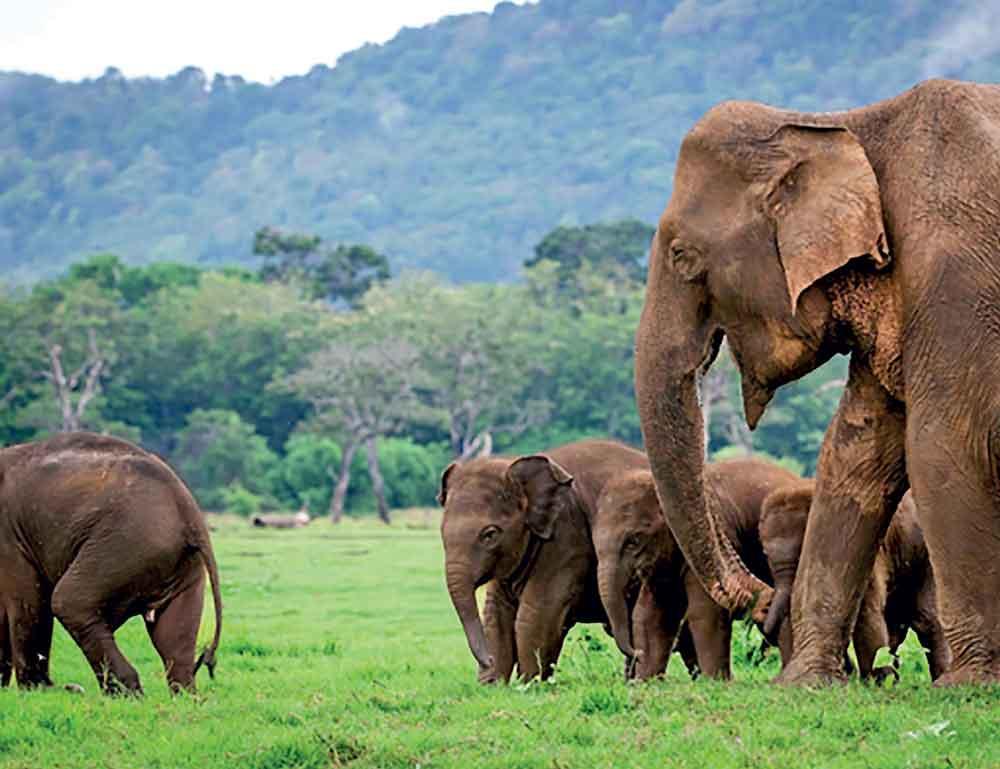
The low-profile giant of the wilderness: the Asian elephant
 Asian elephants are the quiet giants of the forest, but their most powerful tool is invisible. They have the strongest sense of smell of any land animal, far beyond that of dogs or humans. This super sense helps them find food and water, recognise friends and rivals, detect danger, and even make choices that require a kind of abstract thinking. Scientists are now beginning to uncover just how extraordinary this ability is. What they are finding reveals not only the hidden lives of elephants but also offers lessons for humans in conservation, technology, and coexistence.
Built to Smell
The elephant’s trunk is the most advanced multi-tool in nature. With more than 40,000 muscles, it can lift tree trunks, pluck a single blade of grass, or gently explore another elephant’s face. But it is also a long, flexible nose, packed with olfactory receptors.
Inside, an elephant’s nasal cavity contains millions of receptor cells tuned to an enormous variety of odours. Scientists studying elephant DNA have found they possess around 2,000 different types of olfactory receptor genes, more than in any other mammal. By comparison, dogs have about 800, and humans only 400. This genetic wealth gives elephants a detailed chemical picture of the world around them.
The brain supports this gift. The olfactory bulb, which processes smell, is exceptionally large in elephants. Weighing around five kilograms, the elephant’s brain is the biggest of any land animal, and a substantial portion is dedicated to smell. In many ways, elephants live in a universe of scents as much as humans live in one of sights.
Smelling With the Mind
The power of smell goes far beyond simple detection. Experiments show elephants can distinguish between vast numbers of odours, even when the differences are tiny. In one study, elephants identified the smell of two closely related plant species with near-perfect accuracy.
They can also use smell to solve problems. In Japanese research, elephants were asked to choose between two buckets, one containing more food than the other. The only clue was the smell. Time and again, elephants chose the bucket with the larger amount, suggesting they could perform a kind of mental calculation through scent alone.
Smell helps elephants communicate, too. They release chemical signals through urine, faeces, and secretions from glands near their eyes. Other elephants read these signals to understand whether an individual is fertile, stressed, dominant, or unwell. For males, detecting the smell of a female in heat can trigger long journeys across landscapes.
Survival by Scent
The survival value of an elephant’s sense of smell is clear in the wild. African savannah elephants have been observed avoiding areas seeded with landmines. In Angola, herds navigating former battlefields appear able to detect explosives buried underground, a life-saving skill shaped by evolution to recognise dangers in their environment.
In Sri Lanka, Asian elephants rely on smell to locate water during droughts, detect predators such as leopards, and find food across vast distances. They can detect the scent of ripening crops such as rice, wheat, or corn, as well as fruits on mango trees and other native plants nearing maturity. As these foods approach harvest, they produce chemical compounds and emit distinct aromas, signalling that they are ready to eat. This powerful olfactory ability, while essential for survival, often brings elephants into conflict with farmers, as they are naturally drawn to these high-calorie food sources.
Reading Human Scent
Remarkably, elephants can even read human identity through smell. In Kenya, researchers discovered that elephants distinguish between the scent of Maasai men, who sometimes spear elephants, and Kamba men, who do not pose the same threat. When exposed to clothing worn by Maasai men, elephants reacted with fear, bunching together defensively and retreating. The same reaction did not occur with the Kamba scent.
This shows how deeply elephants depend on their noses, not only for natural survival but also for navigating the complex pressures of a world increasingly dominated by humans.
Lessons for People
Understanding the elephant’s olfactory world is not only about appreciating nature’s wonders. It has practical applications. In conservation, scent-based deterrents, such as chilli-based barriers, have been tested to keep elephants away from crops without harm.
Scientists also see potential for elephants in security and safety. In controlled trials, an elephant named Chishuru successfully detected explosives hidden in containers, outperforming trained sniffer dogs.
This raises possibilities of working with elephants in areas such as detecting landmines or explosives, though ethical considerations remain about using wild animals in such roles.
The elephant’s nose also inspires technology. Engineers are developing artificial “electronic noses” that mimic biological smell detection. Studying how elephants process scent may help design more accurate devices for detecting explosives, diseases, or environmental hazards.
Sri Lanka’s Tragic Paradox
Yet there is a tragic paradox unfolding in Sri Lanka. Elephants, armed with the most powerful sense of smell of any land animal, are falling victim to a cruel device known as hakka patas. These are illegal, homemade explosives hidden inside food such as papaya or pumpkin. When bitten, the pressure ignites the mixture inside, blasting the elephant’s mouth and causing horrific injuries that often lead to a slow death.
A hakka patas, often called a ‘jaw bomb,’ is usually made from readily available materials such as gunpowder, gravel, or metal scraps, often sourced from fireworks. The explosive charge is packed into fruit or vegetables, tricking elephants into thinking it is food.
The practice was originally intended to kill wild boar, but has become one of the leading causes of elephant deaths in Sri Lanka.
Statistics show that hakka patas are responsible for about 20 per cent of all recorded elephant deaths in Sri Lanka.
The real tragedy lies in how these devices exploit the elephant’s greatest gift. Scientists point out that elephants are not failing to smell danger. Rather, their foraging instincts are cleverly manipulated. The explosive is disguised with scents that are naturally attractive, such as ripe fruit, creating an olfactory trap that even the most sophisticated nose cannot resist.
The rise of hakka patas reflects the wider crisis of human–elephant conflict. As forests shrink and elephants lose access to natural food and water, they turn to farmland, raiding crops and clashing with people. For rural families already struggling, elephants are seen not as majestic animals but as threats to survival. Hakka patas is the cruel outcome of this escalating struggle.
Beyond Fences and Firecrackers
Solving the problem requires more than fences, trenches, or firecrackers. These measures may provide temporary relief, but do not address the root causes. What is needed is a combination of science, community participation, and firm enforcement of the law.
On the scientific front, a deeper understanding of elephant chemosensory behaviour can help design humane deterrents. Experiments with chilli smoke, bee pheromones (especially from African bees ‘killer bees’) and even crop switching are showing promise in discouraging elephants from entering farmland without causing them harm.
Community-based approaches are equally important. Farmers need support to protect their livelihoods through compensation schemes, alternative farming methods, or new technologies that make coexistence possible. At the same time, robust law enforcement is essential to halt the manufacture and use of hakka patas. Without strict action, these devices will continue to proliferate, endangering elephants and people alike.
A Future Written in Scent
The more we learn, the clearer it becomes that elephants live in a world built not on sight or sound, but on scent. Their noses help them survive, communicate, and even think in ways humans are only beginning to understand.
For people, this knowledge is more than fascinating science. It offers practical lessons for coexistence and survival, from protecting crops in Sri Lanka to designing new safety technologies. At the same time, it warns us of the cost of ignoring these lessons. In Sri Lanka, the use of hakka patas illustrates how human actions can turn an elephant’s greatest strength into its most tragic weakness. Although Sri Lankan elephants survived the landmine era in the northern and eastern regions, they now often suffer serious injuries. It is remarkable that an animal renowned for its sense of smell, with an olfactory system far superior to that of dogs and humans, can be so consistently deceived by a rudimentary, scent-based trap.
Protecting elephants means safeguarding the invisible world of scent that has shaped their evolution for millions of years. If we are wise, we will act now, not only to secure their survival, but also to ensure a future where people and elephants can share the land in peace.
What the country urgently needs is not another reactionary committee or a symbolic policy, but a bold, cohesive, science-based Masterplan for Wild Elephant Conservation and Management. This national roadmap should go beyond human–elephant conflict mitigation to focus on population viability, gene pool preservation, tusker protection, and ecological connectivity. It should integrate land-use planning, scientific monitoring, and ethical wildlife management. Above all, it must balance the safety and livelihoods of rural communities with the survival of Sri Lanka’s largest terrestrial mammal.
The writer is a telecommunications engineer turned environmental and wildlife conservationist, as well as a documentary filmmaker focused on wildlife. His core focus lies in driving policy-level changes needed to strengthen environmental and wildlife conservation in Sri Lanka.