Reply To:
Name - Reply Comment
Sri Lanka acquired its dominion status exactly 77 years ago from the British. Today, Sri Lanka is commemorating this occasion as its Independence Day. During the administration of Ms. Sirima Bandaranaike between 1972 and 1977 we commemorated the ‘Republican Day’ on May 22 instead of Independence Day, while February 4 just passed as an ordinary day.
In fact, the so-called Independence the United Kingdom of Great Britain awarded to Sri Lanka on February 4, 1948 was not a real Independence. The Constitution that we implemented following that day was not drafted by Sri Lankans. The Governor-General under that Constitution acted as the representative of the British Queen until 1972 and he gave his assent to all Acts passed in Parliament and the Senate of this country before their implementation. Britain also continued to maintain two military camps in Trincomalee and Katunayake.
Until 1972, the Sri Lanka’s highest appellate court was titled “Her Majesty’s Most Honourable Privy Council” and not the Supreme Court of Ceylon as Sri Lanka was then called. Besides, the members of Parliament and those like the scouts took oaths pledging that they would be ‘faithful and bear true allegiance to Her Majesty the Queen’ despite we being told that we were independent. The cadres of the Janatha Vimukthi Peramuna (JVP) who took part in their first insurrection in 1971 - 23 years after the “Independence” - were indicted before the Criminal Justice Commission (CJC) for conspiring and waging war against “Her Majesty the Queen.”
However, this situation was totally changed by the first Republican Constitution promulgated in the Ceylon Parliament and ratified on May 22, 1972. Sri Lanka, since then no longer had a representative of the British Queen, we had our own Supreme Court. The country was no longer a British Dominion, but an independent republic.
This was possible without a clash with the British government under a provision of the “Ceylon Independence Act” passed by the British Parliament in 1947 which said “No law or provision of any law made after the appointed day by the Parliament of Ceylon shall be void or inoperative on the ground that it is repugnant to the law of England…” Therefore, what we had gained in 1948 was not Independence, but the independence to declare Independence which we did in 1972. Hence, the real Independence Day of Sri Lanka should be May 22.
However, our leaders created three bloody civil wars by their commissions and omissions which claimed over a hundred thousand lives, after the so-called Independence in 1948. The Tamils, initially in 1950s demanded mere loose devolution of power and the governments of the day failed to address it which resulted in a three-decade long war and a more serious devolution package being thrust upon the country by a foreign country, India.
Later, in 1960s, and 1970s, suppressive measures of another government headed by the United National Party (UNP) and the Sri Lanka Freedom Party (SLFP) led to the 1971 insurrection by southern youth led by the Janatha Vimukthi Peramuna (JVP). Again the UNP government proscribed the JVP on the pretext of the party having been instrumental to the anti-Tamil pogrom in 1983 which resulted in the second insurrection of that party, claiming over 60,000 lives.
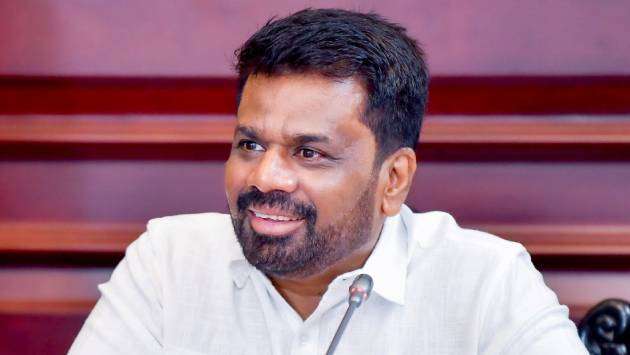
Seventy seven years after we were given Dominion status or autonomy under the UK, we have twice replaced the existing Constitutions with new ones, but only to seek another one. Anura Kumara Dissanayake is the fifth President after Chandrika Kumaratunga, Mahinda Rajapaksa, Maithripala Sirisena and Gotabaya Rajapaksa to pledge to bring in new Constitutions since 1994.
Successive presidents since 1994 have appointed commissions to draft electoral reforms and still we are in square one. Governments for the past 77 years have promised to develop the country in par with Singapore or some other developed country, but we declared bankruptcy in 2022. This is a unique country where a commission was appointed to annul court cases and to punish those who sought justice from the judiciary. Sri Lanka secured the 115th place among 180 countries in the Corruption Index reported by Transparency International. Former Presidents are fighting for billions of rupees worth houses maintained by the state, while the 22 million people are at the mercy of the IMF. What have we to commemorate?