Reply To:
Name - Reply Comment
Underworld in Sri Lanka is not a recent phenomenon. We can trace it back to the United National Party (UNP) government under President J.R. Jayewardene in the late seventies and early eighties
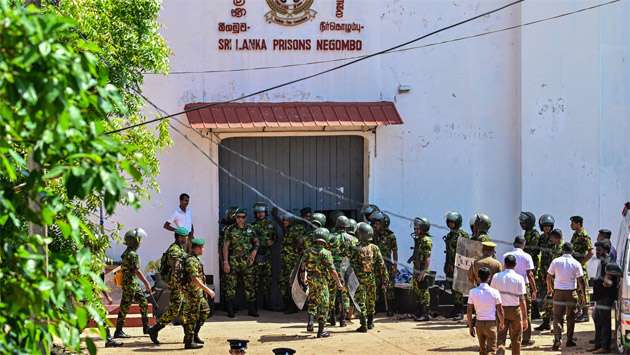
The killing of Weligama Pradeshiya Sabha Chairman Lasantha Wickramasekara on a busy day of his council in broad daylight on October 22 and its aftermath has raised many questions with regard to the safety of people’s representatives, insensitivity of politicians and the media towards victims of crimes and the continued politicisation of crimes.
The Samagi Jana Balawegaya (SJB), which the slain politician represented, seemed to be in a haste to put the blame for the crime on the government and the government in turn seemed to be in a similar haste to identify the victim and his party with the underworld.
The SJB accused the government of not providing Wickramasekara with adequate security despite his requests for the same, citing threats he had received in recent days. Some of the SJB leaders even attempted to implicate the ruling National People’s Power (NPP) in the crime. In response, Public Security Minister Ananda Wijepala, indicating that the killing of the Pradeshiya Sabha Chairman was the result of a rivalry between underworld gangs, told Parliament that Wickramasekara had been an accused in six ongoing court cases and he was already serving a suspended prison term.
Interestingly, no party denied these mutual allegations. Minister Wijepala, acknowledging the allegation levelled by the SJB, stated that there are no legal provisions for a government to provide security for a registered criminal. On the other hand, SJB did not deny what the minister stated about the track record of the Pradeshiya Sabha Chairman.
However, whatever the legal position may be on providing security to a criminal, as the minister referred to, on what ethical grounds is the government denying security for such a person if he is a representative of the people elected by the people and if there are reasons to believe that his life is really in danger?
On its part, if the SJB, by its silence on the allegation levelled by the Minister against Wickramasekara admits them, its leaders should have known those facts when he contested the last local council election held just five months ago. Then, on what grounds did the party approve his nomination?
One cannot but accept the contention by the Opposition that Minister Wijepala justified the murder of the Pradeshiya Sabha Chairman by identifying him with the underworld, even if his allegations about him were factual. Yet, it was also true that he was compelled to reply to the allegations of the Opposition against the government and reveal the reasons for not providing security for the victim, in spite of it being unethical.
However, statistics hardly prove the Opposition’s contention that Sri Lanka had become a criminal state and the national security was in jeopardy. This year’s numbers of shootings and deaths has not yet surpassed the corresponding last year’s numbers. According to a news item carried in the Daily Mirror in January this year, 66 people have died in over hundred incidents including organised crime related shootings last year. Nevertheless, that does not mean that the NPP government has fared well, especially given their braggings on eradicating crimes during the last major elections.
Underworld in Sri Lanka is not a recent phenomenon. We can trace it back to the United National Party (UNP) government under President J.R. Jayewardene in the late seventies and early eighties. We had known only thugs wielded their power only within small areas such as the famous “Choppe Aiya” of Maradana before that. However, the Jayewardene regime created a set of state-sponsored gang leaders, such as Gonawala Sunil and Soththi Upali.
Leaders of President Ranasinghe Premadasa’s government continued to use the same gangs, especially Soththi Upali’s gang, to terrorise the Opposition. Beddagana Sanjeewa, a notorious underworld figure, was a powerful figure close to the highest echelons of the Chandrika Kumaratunga government. It was the time when such gangsters were first given official status. Sanjeewa had worked as a member of the Presidential Security Division (PSD). The political connections of Julampitiye Amare, who was sentenced to death for murdering two supporters of the JVP in 2012, are well-known.
The prime challenge in eliminating the underworld in the country has so far been political patronisation of gangs and politicisation of specific incidents. Although state patronisation of crimes seems to have come to an end, politicisation of them by both the ruling party and the Opposition still stands on the way.
‘Your Thought’ is a space, a right of the readers to support or contradict and discuss the issues highlighted in the editorial and other articles in the editorial and op-ed pages. Designed as the reader’s editorial; our readers can send in their writings, with a word count not exceeding 200, to ‘Your Thought’, Daily Mirror Political Features Desk, No 8, Hunupitiya Cross Road, Colombo 2 or email to [email protected]