Reply To:
Name - Reply Comment
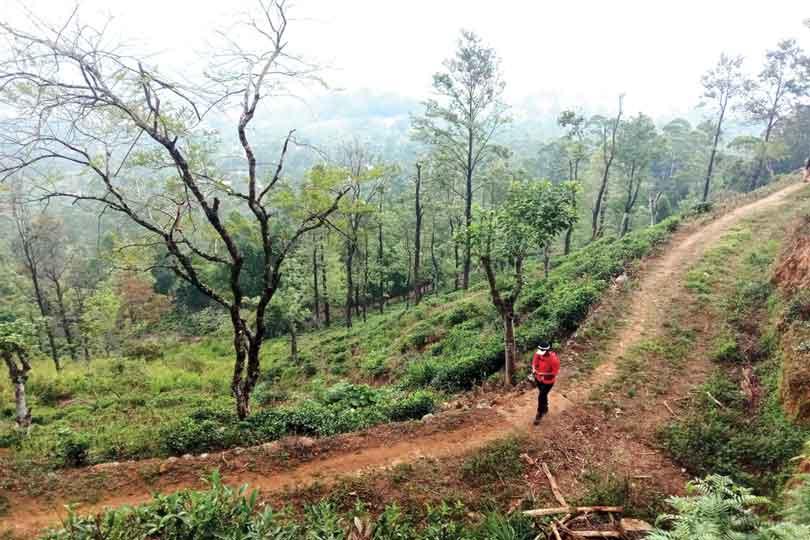
Experiencing solitude in a secure environment
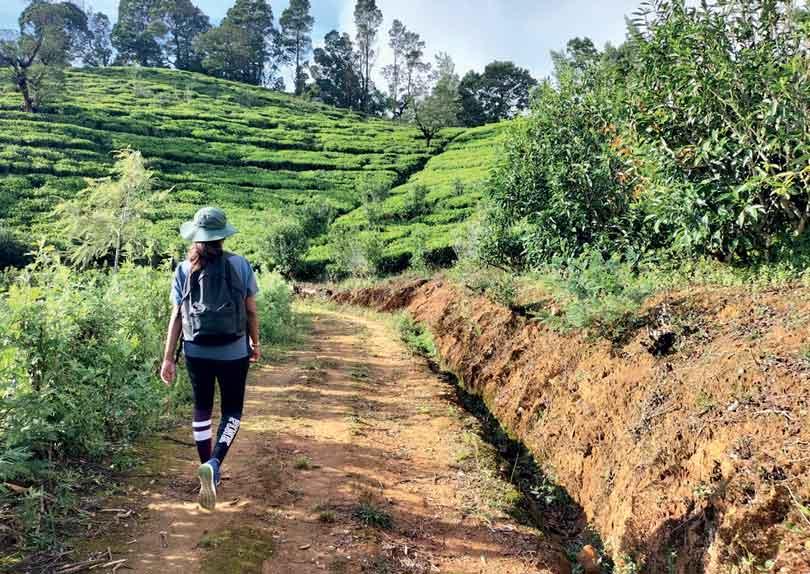
Pekoe Trail offers a great hiking experience
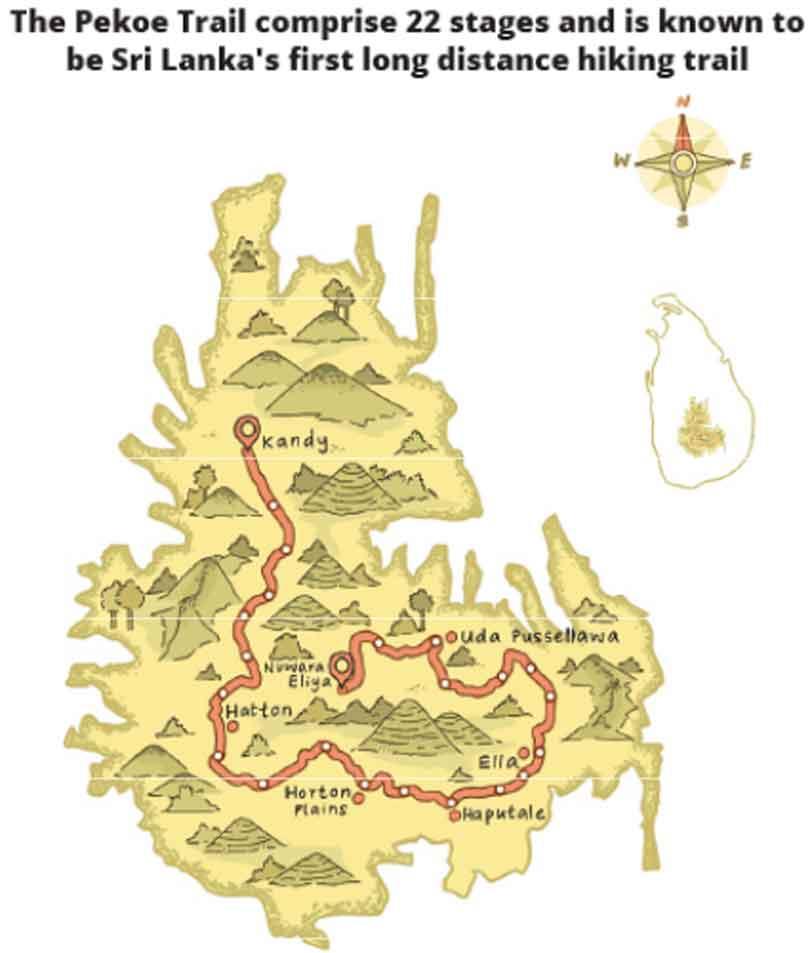
 Aiming to attract 5 million tourists by 2030, Sri Lanka is striving hard to become one of the world’s leading tourist attractions with everything in one place for travellers or tourists. From golden beaches, blue seas with a variety of marine life to misty mountains, wildlife, historically important archaeological sites, Sri Lanka has a golden egg in its platter.
However, adventurous trails are still largely missing from the list, and only a few tourists would have heard about Pekoe Trail, an adventurous trek from Kandy to higher elevations across tea plantations, wild life sanctuaries and mountains ranges.
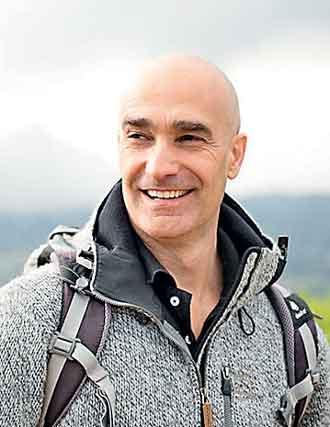
Miguel Cunat, Founder of Pekoe Trail, in conversation with Galeo Saintz, Founding Chair of the World Trails Network (2012–2022), CEO and Founder of Trails + Wanderlust, and international expert on trail stewardship, standards, and governance.
As Sri Lanka looks to secure the long-term future of Pekoe Trail, questions of stewardship, governance, and stakeholder
|
Galeo-Saintz |
representation are more urgent than ever. How can a trail of this scale be managed responsibly? And more broadly, how can trail tourism truly flourish in Sri Lanka? The answer lies in getting the foundations right — establishing credible governance, fair stakeholder representation, and clear national standards that will allow the trail, and the wider sector, to grow in a sustainable and inclusive way.
Q Why is stewardship such an important concept for trails like the Pekoe Trail?
Galeo Saintz: Stewardship is really at the heart of trail work. It’s not about control or ownership, it’s about guiding the direction in which a trail develops, creating the right conditions for it to thrive, and fostering autonomy so that many different stakeholders can contribute to its success. Good stewardship builds self-organisation: communities, businesses, and institutions all find their place and role. Without stewardship, trails risk being exploited, neglected, or pulled in competing directions. With it, they become shared assets that evolve responsibly.
And beyond management, stewardship is also about learning to collaborate across divides which is essential. With clear bylaws and inclusive representation, governance bodies become places to listen, to cross the aisle, to build trust. The most resilient models are those built on trust and collaboration, the very essence of true stewardship. Trails, when stewarded well, don’t just serve landscapes; they unite people, institutions, and businesses around a common identity and
shared vision.
Q What governance model do you see as ideal for a long-distance trail?
Galeo Saintz: The best model for a long-distance trail is a nonprofit organisation dedicated solely to the trail, with the state and other landowners represented in the governance structure as stakeholders, but the organisation retaining its operational autonomy. The government should recognise the trail as a national asset officially, legitimise an organisation to act as the trail steward, and commit to supporting it financially with gap funding, ideally with an annual operational grant to cover key functions or revenue shortfalls, while also helping to coordinate inter-agency responsibilities, facilitate donor contributions, and unlock institutional funding.
The nonprofit then becomes the vehicle for professional management, ensuring the trail is maintained, promoted, and stewarded in line with internationally inspired best practices.
A long-distance trail deserves its own independent governance structure, with fair representation of all stakeholders. In Sri Lanka, those stakeholders span both the public and private sectors, and if this balance is not in place, supporting and stewarding such an outcome must be treated as a priority.
What does not work well is when trails are housed within broader industry associations or only in private proxies. These organisations often have shifting agendas and their own interests, which can dilute or distort the mission of the trail and alienate stakeholders who do not feel represented or heard, be it local communities, conservation actors, or others who are central to the trail’s success.
Q Why is it so critical that Sri Lanka gets its trail governance foundations right now?
Because Sri Lanka is at a crossroads in its tourism journey. Trail travellers are adventurous, independent-minded, and intensely curious, but they are also deeply committed to sustainability, regeneration, community benefit, and authenticity. They seek thriving villages, untamed landscapes, and living traditions, not mass tourism. If Sri Lanka establishes strong stewardship and governance foundations now, it can position itself as one of the world’s great hiking destinations. If not, trails risk fragmentation, exploitation, or being reduced to short-term assets. The choice made today will shape whether trail tourism becomes a driver of conservation, community upliftment, and identity, or a missed opportunity.
Q What role do National Trail Standards play in this?
Galeo Saintz: Standards are one of the most powerful tools available. Once a trail is formally recognised as a ‘national’ recreational trail, the governing body becomes responsible for maintaining it within those standards, signage, safety, wayfinding, and so forth. Standards also create a benchmark for quality, which helps the private sector know
how to engage.
In contexts where formal trail standards have not yet been established, entrepreneurial projects often fill the vacuum, which is both an opportunity and a risk. The Pekoe Trail itself is a good example of this: it emerged in a policy vacuum, which allowed a lot of creativity. But for the long-term, a standardised framework gives legitimacy to government and donor investment, creates clarity for everyone involved, and helps prevent the trail from being co-opted to serve narrow private agendas rather than the broader public good.
There are already well-established recreational trail standards in many parts of the world. Sri Lanka would do well to formalise its own, aligning with international best practice while adapting to local conditions. This would give the government a clear framework for responsibility and create consistency across all trail projects in the country. In addition, it will give governance clarity and confidence to donors, investors, and funders.
QTrails are often described as conservation corridors. Why does this matter?
Galeo Saintz: Absolutely. Trails don’t just connect people to landscapes; they also connect ecosystems to each other. The Pekoe Trail, for instance, weaves through tea plantations, fragments of indigenous forest, wildlife corridors, and rural villages. That creates linear connectivity for flora and fauna.
Through the World Trails Network’s task team on Trails and Conservation and together with the IUCN Urban Conservation Strategies Specialist Group’s working group on trails and conservation, we are working towards a resolution to recognise long-distance trails as linear protected areas. If adopted, this would mean governments have to manage trails not just as tourism assets, but also as corridors managed for ecological connectivity.
Another entry point is UNESCO’s biosphere reserves. Many trails overlap with biospheres, which already have government structures and international recognition. Positioning a trail within a biosphere reserve can strengthen governance and bring trail management under existing conservation frameworks.
Q How should private landholders like tea companies fit into trail governance?
Galeo Saintz: All landholders clearly underpin the existence of the Pekoe Trail, and governance should be inclusive because trails establish clear inter-dependency which is why they are shared assets. Landholders stand to benefit by offering hospitality, accommodation, food, and local experiences, and also, of course, in the case of Sri Lanka, selling tea and other agritourism products that can help them make the most of the opportunities trail bring.
In some cases, landholders are sometimes contracted or incentivised to maintain stretches of trail or provide other support services, but the money should never flow directly from government to the companies. It should be channelled transparently through a professional management entity, which then decides how to allocate resources for maintenance and upkeep. That separation is key to ensuring that governance remains independent and in the public interest.
Q What about the political and practical realities?
Galeo Saintz: Government support is essential for the long-term sustainability of any national trail. When ministries, departments, and officials recognise the value of trails, they play a pivotal role in embedding them into legislation, regulations, or official policy, securing their future for generations to come. A key example of this is one of the world’s most famous trails, the Appalachian Trail in the USA or the Camino in Spain in the province of Galicia, and there are many other examples.
It is also worth noting that trails are not like airports, ports, or highways, they are not primarily about revenue extraction, but about creating wider national value, meaning-making, and contributing to national identity. Their strength lies in their narrative power: they are symbols of national identity, instruments of tourism branding, and platforms for rural development. When governments embrace trails in this way, such trails become catalysts for both community benefit and destination stewardship.
It is worth commending the Government of Sri Lanka, Sri Lanka Tourism and all the other relevant government agencies, as well as the EU and USAID, and all those who contributed to the Pekoe Trail. Having personally walked the full 300 km, I can say the achievement is extraordinary. Creating a trail of this scale is no small feat, and it already stands as one of the country’s most remarkable tourism assets. The next step is to ensure the foundations are correct and strong, governance, funding, and stewardship, so Sri Lanka can truly lead with trail tourism in a country that has immense
potential for it.
Q How do you see the role of trails in society, and in travel itself?
Galeo Saintz: Trails are extraordinary social levellers. They cut across class and wealth. Anyone with even a worn pair of shoes can walk them. They bring people into landscapes they would otherwise never see, and they create a sense of belonging, connection to place, and shared identity.
They also anchor entire outdoor economies. Adventure travel, wellness tourism, community-based tourism, all of these can hang off a trail if it is well managed. In this way, trails are not just footpaths. They are national assets that combine infrastructure, conservation, tourism, and cultural identity in one continuous line across the landscape.
And beyond access, trails speak to the very heart of travel itself: to step outside your comfort zone, to walk into new terrain, and to embrace the unknown. To be bold, to be brave, and to see tourism not as a transaction but as a journey, this is the hallmark of innovation in tourism today, and it is the essence of what we call “travel.” Trails embody that essence: they challenge us, unite us, and remind us why we travel at all.