 MOHAMED AYUB
 Reply To:
Name - Reply Comment
It is strange that the SJB has brought up this issue six years after the Easter bombings
 Nevertheless, the other argument that the deputy minister is not assigned any subject is somewhat confusing and should be resolved with legal advice from relevant authorities
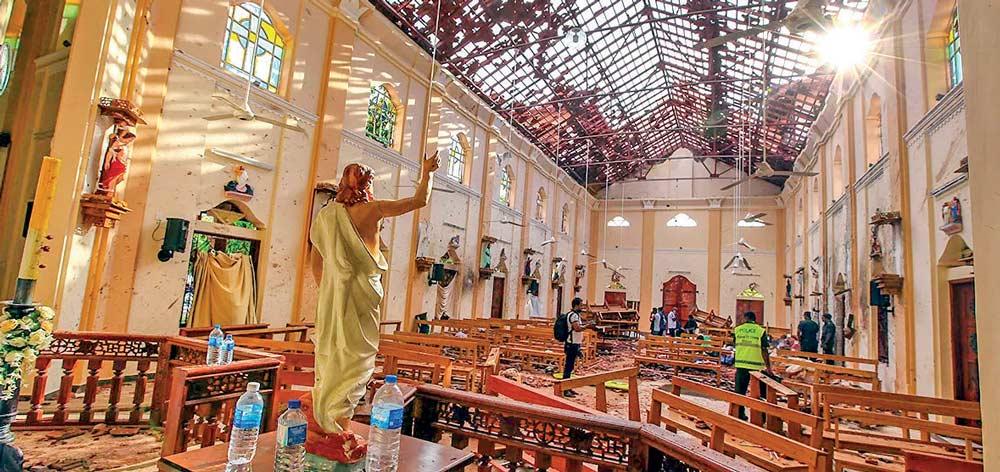
The Samagi Jana Balawegaya (SJB) in a no-confidence motion against the Deputy Defence Minister, Retired Major General Aruna Jayasekara, accuses him of negligence of duties during his tenure as the Eastern Commander of Sri Lanka Army in the context of the Easter Sunday terrorist attacks in 2019.
The party handed over the no-confidence motion to Speaker Jagath Wickramaratne on August 12 arguing conflict of interest is involved in the current investigations into the terror attacks, citing Jayasekara’s role during key incidents linked to the Easter attacks. They have mentioned especially two incidents - the Vavunathivu police killings in the lead-up to the bombings and the Sainthamaruthu explosion in the wake of the attacks where several key suspects committed suicide.
SJB never suspected Jayasekara’s role up until last month since the terror bombings took place in 2019 where nearly three hundred people were killed, not even when Jayasekara was leading the NPP’s Head of the Retired Tri-Forces Collective prior to the last Presidential election. But all of a sudden they have discovered conflict of interest in his role as the deputy minister while investigations are happening under his government now.
Against the tradition?
Although the Speaker received the motion, its entry in the order paper of the Parliament and the debate on it seem to be in the balance on legal and traditional grounds. It is being argued that bringing in a no-faith motion against a deputy minister - rather than against a minister or the government - is against the tradition, and concerns have also been expressed that since Deputy Minister Jayasekara has not been assigned any subject, a no-confidence motion challenging his activities is not valid.
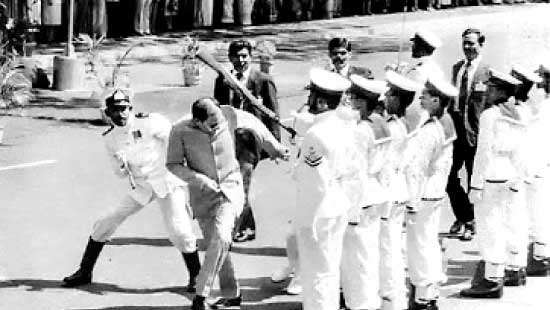
However, the tradition of bringing in NCMs only against the government and the ministers have been breached as far back as 1981 when the United National Party (UNP) government led by President J.R Jayewardene passed an NCM with its five sixths majority power in Parliament against the then Opposition leaders and the leader of the Tamil United Liberation Front (TULF), Appapillai Amirthalingam. The TULF leader was accused of promoting secessionism that was then slowly but steadily raising its head with Tamil armed groups, killing individual armed forces personnel in the north.
Nevertheless, the other argument that the deputy minister is not assigned any subject is somewhat confusing and should be resolved with legal advice from relevant authorities. Yet, even if the motion is deemed to be valid and put to the vote after a debate, the writing is on the wall for it, in the light of the two thirds majority enjoyed by the ruling National People’s Power (NPP) in the House. Though the SJB knows it very well, it is pushing the government to allow it to avail the time of the House to get the benefit of propaganda through the motion.
Conflict of interest would be involved in this case only if Jayasekara is accused of negligence of duty or suppression of facts during or after the terrorist attacks. It was the army intelligence units that were accused by the police and the then Opposition parties for misleading the investigators on the killing of police personnel at Vavunativu in Batticaloa District. They were also accused of meeting the Tropical Inn bomber minutes before he exploded his suicide kit.
The army intelligence units come directly under the Army Commander who was then Lieutenant General Mahesh Senanayake. General Senanayake joined the SJB in May last year and was appointed the head of the party’s Ranaviru Balakaya.
The terrorists had mainly targeted churches and star class hotels in the Western Province and the incidents leading up to crime had taken place in Northwestern Province (Wannathavillu), Sabaragamuwa Province (Mawanella) and Central Province (Nuwara Eliya) as well. The rationale behind the SJB singling out the commanding officer of one province is not clear.
High ranking police officers at various levels, including the then Inspector General of Police (IGP) were the authorities accused most of negligence of duty, despite having received clear information on the terror attacks. Based on that, the Supreme Court ordered the former IGP to pay Rs. 75 million as compensation. The minister then under whose purview the police came was Ranjith Madduma Bandara who is now the General Secretary of the SJB.
Hence, the NCM is purely political and it might boomerang on the SJB if it is debated in the House. However, the NPP also faces a moral dilemma as the Catholic Church, the representative of the large majority of the Easter Sunday carnage victims, too demands the resignation of the deputy minister on the same grounds.
Another minister of the NPP government - Energy Minister Kumara Jayakody -- also seems to be in the hot water over an incident involving alleged misappropriation of funds amounting to Rs 8 million ten years ago when he was serving as the head of the tender board of the Fertiliser Corporation. The Minister during a recent televised interview argued that he had to take only the moral responsibility for the actions of one of his subordinates.
Govt in awkward position
However, the Sunday Times reported that the Commission to Investigate Allegations of Bribery or Corruption (CIABOC) has decided to file action against the minister, putting the government, especially President Anura Kumara Dissanayake, in an awkward position.
Since the incident had taken place long before Jayakody joined the NPP, one may argue that the party’s claim for moral high ground is not harmed. However, if the leaders of the party had prior knowledge about the alleged fraud when he joined them, there is a moral issue which they have to explain. The time when the alleged misappropriation occurred is irrelevant, since most of the corruption cases involving leaders of other parties, especially those of the Sri Lanka Podujana Peramuna (SLPP), can be traced back to the Mahinda Rajapaksa administration between 2005 and 2014.
Media Minister Dr. Nalinda Jayatissa who is also the Cabinet Spokesman told journalists that his Party’s response to the matter depends on the action that would be taken by the CIABOC. Yet, irrespective of the possible actions by the CIABOC, the NPP has already been morally compelled to take some action since the party now knows what has happened and the people in turn know it.
One can question the validity of Opposition parties that have a notorious history of corruption questioning the morality of the NPP. Yet, the right of the people to question the morality of any ruling party is beyond dispute.