Reply To:
Name - Reply Comment
 But at the speed at which elephants are being killed (in 2022, 439 wild elephants died, in 2023, 488 died, and in 2024, 388 died) the animals could soon go extinct But at the speed at which elephants are being killed (in 2022, 439 wild elephants died, in 2023, 488 died, and in 2024, 388 died) the animals could soon go extinct |
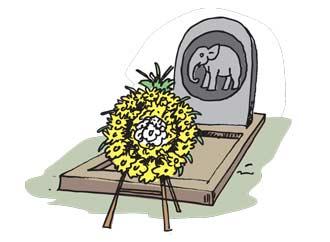 A few days ago, many were heart-broken when we read of the death of yet another majestic elephant called ‘Bhathiya’. Approval was granted through the Ministry of Foreign Affairs and regulatory bodies, for the foreign veterinarians to arrive in Sri Lanka to treat the animal, but Bhathiya died before they could arrive.
The next day, media highlighted yet another sad story –the Department of Wildlife was treating 13 injured jumbos. All thirteen were being treated for gunshot injuries. Another pachyderm locally known as ‘Kandalame Hadakaraya’ is reportedly facing starvation due to injuries caused by gunshot.
According to wildlife authorities, this poor animal has been in bad health for several months due to gunshot wounds and has been treated on several occasions following reports by villagers saddened at the plight of the wounded animal.
A study by ResearchGate showed during the five-year period between 2005 and 2010, one-thousand-one-hundred and fifty-four elephants died. Of this number only 55 died of natural causes. Five-hundred and seventy-four died of gunshot wounds and 179 of unknown causes. Other deaths were caused by electrocution (105), train accidents (90), poisoning (31), hakkapatas –home-made hand bombs- (11) and other (109).
More than a third of elephant killings involved shooting, explosive-laden bait and poisoning. Again, most elephant killings happen in agricultural areas. Authorities label this as a ‘human-elephant conflict’.
This conflict arises when elephants raid crops for food, leading to retaliation from farmers through methods like shooting, electrocution etc. Large numbers of elephants continue to die as a result of being nocked down while crossing railway lines.
The ‘Journal of Tropical Environment‘ points out that due to the increase of human population, forest cover in Lanka reduced rapidly. Earlier, forests covered around 50% of the land, presently forest cover is less than 20%. Clearing of land for chena cultivation, settlement programmes and development activities resulted in a decline in forest cover.
Today, the elephant population has risen to around 7,000. It is estimated an elephant needs a minimum of 50 kg of food per day. Therefore, around 350,000 kg of food per day is required to feed the elephant population. But the available forest cover is not sufficient to provide the food required.
In the meantime, the farming population in our country live in deprivation. World Bank reports show rural poverty has more than doubled in rural areas after the economic collapse and the COVID pandemic hit the country in 2023. While incomes dropped, the costs of basics rose astronomically.
While a family of four needs a minimum of over Rs. 90,000/- to have two square meals per day the average monthly income still remains below Rs. 65,000/-.
Elephants on the other hand, faced with shrinking forest coverage tend to raid crops in rural farmlands in search for food. This in turn this leads to retaliation from farmers through shooting, electrocution, poisoning and use of explosive devices which result in elephant deaths.
The problem we are confronted with therefore is not one of a ‘human elephant conflict’, but one where ‘less important humans’ and elephants are facing the common problem.The problem of starvation.
During the past, the number of elephants in this country has grown. But at the speed at which elephants are being killed (in 2022, 439 wild elephants died, in 2023, 488 died, and in 2024, 388 died) the animals could soon go extinct.
This is one of the many problems our present government is facing and must necessarily come up with solutions fast if the elephant is to be saved.