Reply To:
Name - Reply Comment
In latter half of the 1970’s, at a time when Lanka was opening up its economy to foreign capital, the late president J.R. Jayewardene reportedly welcomed even unscrupulous investors with his famous phrase ‘let the robber barons come…’. Well, the robber barons came, spreading their tentacles through the length and breadth of the country, leaving none -from the highest in the land, to a petty peon untouched.
In simple language, corruption has taken hold of nearly every aspect of life in this country. Our present rulers -- the NPP/JVP political combine -- while on the campaign trail of the recently held presidential and parliamentary elections promised, among other things, to change the Constitution of the country. We see no signs of hurry to implement that promise.
To tackle rising poverty in the country, the NPP/JVP government, promised to reduce the cost of living and via restructuring the International Monetary Fund (IMF) Extended Fund Facility which unfairly targeted the poorest sections of Lankan society. Sadly, the government found it was unable to keep its promise regarding the restructuring of the IMF deal. Every economic move of government is today governed by IMF diktat.
Making matters worse, by July this year positive inflation (a sustained, moderate increase in the prices of goods and services) increased. The Central Bank projects it will gradually accelerate toward 5% from today’s -0.3%. Economists tell us this is good for the economy as a whole. But for a people groaning under increasing prices and stagnant wages, their plight is distressing to say the least.
Recently government increased the national minimum monthly wage to Rs. 27,000/- and increased the national minimum daily wage to Rs. 1,800/- per day. But many businesses do not follow this rule. At the same time, the average full-time monthly wage in Lanka is Rs. 55,000/-
Yet, it costs Rs. 25,000/- for a single person to have 2 basic meals a day for a month. A family of four (father, mother and two children) needs Rs 100,000/- per month for food alone! Rent for a small two-roomed house ranges from Rs. 30,000-/ to Rs. 40,000/- per month. Unsurprisingly worker groups and university student groups are threatening trade union action.
Government is also faced with the problem of debt-stricken state owned enterprises such as the Ceylon Electricity Board (CEB). Under terms of the EFF conditions debt-ridden state-owned enterprises (SOEs) needed to be reformed. Initially the NPP/JVP regime rejected the suggestion. Recently the government brought in an amendment to ‘unbundle’ power generation, transmission and distribution licensees to be established via an amendment to the Electricity Act ‘through extensive public and stakeholder consultation’! A distinction without a difference and a play on words.
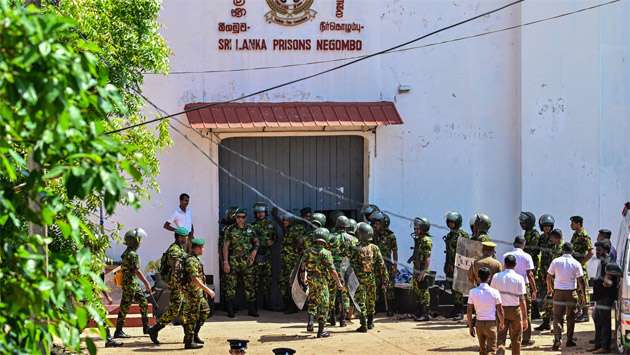
It is amid these contradictions that the government began its anti-corruption drive. To its credit the government has prosecuted a number of ministers, deputy ministers, ranking police personnel including the Inspector General of Police. However quite unexpectedly, like a magician pulling a rabbit out of his hat, a few days ago the government took into custody the immediate past president of the country.
Many ordinary folk saw the arrest as an act of vengeance for the past president’s alleged involvement in the torture of prisoners at the Batalanda complex during the 1988-1990 JVP insurgency. Investigations carried out during President Chandrika Kumaratunge’s term in office however, did not provide evidence of President Wickremesinghe’s involvement in offences committed at Balalanda.
A number of others, however, saw the arrest of President Wickremesinghe as the government’s strategy to divert people’s minds away from their pressing problems and the government’s failure to fulfill its pre-election promises. Still, some others believed Wickremesinghe was taken into custody to check the pulse of the people, before going after more popular and powerful political leaders.
What the government did not expect was the fallout from the arrest. It united a once divided political opposition. Many hundreds of ordinary people joined protests against the taking of Wickremasinghe into remand custody.
On the 26th of August Wickremasinghe was released on bail leaving the President, his Prime Minister and Cabinet of Ministers with egg in their faces. While government spokespersons claimed they are applying the law equally, there are not many takers. The fledgling administration is going to have its hands full to regain past stature with its base.