Reply To:
Name - Reply Comment
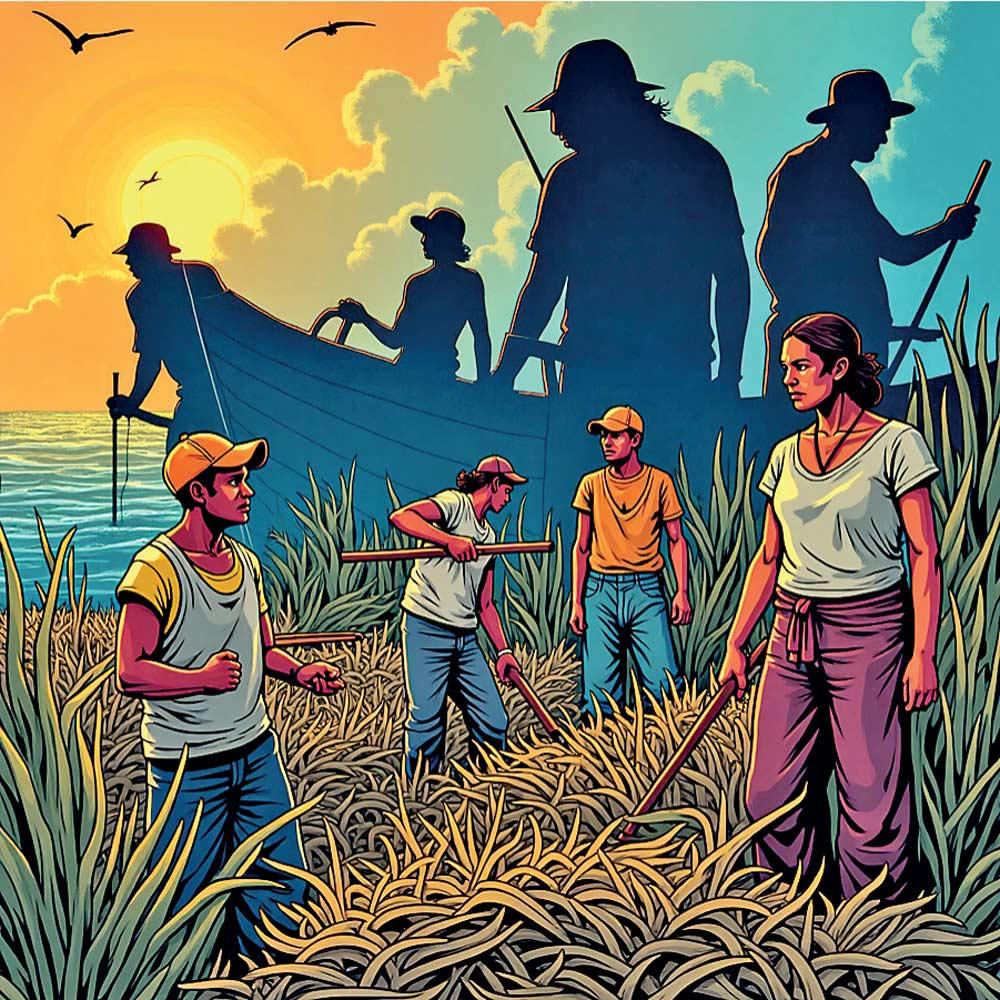
My work with the co-operatives in the North has led me to frequently visit the East in recent years for collaborative initiatives. The geography of the long Eastern coast from Trincomalee to Ampara, with lagoons and vast paddy fields, and dotted towns and expanding villages is stunning. The fishing sites, the lush paddy farms and the roaming herds of cattle everywhere portray a region with abundant resources for local food production.
 Indeed, fish, rice and milk, so central to our nutrition, are ubiquitous. Nevertheless, the small scale producers are left at the mercy of the traders with little value addition in the region; and these producers of our staple foods have seen little progress in their social and economic lives.
Conflict and polarising politics
This difficult situation of the farmers and fisher-folk are marked by different political, historical and economic factors of the region. The long history of conflict and polarising politics could be one reason for the debilitated rural institutions. The flawed development policies that have for long neglected, if not undermined, rural development is another reason for the atomisation of these small producers falling into debt and mercy of traders. The long protracted conflict, the Tsunami, the Covid pandemic and the ongoing economic crisis with the rise in the cost of living have all left their destructive imprint on the body politic of the region.
The East due to its ethnic diversity, lack of suitable and sustainable industries and debilitated social institutions provides a real challenge to the NPP Government. Unemployment has resulted in out migration, including of women, weakening the society. The fickle tourism sector is being pushed as the way forward, even as the great possibilities for agricultural transformation have found little meaningful support. In this context, co-existence among communities and livelihood concerns of rural folk are of paramount importance.
The reconstruction of the East could begin with a development framework bringing in the ideas of the local intelligentsia. Meanwhile, there is a need for new tertiary organisations that can revitalise rural social institutions. During my recent visits, I was encouraged by the discussions with co-operators, academics and activists, with a wealth of knowledge about possibilities of reconstructing the region’s economic future. However, the challenges are poignant with the need to focus on appropriate small infrastructure.
The development projects of the World Bank that pushes for infrastructure needed by tourism need to be abandoned! Land for rural livelihoods – including grazing land for cattle – is contentious along ethnic lines, and further aggravated by the large land grabs by the state through various departments including that of environmental conservation. Amidst a whole range of challenges, I record below what I heard and saw of the challenges facing co-operative revival in the East, while recognising that co-operatives are only one aspect of reconstruction.
Long crisis
In my many visits to the East over the last decade and a half, the impact of the long history of destruction are persistent. The wounds of war and the tsunami were what I heard during the visit immediately after the war. And in August 2010, I wrote a long essay in Himal South Asian magazine titled “Eastern awakening?”
I quote from that article below, because my recent conversations sadly continue to reflect what I saw and heard back then:
“Just two years prior to the escalation of the war in the east, the tsunami of December 2004 had destroyed much of the coastal area of Batticaloa. Significant donor funds and projects came to the district, and local observers claim it is these reconstruction efforts that the government is now branding as post-war development. There are related lessons, too, including the massive waste and dependency that came with NGO-led post-tsunami development efforts in Batticaloa. As I travelled in Batticaloa, I saw road after road being re-tarred and widened. So much talk in Colombo over the past two years about Batticaloa and the Eastern Province had been about the Eastern Awakening, but many local activists describe it as an empty shell.
“For instance, close to 20 new bank branches were opened over the last year in Batticaloa district, which are expected to provide small loans to farmers and fishermen trying to revive their livelihoods. But the reality is that, given the lack of public transportation, few of the marginalised families can make the long trips to Batticaloa town. Even fewer will be able to furnish the documents necessary for bank loans. Banks, buildings and roads have come to mean development without any real change in the economic relations and social life of the people.”
Too many boats, too much equipment
Fifteen years later, fisher folk trace the crisis of their livelihoods to the unplanned and large number of boats and equipment distributed by donors after the tsunami. And the resettlement areas given to them are far from the coast, limiting their access to the sea. All this has led to overfishing with unsustainable and illegal fishing practices, and undermined the historically sustained coastal tenure practices. The factories – including those dumped by unplanned donor projects for co-operatives soon after the war – remain idle to this day. The expansion of banking was overtaken by finance companies and extractive microfinance schemes, which have greatly indebted the local population, particularly women. It is as if we have come full cycle, and the path of local production has to be set on a different trajectory of rural economic transformation.
Milk, fish and rice
The East has such large herds of cattle, but the farmers are entrapped by traders and companies, selling one litre of milk for as low as Rs 140, whereas a litre of sterilised milk in supermarkets is sold for around Rs 550. A dairy development plan for the East, engaging the agriculture, livestock and co-operative departments is paramount, so that valued addition can lead to both higher prices for dairy farmers and the generation of local employment, including jobs for youth gaining skills in dairy plants.
Fisheries Co-operative Societies (FCS) that long organised the coastal communities have become weakened, due to the entry of parallel and politicised Rural Fisheries Organisations (RFOs), which were initiated in 2010 by the then government towards creating vote banks among the fishing communities. The absence of credible and participatory organisations has led to illegal and extractive fishing practices that continue to undermine the sector.
Dividing the fishing communities
While dividing the fishing communities, these institutions remain weak, even unable to bargain with traders for fair prices; many older fishermen recollect with nostalgia of the higher fish prices and lower cost of living that enabled them to build houses and educate their children. The ministries and departments in charge of fisheries and co-operatives have the urgent task ahead to set coastal tenure and seafood production for self-sufficiency on a sustainable footing. They need to reorganise and strengthen the FCS, while abolishing the RFOs and other arbitrary local institutions set up for fresh water fishing and aquaculture.
While the farmers toil in the paddy fields, it is the rice mafia of large millers from the neighbouring provinces that sweeps the paddy away at rock bottom prices. Paddy purchase, paddy storing and rice milling have to be taken forward by the Paddy Marketing Board to a much larger scale, and idle rice mills – particularly those owned by co-operatives – have to be reactivated.
Many of these challenges in the Eastern Province are indeed similar to other regions, but the consequences are more severe given the long history of destruction and failed post-war development programmes over the last two decades. Nevertheless, there is a reckoning among local actors, including the youth, co-operators, activists and academics, for a different approach to development that is both participatory and inclusive particularly along ethnic lines. It is local development initiatives that strengthen rural institutions capable of challenging polarisation that may set the path of reviving the East.