Reply To:
Name - Reply Comment
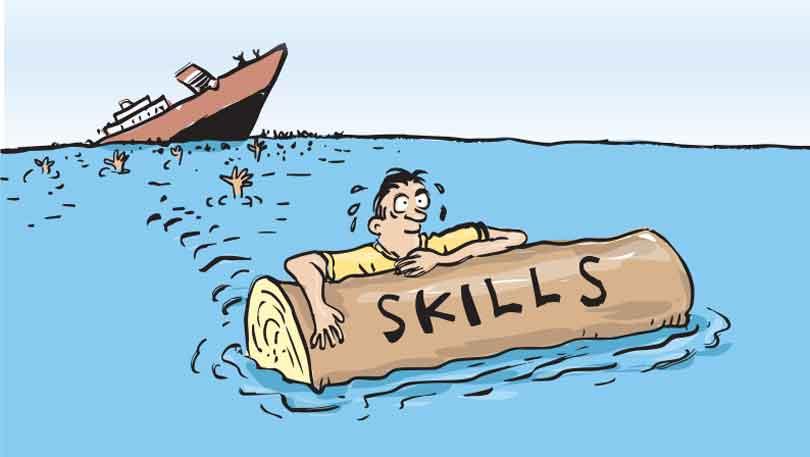
Sri Lankan politics needs youth as leaders more than ever before. This is because youth of today mean business. They are goal specific and know what they want in life
Youth are one of our major assets. This is why our hearts melt when we see unemployed youth playing cricket during daytime when elsewhere youth in large numbers are either at university or serving institutions as employees. Any government must have a plan for unemployed youth. They must be given opportunities to hone their skills. Generally, youth are mostly spoken about and used during election campaigns. Leave the elections aside, we have a day to celebrate youth and their skills and that day is today! Yes, World Youth Skills Day is celebrated on August 15.
In 2014, the United Nations (UN) General Assembly adopted a resolution that proclaimed August 15 as World Youth Skills Day.
There is something special about this day. The authorities responsible for organising such a day wish to raise awareness about the youth who don’t have skills. Lack of skills prevents youth from being employed. What would their futures be without skills?
This is why at the UN Headquarters in USA and elsewhere, events are held so that youth can enhance their skills. Some of these events give opportunities for young people to engage in photo essays, presentations by employees and employers and panel discussions.
A few days ago, Sri Lankan President Anura Kumara Dissanayake was present at the ‘Youth Club’ National Youth Conference, held at the Sugathadasa Stadium. He had specifically said that youth, who were once used as political pawns, have now transformed themselves and moved onto a platform that produces competent leaders.
Sri Lankan politics needs youth as leaders more than ever before. This is because youth of today mean business. They are goal specific and know what they want in life. They can very confidently use the words ‘yes’ or ‘no’. You hardly find a youth who gets involved in a project done by an elder which doesn’t serve his purpose.
But still, the unemployment rate in Sri Lanka, according to latest available statistics, is 22.34%. The youth taken for this survey fell between the age group 15-24 years.
Browsing through the subject of youth and their skills, this writer came up with a term used in its abbreviation and that read NEET. This means ‘Not in Employment, Education and Training. Right now the global statistic for this is 267 million.The authorities expect this figure to rise to 273 million in the near future.
To combat these figures, the UN and other organisations place emphasis on ‘Technical and Vocational Education and Training (TVET). These are efforts taken to help youth work as technicians or where skills and craftsmanship is in demand.
The government alone cannot sharpen the skills of youth with their programmes. The private sector must also chip in. This is because there are enough youth in this island who have been unable to receive either a proper education or training. Youth without skills and employment is not the problem of only the government. The problem does have a trickledown effect on the private sector as well; especially when the skills are lacking in an individual.
Sri Lanka is still a country where you can find some type of employment if you are skilled. The same cannot be said if you’re not educated. There is a mass exodus of educated youth who are immigrating in search of greener pastures. Try to find a skilled plumber or an electrician for a domestic requirement and you’d be disappointed. You can hardly find any these days even in an emergency. The point this writer is attempting to stress is that if you are an average plumber of electrician you can find work in Sri Lanka. If you’re an exceptionally skilled plumber or electrician, your geography expands beyond Sri Lanka.
So, on this day set aside to celebrate the skills in youth, let’s hope that both the state and private sector take it as their responsibility to have skilled youth who can be readily employed.