Reply To:
Name - Reply Comment


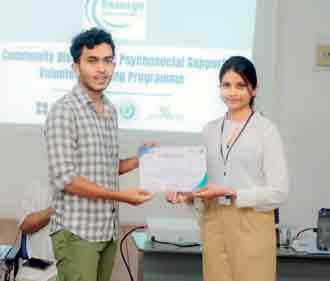 When disaster strikes, physical relief arrives quickly, but the internal trauma of displacement, grief, and fear lingers long after the floodwaters recede. Born from a British Council youth leadership initiative, the student-led RESURGE programme bridges this critical gap. By equipping young Sri Lankan volunteers with professional ethical training, they are fundamentally redefining humanitarian aid to prioritize emotional recovery.
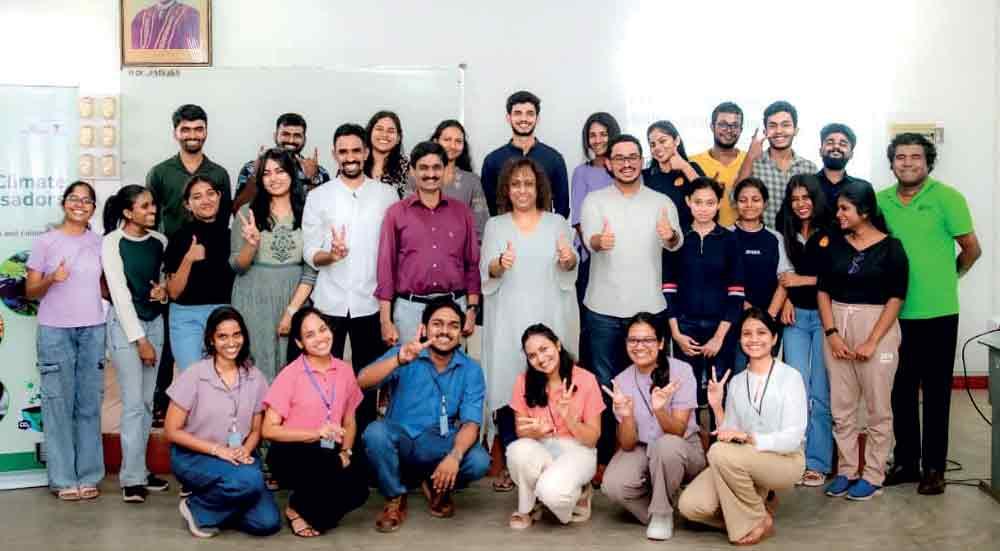
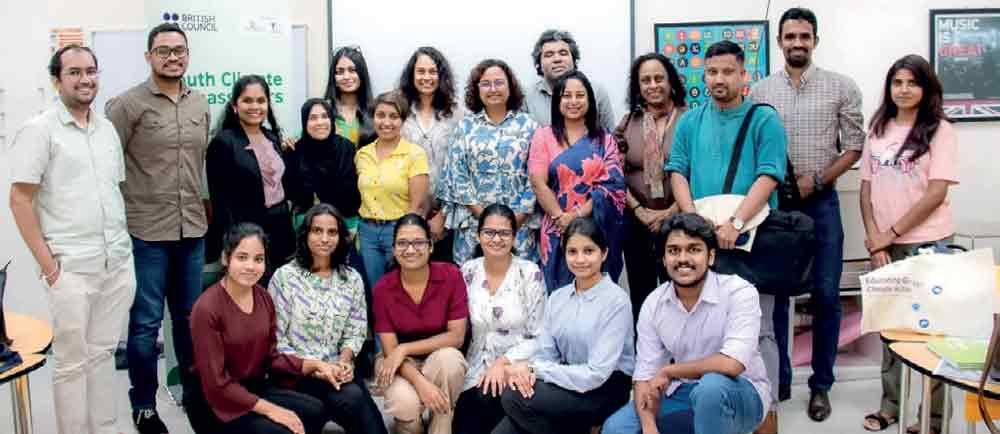
In the aftermath of floods and landslides, communities need more than emergency rations and tarpaulins. The RESURGE initiative was born from the Youth Climate Ambassadors Programme - a youth leadership programme on Climate Action conducted by British Council Sri Lanka in collaboration with Earthlanka Youth Network at the University of Sri Jayewardenepura, and was shaped by experts, and driven by youth, to make the case that emotional recovery is just as urgent as physical relief.
Sri Lanka is no stranger to disaster. Every monsoon season, communities across the island brace themselves for floods that swallow roads overnight, landslides that bury hillside villages without warning, and the slow, grinding displacement that follows in their wake.
Aid arrives - food, water, shelter materials - and then, eventually, it stops. But for those who have lost homes, livelihoods, or loved ones, the internal storm does not stop when the rain does. Fear, grief, and disorientation often linger long after the floodwaters recede.
It was this quiet, persistent reality that a group of young university students in Sri Lanka refused to accept as inevitable.
Their response became RESURGE - Healing Communities - an initiative built on a conviction that disaster response must address the whole person: mind and body, community and individual, the material and the emotional alike.
The members of the RESURGE team came to their project not through academic research alone, but through direct observation. As young volunteers who had witnessed disaster response firsthand, they saw a pattern that troubled them: when emergencies struck, people received material assistance, but the emotional and psychological dimensions of suffering went largely unaddressed. At the same time, they noticed something else.
Many of their peers - students, community members, youth group participants - desperately wanted to help but had no framework for doing so safely or responsibly. Without proper training, even the most well-meaning volunteer can inadvertently cause harm: by handling sensitive situations clumsily, by failing to recognise signs of psychological distress, or by acting in ways that undermine a community’s dignity rather than uphold it. The idea, then, was not simply to produce more volunteers, but to produce better-prepared ones. The team set out to create something practical: a structured guide and training module that could equip youth with the knowledge, ethical grounding, and human skills to engage responsibly in some of the most difficult situations communities face.
One of RESURGE’s most distinguishing features is how rigorously it was developed.
Rather than relying solely on the team’s own instincts, the students embarked on a series of expert consultation sessions, drawing in professionals from a remarkably diverse range of disciplines: mental health practitioners, social workers, specialists in climate resilience, and youth development practitioners.
These conversations fundamentally shaped the direction of the project as experts shared not just technical knowledge but hard-won insights from years of working with vulnerable communities
The centrepiece of the RESURGE initiative is its Youth Volunteer Guide -a practical, accessible resource designed to be used by universities, community organisations, non-governmental organisations, and youth groups across Sri Lanka. Its scope is deliberately broad, because the team understood that responsible volunteerism cannot be reduced to a single checklist.
The guide covers five interconnected areas, each chosen because volunteers so frequently find themselves unprepared for them. First, it grounds volunteers in an understanding of disaster contexts - the nature, scale, and human impact of the floods and landslides that periodically devastate Sri Lankan communities.
Second, it defines volunteer roles clearly, articulating what youth volunteers can and should do, and equally what lies beyond their remit. Third, it addresses ethical volunteerism, including the foundational principle of Do No Harm, which requires volunteers to think carefully about the consequences of their actions rather than simply acting on impulse to help.
The guide also covers safeguarding and child protection practices that ensure the dignity and safety of all community members, particularly the most vulnerable.
And it introduces Psychological First Aid - known as PFA - a set of humane, accessible techniques for providing immediate emotional support without overstepping into the domain of professional counselling. PFA does not try to turn volunteers into therapists. Instead, it teaches them to listen without judgment, to help individuals feel safe in the immediate aftermath of crisis, and to connect them with appropriate professional support when needed. It is a human skill set as much as a technical one, and it reflects RESURGE’s broader philosophy: that compassion, when well-directed, is itself a form of action.
Perhaps the most quietly radical aspect of RESURGE is its insistence on safeguarding and ethical practice as central - not supplementary - concerns. In the rush of disaster response, these considerations are often treated as bureaucratic formalities.
RESURGE argues otherwise.
When volunteers work with communities in crisis, they encounter people at their most vulnerable. Children may be separated from caregivers.
Families may be living in cramped temporary shelters. Survivors may be reliving trauma. In these conditions, the potential for well-intentioned action to cause harm is real. An untrained volunteer who takes photographs of distressed individuals, or who asks intrusive questions, or who promises assistance they cannot deliver, can deepen rather than relieve suffering.
By embedding safeguarding at the heart of the training module, RESURGE sends a clear message: responsibility is not optional. It is the foundation on which all effective volunteering rests.
The RESURGE initiative was guided throughout by Mr. Sachinda Dulanjana, who served as both mentor and editor of the volunteer guide. His involvement brought not only professional expertise but personal conviction -having worked in disaster-affected communities himself, he understood viscerally why the training gap the team identified matters.
Reflecting on his role, Mr. Dulanjana described the guide as a living document - one intended to evolve as new lessons are learned and new challenges emerge. This framing is important. It signals that RESURGE is not a finished product but an ongoing commitment: to improving the standard of youth volunteerism, and to ensuring that the guide remains relevant to the communities it seeks to serve.
By situating disaster response within a climate action framework, RESURGE acknowledges this reality - and positions youth volunteers not merely as helpers in individual emergencies, but as participants in a longer-term effort to build community resilience. The RESURGE team is clear that the initiative is not intended to remain a pilot project or a university assignment. Their aspiration is something considerably larger: a national network of trained youth volunteers, prepared to support communities before, during, and after disasters, spread across Sri Lanka.
“Your willingness to help can make a real difference. But it is important to learn, listen, and act responsibly.” said Sachini Wickramasinghe, Team Leader of RESURGE
RESURGE’s answer is a guide, a training module, a network of experts, and a community of young people who have decided that good intentions are not enough - and that, with the right preparation, the difference between helping and healing is not as wide as it might seem.