 Kamanthi Wickramasinghe
Reply To:
Name - Reply Comment
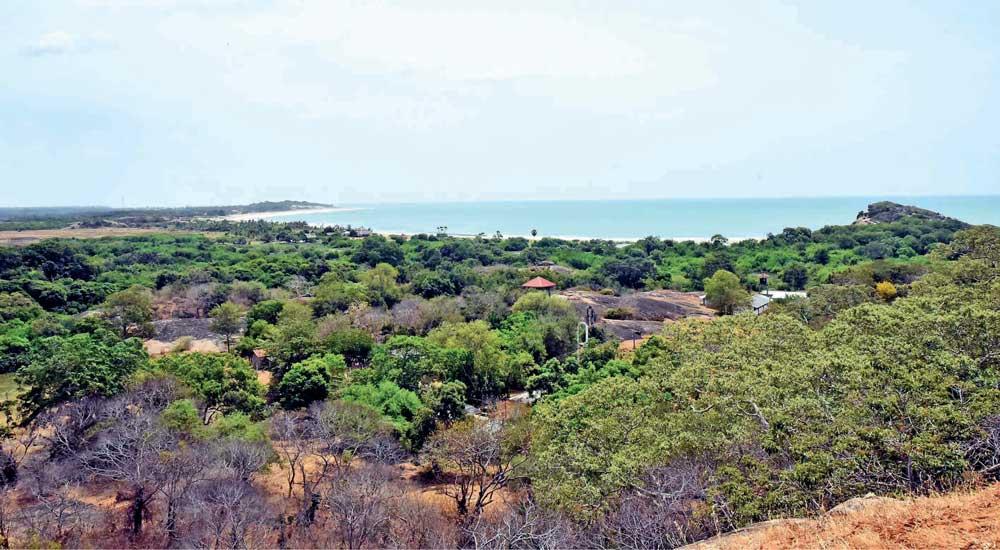
View of Elephant Rock, Crocodile Rock from Shastrawela. Rave parties take place in habitats frequented by elephants.
Pics by Kithsiri De Mel
- For visitors who visit Arugambay, parties are always a first choice, given the culture. But the fact that these parties are set in areas frequented by elephants aggravates the situation at hand. With bright lights and loud music, these parties begin around 10.00 pm and continue until sunrise
- “People seem to be less aggressive towards elephants than in other parts of the region. For instance, in the North Western province, you would see elephant fences and all those, but here you don’t see them much. Therefore, we have heard of fewer cases of HEC in this area so far,”- Department of Wildlife Conservation Director General Ranjan Marasinghe, the Eastern Province
Apart from braving the waves and surfing on the pristine beaches of Arugambay, crowds are now attracted to observing wildlife on the East Coast. But from the point of view of conservationists, respective authorities need to pay more attention to safeguarding several forest patches in the area, which are home to many herds of elephants. During a recent visit to Arugambay, the Daily Mirror witnessed how illegal encroachment, rave parties in areas frequented by elephants, unsafe development along the estuary and coastal areas have posed a threat to wildlife and the pristine marine environment.
Serious lack of regulation
Winding through the pristine landscape of Arugambay is the iconic Heda Oya, providing a breathtaking view for anybody who observes the landscape from Elephant Rock or Crocodile Rock. But as of late, Elephant Rock has become a potential party location for those organising parties in the area. Daily Mirror learns that plans are underway to shift parties out of the tourism stretch in Arugambay so that it doesn’t disturb other visitors. But once outside the tourism, as you travel towards Panama, one would observe forest patches on either side of the road, accompanied by vast paddy lands that attract elephants during the harvesting season. While conservationists observe that these forest patches ideally serve as Other State Forests, providing vital ecosystem services, institutional failure has paved the way for people to encroach into these areas sans any regulation. The Daily Mirror learned how the estuary is being destroyed as people put up illegal establishments by cutting down mangroves, despite the government standing firm about illegal establishments along the coastline.
An urgent call to protect Radella
One of the trending attractions in Arugambay includes the Radella Tank and its surrounds, bordering the Kumbukkan Conservation Forest, which has been declared a Protected Area. Gazetted in 2009 under the Department of Forest Conservation, the Kumbukkan is bordered by three wilderness areas: Lahugala Kitulana National Park and Pansalgoda Other State Forest to the North, the Wattegama-Kebiliththa Reserved Forest to the West and the South, the Kumana National Park and Panama Kudumbigala Sanctuary.
The Radella and Panama tanks are believed to be ancient man-made reservoirs fed by three rivers – the Wila Oya, Kuruppan Odai and Heda Oya. Protected areas allow for the safe passage of herds of elephants and other wildlife that traverse the landscapes, thereby maintaining the long-term survival of elephant herds in the East and mitigating possible causes that would lead to HEC. The Kumbukkan is therefore identified as a critical catchment, sustaining the livelihoods of many people from farmers to fishermen, vegetable cultivators and herders.
However, as of late, it has been observed how tuk-tuk drivers have been escorting visitors towards these sensitive areas. Conservationists opine that visitors should visit these areas with utmost caution and respect for the wildlife that have made this area their home territory. At both entrances to Radella, signboards have been put up by the Parrotfish Collective, a group of conservation communicators who have actively been involved in spearheading conservation efforts in the country, to remind individuals to be responsible visitors, discouraging them from approaching animals, feeding alcohol and consuming alcohol. But at the entrance itself, we were greeted by litter that was scattered around in places. A backhoe that had been extracting soil greeted us as we moved further towards the interior. Anybody who opts for this mini safari would love the winding roads through the conservation forest, sometimes wondering if one has visited Wilpattu. As we moved towards the Radella tank, we saw how two elephants were busy feeding on the grass. But we also observed how illegal encroachments have disturbed the natural equilibrium in the area. Such unregulated actions could possibly fuel the human-wildlife conflict with drastic consequences for both humans and wildlife. The presence of domesticated animals within this conservation area aggravates the problem further.
So far, the Eastern Province has not been affected by the Human-Elephant conflict, but conservationists warn of a looming conservation crisis if the authorities turn a blind eye towards enforcing the law. On the other hand, a senior government official told this paper that prior to hosting a party the organisers need to get approval from the Pradeshiya Sabha, sound permits from the police station and approval from Excise department for the sale of liquor etc. Therefore the legal provisions are in place and it is up to the authorities to ensure that people have abided by the law.
Culture of rave parties
For visitors who visit Arugambay, parties are always a first choice, given the culture. But the fact that these parties are set in areas frequented by elephants aggravates the situation at hand. With bright lights and loud music, these parties begin around 10.00 pm and continue until sunrise. On a given day, around 8-10 parties are organised in and around Arugambay, many of which are in locations that border forest patches and paddy lands.
“Elephants are part and parcel of why people come here due to the proximity of wildlife,” said a local business owner who spoke on condition of anonymity. “Where else in the world could you go for a surf and then see an elephant on the side of the road? It’s unique and beautiful and needs to be conserved and mindfully looked after. The laws need to be upheld here. There’s a great opportunity to set things right,” the source said.
A haven for illegal encroachment
During our visit towards the Shastrawela archaeological site, the Daily Mirror learned that this area is now being frequented by species such as the Sri Lankan leopard, porcupine, mouse deer and many other species, adding to the diversity of the landscape. The road leading up to Elephant Rock has been illegally encroached, and during our visit, we observed how new settlements are coming up on the banks of a nearby river where elephants frequent.
Fewer cases of HEC in the Eastern Province so far: DWC DG
According to Department of Wildlife Conservation Director General Ranjan Marasinghe, the Eastern province has vast areas of paddy fields providing the opportunity for elephants to feed on paddy, etc. “People seem to be less aggressive towards elephants than in other parts of the region. For instance, in the North Western province, you would see elephant fences and all those, but here you don’t see them much. Therefore, we have heard of fewer cases of HEC in this area so far,” he opined.
Responding to a query on declaring Radella as a Protected Area, he said that the land ownership needs to be considered prior to declaring an area as a Protected Area. “The government should have 100% land ownership in order to do that. We have Managed Elephant Reserves, for instance, but we know that the first MER hadn’t been successful. On the other hand, we now know that elephants live outside protected areas. So we need to have a mechanism to monitor human activities in DWC or Forest Department Lands,” he added.
Several attempts to contact Forest Conservator General W. W. M. P. S. C Palamakumbura to inquire about new approaches to safeguard forest department territories from illegal encroachment activities proved futile.
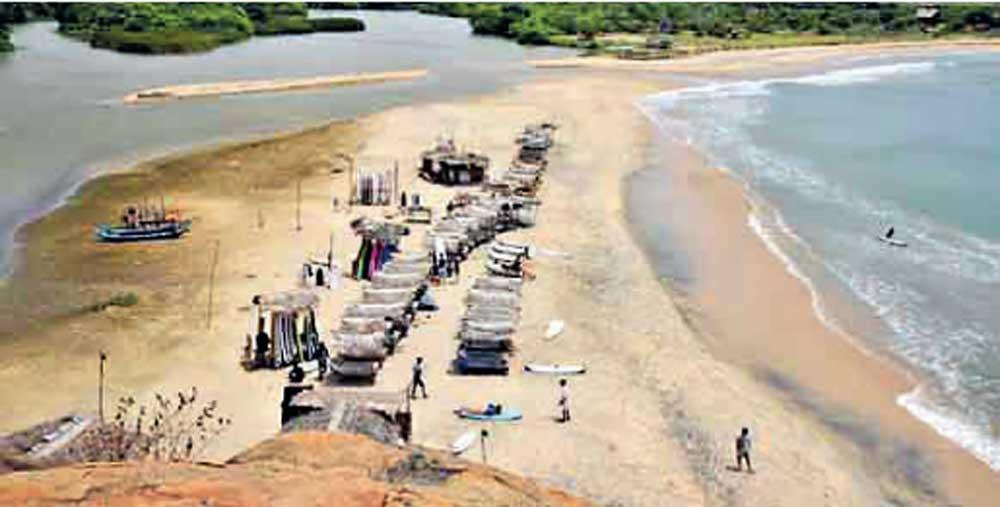
Makeshift establishments along the estuary near Elephant Rock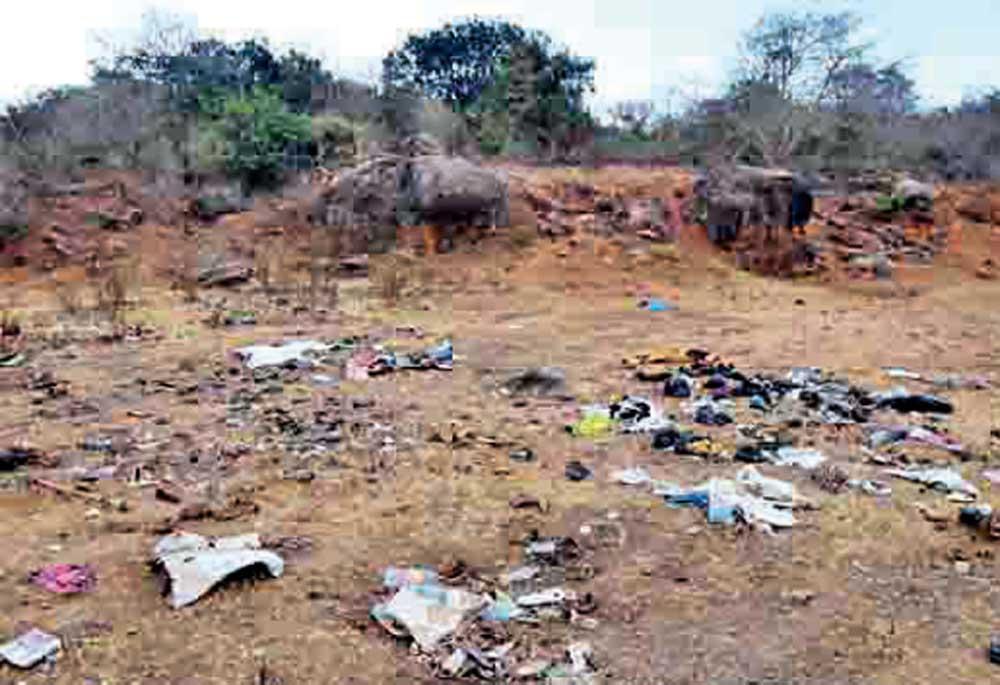
Several areas at the entrance to Radella littered by visitors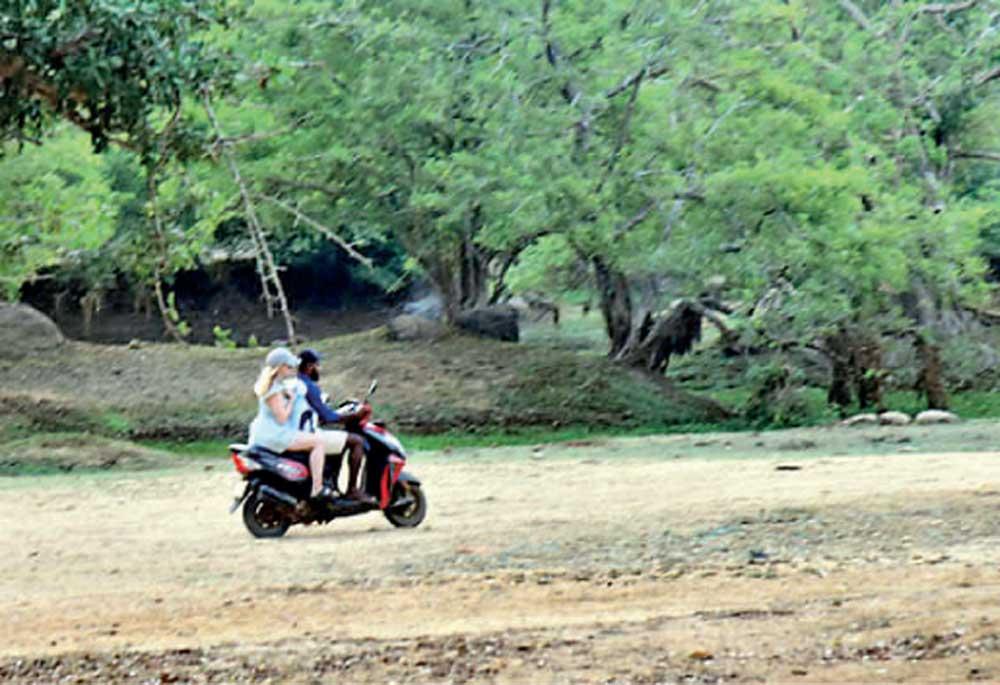
The infamous scooter safaris which conservationists believe are risky given the sensitivity of the area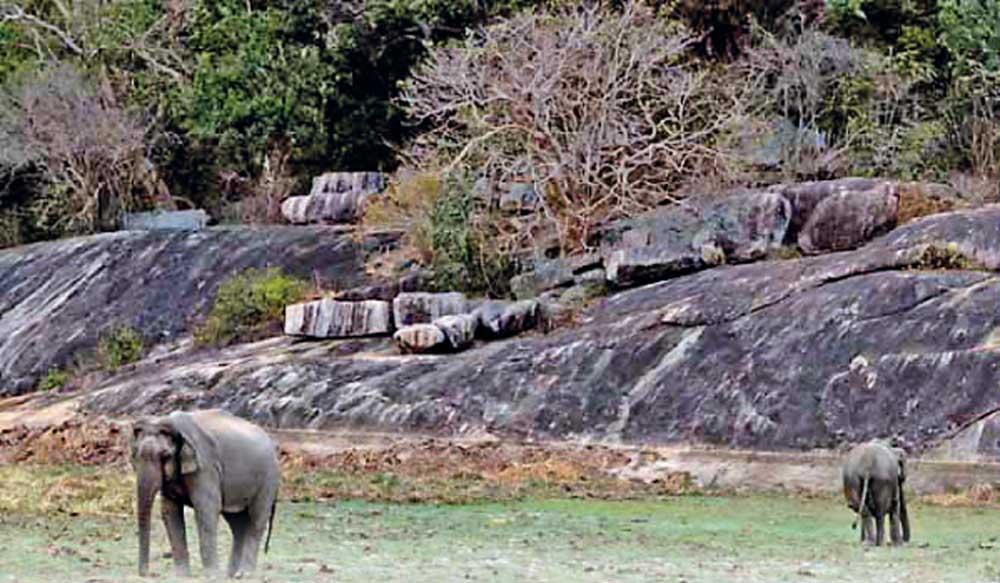
Elephant herds near Radella tank