Reply To:
Name - Reply Comment
|
Dr. S.P. Nissanka |
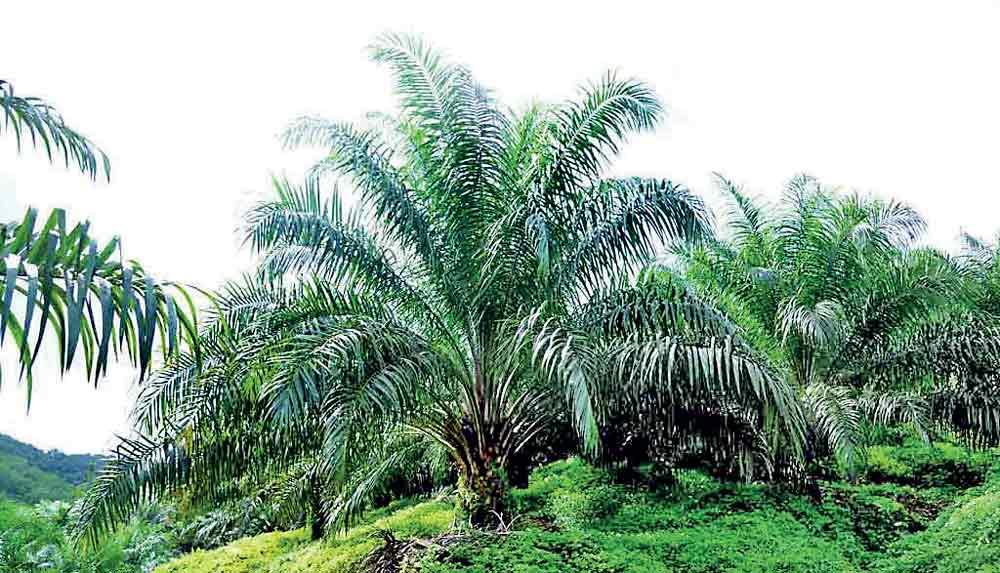
A senior Sri Lankan agricultural scientist has challenged some of the most persistent criticisms levelled against oil palm cultivation, arguing that available evidence does not support claims that the crop causes unusual soil degradation, biodiversity loss or water shortages compared with other plantation crops, and urging policymakers to rely on science rather than public perception when shaping agricultural policy.
Emeritus Professor of Agriculture at the University of Peradeniya Dr. S.P. Nissanka said the debate surrounding oil palm in Sri Lanka had become dominated by unsubstantiated assumptions despite a lack of local scientific evidence to support many of the environmental allegations frequently cited against the crop.
In a detailed review of the agronomic impacts of oil palm cultivation, Nissanka argued that soil-related challenges commonly associated with oil palm are largely a function of land management practices rather than the crop itself, noting that similar concerns exist across tea, rubber and coconut plantations.
“Public policy and social discourse must be informed strictly by scientific evidence rather than speculative, unsubstantiated preconceptions,” he said.
Sri Lanka continues to grapple with questions over the future of oil palm cultivation, a highly productive crop that has remained at the centre of environmental and policy debates for years.
According to Nissanka, oil palm currently occupies around 10,400 hectares in Sri Lanka’s wet zone low country, largely on lands previously cultivated with rubber or tea. He stressed that no natural forests had been converted for oil palm cultivation, arguing that comparisons should therefore be made against other plantation crops operating under similar agro-climatic conditions rather than against natural forest ecosystems.
He also disputed assertions that oil palm cultivation inherently accelerates soil erosion, saying erosion outcomes depend largely on factors such as terrain, rainfall intensity, drainage systems and estate management practices.
While acknowledging that poor plantation management can contribute to environmental degradation, he noted that internationally accepted conservation measures including cover crops, contour planting, mulching and proper drainage systems have been shown to effectively minimise soil loss in oil palm plantations.
The paper further challenges claims that oil palm requires excessive fertiliser use compared with other plantation crops.
According to the analysis, oil palm generally requires higher fertiliser inputs than rubber but remains comparable with coconut and lower than tea for key macronutrients such as nitrogen. More importantly, the crop delivers superior yields relative to the quantity of nutrients applied, making it one of the most nutrient-efficient plantation crops under proper management.
Nissanka also rejected the commonly repeated claim that oil palm plantations function as ecological deserts.