06 Mar 2017 - {{hitsCtrl.values.hits}}
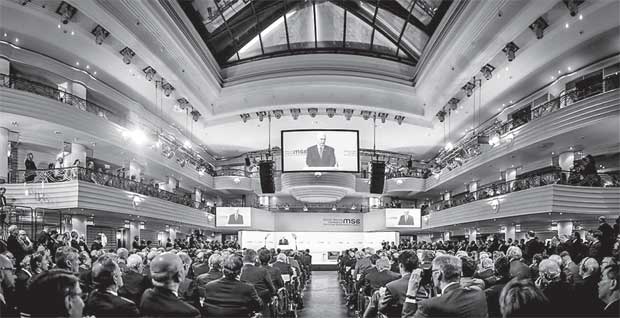 The Munich security conference
The Munich security conference concluded few weeks ago. It was one of the largest and most represented security conferences in the world, with political leaders, security sector and civil society leaders and policy makers coming together to discuss the challenges and progress in the global security order.
The key theme of its main report published this year went as, ‘Post truth, Post West, Post Order.’ Which itself reflects the key momentum and dynamism of the current epoch. The important observation is that the Liberal political elites are coming into a slow and painful conviction the Liberal  world order that was created under the American leadership and resources is unravelling. It is unraveling not because of serious external threats, instead ironically by fissures, cracks that are slowly weakening the structures, which held the order together from Liberal norms, values to institutions.
Last twelve months seem to have accelerated this process, Liberal institutions from global financial, trade to political institutions namely the WTO, the IMF and the United Nations are showing signs of extreme brittleness, the Munich Security Report is a classic example, where the fears which were mostly suppressed by the elite Liberal policy makers and their ancillary networks such as elite Liberal Universities and think tanks seem to be finally breaking the gags and openly announcing their fears.
From events such as the Brexit, the election of President Donald Trump to attacks on migrants in South Africa to heightened fears in Sri Lanka of selling out to China and inundating of Sri Lanka job markets by skilled and unskilled Indian labourers, all represent this new nervous world.
This column comes to light at a time when overall trust of many established systems are questioned, for many it is the challenging of the status quo, which range from lack of trust of governments, policy  makers, mainstream media, intellectuals to academic establishments.
The Trump victory did not just shake the political establishment; it did strike at the very foundations of the intellectual ivory tower from its core. Thanks to a massive Cyber Cultural Revolution where social media platforms from Facebook, Twitter to Snapchat altered the way people spread and consumed information and these fluid structures of social media upended the dominance of legacy media, which always had a claim to master and hold a moral high ground on a truthful narrative.
The topic of today’s column is not a standalone. It is setting up a set of analytical narratives on ongoing global transformations, to illuminate and encourage the readers to decipher some confusing contradictions of global politics and political processes. While the West is struggling to reckon with its in ability to lead and consolidate and repair the broken Liberal system, China seems to be defending the very systems many Marxists saw as a threat to the global order.
Thus the question is why China wants to defend and why did China unveil its inaugural freight shipment via rail links from Yiwu to London spanning 12,000 kilometres, the very next day following Xi’s speech at the World Economic Forum?
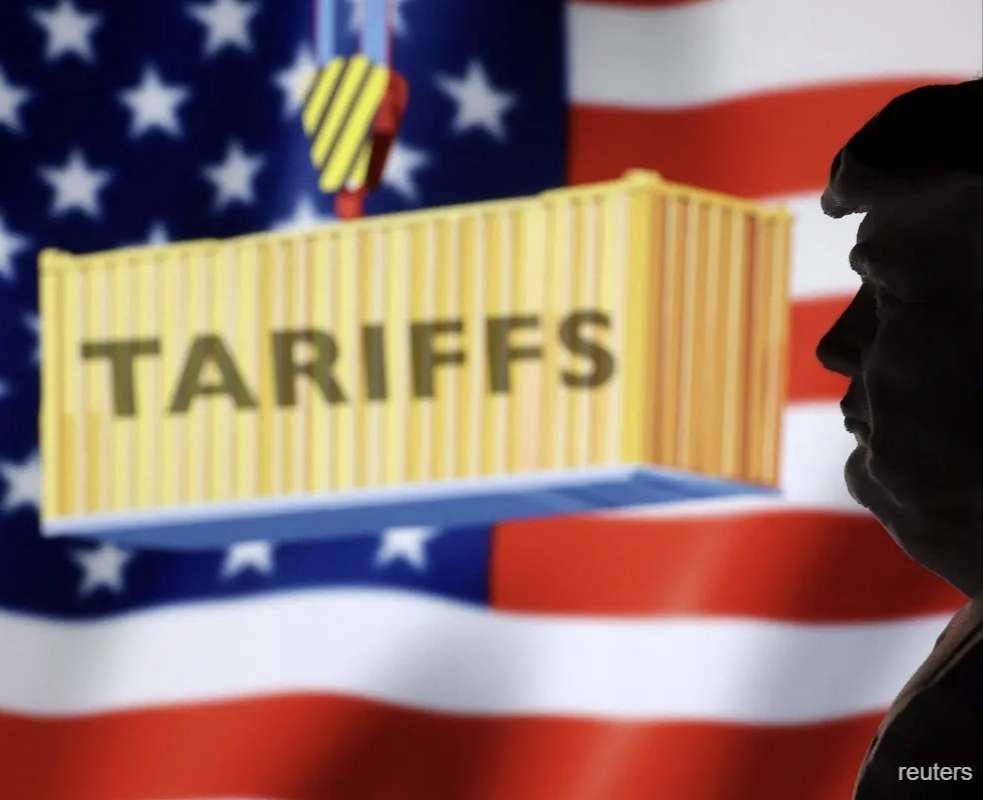
The crises in the West are blamed on hyper-globalisation. To put it in simple terms borrowing a line from President Trump’s Chief Strategist at the White house Steve Bannon, ‘American working class was gutted to create China’s middle class’.
The year 2017 seems to be a year of relentless paradoxes, at the World Economic Forum annual meetings, which is the globalist hangout and the cool place to be if you were some Liberal elite, the maestro of the show this year was the Chinese president Xi Jing Pi, who in his key note address sounded more like Thomas Friedman calling for a passionate defence of globalisation, while globalisation is seen as the enemy by most nationalists in the West as highlighted by the observation of Bannon.
Will this tension create serious realignments of how power is distributed in the world? Will countries like China and Russia try to create a New World Order, as the Russian Foreign Minister last month declared at the Munich Security Conference, ‘let’s think of a Post West World’?
There is a mix of transformations which many analysts, academics and policy makers are grappling with, some see it has a toxic cocktail that would lead to an explosion and disintegration of the existing global order, some see a world which will be dominated by multiple of nation states, yet the single most significant political challenge which impacts global and national politics is unprecedented speed at which established political norms, institutions and regimes are shifting with no real stabilising arc.
From Liberal political parties and programmes being despised or rejected from America, Britain, France, Hungary to Philippines some would argue even the Liberal hold of the traditional Indian political parties is waning. Analysts fear an illiberal world.
In a Post Factual World, people may no longer seek the truth but see the truth as proclamation of an alternative leader capable of convincing them that alternatives are possible.
Watching President Trump making his inaugural address to the congress few days ago highlighting the return of the American spirit, reinventing American greatness sends a strong message to globalists, who sought to fix global problems from climate change to setting standards of free trade.
There clearly is a drive to inward looking policies, in a recent interview with the British Channel 4, Slovenian philosopher Slavoj Zizek proclaimed, “I fear in the short to middle run the populists may deliver on their promises.”
His argument was that both the traditional forces of Liberal and Left politics were in crisis, thus providing extremism at both spectrums to thrive.
Thus it is time for Sri Lankans to understand the big picture of global transformations. We are bogged down with political debates tied to challenges emerging from grand coalition rule within the country.
If we as a nation fall into a political sinkhole that does not give us a clear vision of how the world is changing, we are in deep trouble.
It is important to have a clear world affairs education programme integrated into our school curriculum, the world is more and more connected yet it seems people are more and more divided; we as a nation are in acute shortage of diplomats, civil servants, politicians, who can work across divides, while reaping the benefits of the intense global connections.
Thus it is time to see the big picture rather than self inflicting mortal blows to the country that would make it far weaker and less flexible to adapt and adjust to global transformations that are ripping the global order apart.
27 Jun 2026 1 hours ago
26 Jun 2026 3 hours ago
26 Jun 2026 4 hours ago
26 Jun 2026 4 hours ago
26 Jun 2026 4 hours ago