25 Feb 2025 - {{hitsCtrl.values.hits}}
Professor C. C. de Silva is one of Sri Lanka’s first Professor of Paediatrics
Professor De Silva hailed from a pioneering medical lineage—his father William Henry de Silva whilst serving as a pioneering Eye Surgeon, established ophthalmology as a specialty in Ceylon
He is an alumnus of St. Bishops and S. Thomas College.
Sri Lanka has maintained a superior healthcare system for a long period even before the colonial times
 When I started my career in Paediatrics nearly 25 years ago as a Trainee at the Postgraduate Institute of Medicine, I learned gradually, one by one, the great professionals who developed the field of Paediatrics in this country. Some of them are fortunately still around providing their expertise, supervision and services to help maintain and improve the field. One name stood out above all; that of Professor C. C. de Silva.
|
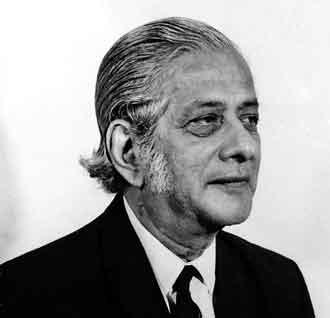
Professor Percival Cholmondeley Chalmers de Silva (1904-1987), affectionately known as Professor C. C. de Silva, stands as a monumental figure in Sri Lanka’s medical history
|
Professor Percival Cholmondeley Chalmers de Silva, affectionately known as Professor C. C. de Silva, stands as a monumental figure in Sri Lanka’s medical history. As the nation’s first Professor of Paediatrics, his contributions have left an indelible mark on child healthcare and medical education.
Early Life and Education
Born in Colombo, on the 25th of February 1904, Prof. C. C. de Silva was the son of William Henry de Silva, a pioneering Eye Surgeon, who established ophthalmology as a specialty in the country. Young C. C. de Silva received his early education at St Bishop’s College Colombo until the age of ten, after which he attended S. Thomas’ College, Mount Lavinia. His academic journey in medicine began at the Ceylon Medical College in 1923, but he soon transferred to the University College London and later to King’s College Hospital, where he completed his medical studies.
Medical Career and Contributions
Sri Lanka has maintained a superior healthcare system for a long period even before the colonial times. It is due to the excellent professionals the country has produced for ever so long. The trend continued beyond colonial times and at present the country boasts of health indices comparable to and sometimes even better than those of the developed world. The foundations of this health care system, which has made it a model for developing countries, were laid down in 1858 in the colonial period.
From the beginning, Sri Lankans trained in the West were providers of state medical care in hospitals and dispensaries. The Colombo Medical School, founded in 1870, was crucial in the extension of medical services to the general population from then onwards. The two decades of self-government before independence following the Donoughmore Constitution in 1931 with the instigation of universal suffrage, contributed to a further rapid expansion of health services as politicians sought support from the electorate. Furthermore, the devastating 1934–35 Malaria epidemic, with an estimated 80–100,000 deaths, was instrumental in extending the health infrastructure to even the neglected rural regions at that time.
Upon returning to Sri Lanka in 1931 with this background, Professor C. C. de Silva established a general practice, an uncommon path for a young physician at that time. In the background of challenging problems for children, who were considered to be miniature adults at that time, he developed a passion for the field of Paediatrics. This led him to focus on child healthcare, culminating in his appointment as the very first Professor of Paediatrics at the medical school of the University of Ceylon in 1949. This position allowed him to revolutionise paediatric education at both undergraduate and postgraduate levels, significantly elevating the speciality’s status in Sri Lanka. The field has taken root and has blossomed into a well-developed medical discipline in the country now.
Professor C. C. de Silva provided his services and made his name as an excellent Paediatrician while working at the Lady Ridgeway Hospital for Children, the premier hospital dedicated to Children in Colombo, built 150 years ago. History has recorded that on the 26th of February 1909, Sir Henry Edward McCallum, the Governor of Ceylon, laid the foundation stone for constructing a separate block for children in the Lady Havelock Hospital for Women and Children. The building was erected with public subscriptions and donations, and the former First Lady Ridgeway had been markedly energetic in fundraising for this project.
On the 27th of September 1910, the new section; the Lady Ridgeway Block for the Children was ceremonially opened. In 1937 a qualified Paediatrician for the hospital, Dr L. O. Abeyratne was appointed as the Physician and the Medical Officer-in-Charge of the Hospital. Starting from that time, the hospital has evolved to provide cutting-edge services to sick children in need, right up to the present time.
At the Lady Ridgeway Hospital for Children, Professor C. C. de Silva conducted groundbreaking research on tropical paediatrics, particularly on conditions like kwashiorkor and avitaminosis. His work garnered international recognition, leading to invitations to numerous global conferences, some of which he chaired.
Leadership and Honours
Professor de Silva’s leadership extended beyond the hospital and classroom. In 1949, he was elected the President of the Ceylon Branch of the British Medical Association, now known as the Sri Lanka Medical Association. He also served as President of the Ceylon Association for the Advancement of Science in 1961 and became Chairman of the Ceylon Institute for Scientific and Industrial Research in 1962.
Personal Life and Legacy
In 1931, Professor de Silva married Irene, daughter of Sir Henry de Mel and sister of the Reverand Lakdasa de Mel, Bishop of Calcutta and Metropolitan of India, Burma, Pakistan, and Sri Lanka. They had a son Wijitha and a daughter Ilika. Despite his demanding career, he was a devout Christian who never missed church on Sundays and was known for his kindness, never turning away anyone seeking help or advice. He was a great family man who doted on his wife and two children.
After retiring in 1966, Professor C. C. de Silva remained active in various social organisations dedicated to family planning, nutrition, and support for the deaf and blind. He also pursued writing, authoring his autobiography, ‘Life as I Lived It’, just before he left this mortal world.
Professor C. C. de Silva’s legacy is profound. His pioneering efforts in paediatrics have shaped the landscape of child healthcare in Sri Lanka, and his dedication to medical education has inspired countless professionals. His life serves as a testament to the impact one individual can have on a nation’s health and well-being.
The writer is a Professor in Paediatrics at the University of Peradeniya.
10 Jul 2026 26 minute ago
10 Jul 2026 29 minute ago
10 Jul 2026 34 minute ago
10 Jul 2026 1 hours ago
10 Jul 2026 1 hours ago