22 Nov 2025 - {{hitsCtrl.values.hits}}
 The SJB obtained around 4.4 million votes at the last Presidential election when the majority of these Tamil communities voted for it, but secured only around 2.8 million votes during the subsequent Parliamentary election
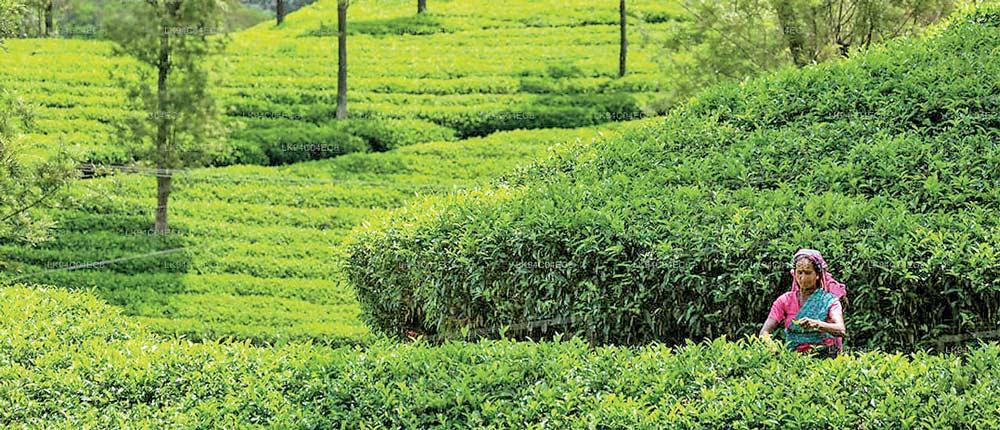
The government will increase the daily wage of estate workers from Rs. 1350 to Rs. 1550 from January next year and pay them an additional Rs. 200 daily attendance incentive, with an allocation of Rs. 5000 million
The proposal to increase the salaries of estate workers in the second budget of President Anura Kumara Dissanayake of the National People’s Power (NPP) seems to have put the Opposition, especially the Samagi Jana Balawegaya (SJB), in an embarrassing situation. It is something that the Opposition can neither swallow nor spit out.
The SJB has been highly dependent on the Tamil people in the Northern and Eastern Provinces, as well as the Tamil-speaking people living mainly in the tea-growing up-country, who are lately being referred to as the Malaiyaga community, particularly during elections, such as Presidential elections.
The party, which obtained around 4.4 million votes at the last Presidential election when the majority of these Tamil communities voted for it, had to be satisfied with around 2.8 million votes during the subsequent Parliamentary election when those communities voted for parties formed with their own ethnic identity.
Therefore, it is comprehensible that the SJB cannot antagonise the Malaiyaga community under whatever circumstances. It is against this backdrop that President Dissanayake presented his second budget in Parliament on November 7. He, during his four-hour-long speech, stated that the daily wage of estate workers would be increased from Rs. 1350 to Rs. 1550 from January next year, and the government would pay them an additional Rs. 200 daily attendance incentive. The allocation for this incentive was Rs. 5000 million.
Questions were raised in some quarters on the legality of this incentive, which is to be paid from the Consolidated Fund to the employees of private sector companies. The Committee on Public Finance (COPF), headed by SJB parliamentarian Dr Harsha De Silva, had concluded that this incentive is unlawful, according to media reports.
SJB MP Rohini Kavirathna lodged a formal complaint with the Commission to Investigate Allegations of Bribery or Corruption (CIABOC), the Auditor General, and the National Procurement Commission regarding this Rs. 200 daily allowance, on the grounds that it violates the Public Financial Management Act (PFMA) No. 44 of 2024. However, he foresaw the imminent political fallout of his fellow members’ action. Another SJB parliamentarian, Ajith P. Perera, immediately stated that Kavirathna’s stand on the matter was her personal view. And this put an end to the controversy.
If the SJB still opines that the proposal to grant an allocation from the Consolidated Fund to pay an incentive to the estate workers is illegal, they have allowed it to happen on political consideration. If it is not illegal, on what grounds did Kavirathna go to CIABOC and other institutions? Similarly, Dr Harsha De Silva, under whose Chairmanship the COPF concluded that this incentive was illegal, does not seem to raise the issue in Parliament.
On the other hand, the NPP promised to increase the estate workers’ daily wage to Rs. 2000, knowing very well that the government cannot dictate terms to the Regional Plantation Companies (RPCs) to increase the salaries of workers. Yet, besides the humanitarian angle in the Rs. 200 incentive payment, it is clearly a political decision to pay it from the taxpayers’ money. However, pathetically, the Opposition cannot criticise the government for it.
Nevertheless, the government’s argument to justify the incentive is no doubt strong. Health and Media Minister Dr Nalinda Jayatissa, who is also the Cabinet spokesman, while responding to a journalist who questioned the legality of the government’s move, questioned in turn if the latter had ever challenged the fertiliser subsidy provided to the farmers. He stated that the farmers who are also not public servants, like estate workers, are provided subsidies from the public coffers.
The trade union leaders representing the estate workers are also another group that has been stumped by the government’s offer to pay Rs. 200 with their increased daily wage. They have been concerned since the last Presidential election, when it was evident that the NPP had made inroads into the Malaiyaga community. The NPP’s influence among the Malaiyaga community further deepened at the Parliamentary election, and the government recognised their contribution to the NPP victory by offering a Cabinet portfolio and a deputy ministerial post. This pay hike might further strengthen the NPP within that community.
It has been a habit of the trade unions in the estate sector to grab the credit for any pay increase mediated by the government. However, it would be difficult for them to do so as President Dissanayake has already owned it, thanks to the negative media hype created against it. As happened to the SJB, these trade union leaders are in a position not to praise the government or criticise it over the matter.
Nonetheless, leader of the Democratic People’s Front (DPF) and the Tamil Progressive Alliance (TPA), Mano Ganesan, Ceylon Workers Congress (CWC) leader Jeevan Thondaman, Upcountry People’s Front (UPF) leader, R. Radhakrishnan and the leaders of the National Union of Workers (NUW), Palani Digambaram, voted in favour of the budget following its second reading. They might do the same after the committee stage debate on the budget as well.
Malaiyaga parties might prefer to join hands with the NPP government in order to thwart a possible erosion of their vote bank in the event of a drastic inroads by the NPP into their vote base. However, it is doubtful if they would prefer to resort to such a move, sacrificing their privileges.
However, this salary increase would not solve the problems faced by the estate workers at all. It is just a consolation to them. As a community, they are the people among whom the highest malnutrition, child mortality and infant mortality prevail compared to national indicators and who enjoy the least facilities in the fields of health, education, transport and housing. These issues have not been addressed, even when the estates were under state institutions, while the trade union leaders were ministers of the government. This has been resulting in the exodus of youth from the estate sector, threatening the very survival of the plantation sector.
08 Jul 2026 13 minute ago
08 Jul 2026 18 minute ago
08 Jul 2026 48 minute ago
08 Jul 2026 1 hours ago
08 Jul 2026 1 hours ago