23 May 2026 - {{hitsCtrl.values.hits}}
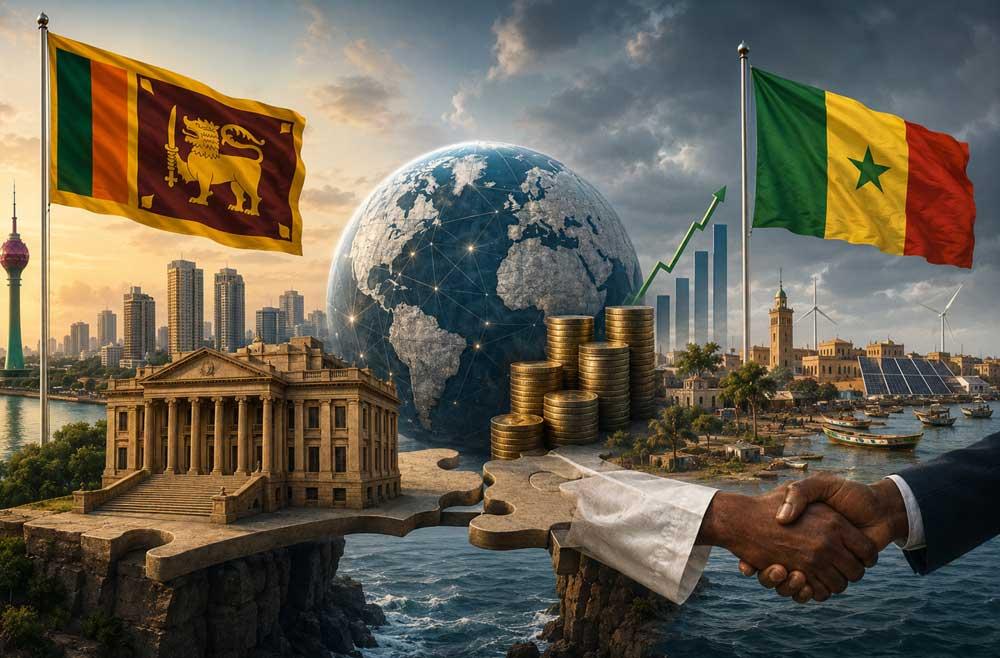
By Ahilan Kadirgamar
Sri Lanka gained independence in 1948 after four and a half centuries of colonial rule by the Portuguese, Dutch and then finally the British. Despite this colonial legacy and attempts to keep the country in the Western orbit, most notably by the United States with the Colombo Plan and the World Bank with its extensive Mission in 1951, Sri Lanka took the turn towards Import Substitution Industrialisation and a geopolitical shift towards the Non-Aligned Movement in 1956. This economic trajectory culminated in the country being considered a model developmental state by the 1970s. A key factor in Sri Lanka’s developmental success was its high Human Development Indicators despite low per capita income; outcomes which gained from the robust social welfare policies of free education, free healthcare and universal food subsidies implemented after Independence. However, the prolonged downturn of the global economy in the 1970s including the OPEC oil shock, and declining terms of trade since decolonisation created a political backlash towards the end of that decade, leading to the rise of a right-wing regime aligned with the United States. Sri Lanka became the first country in South Asia to liberalise its economy – through a programme known locally as the open economy reforms – and went through Structural Adjustment with the IMF and World Bank in 1978.
Liberalisation focused on open trade including agriculture and financialisation with capital account convertibility. The need for capital inflows after years of a capital strike denying development funds to punish Sri Lanka for its turn away from the West, was characterised by the largest World Bank development project in the country for the diversion of the Mahaweli River for irrigation and settlements. The result was increasing external dependency with the promotion of the tourism sector, migrant work for remittances and a garment sector that drew from quotas of the Multi-Fibre Arrangement (MFA).
After an initial economic boom, this economic bubble burst with inadequate returns from capital inflows coinciding with the escalation of civil war. The two and a half decades of civil war and repeated balance of payment crises slowed the pace of neoliberal reforms as successive governments were preoccupied with the war. I have argued elsewhere that it is the conjuncture of the end of civil war coinciding with the global financial crisis of 2008 to 2009 that led to a second wave of neoliberalism in Sri Lanka.[2]
Second Wave of Neoliberalism and the Debt Crisis
This second wave of liberalisation was formalised by Sri Lanka’s 15th IMF programme in July 2009. Sri Lanka was considered not only an emerging market, but also a post-conflict economy with authoritarian and militarised stability to push through rapid “development”. Flows of global capital took the form of portfolio investments into Sri Lanka’s capital markets – which continues to be promoted by the World Bank and the Asian Development Bank – and more significantly borrowing on the international capital markets in the form of International Sovereign Bonds (ISBs), and to a lesser extent commercial debt by state banks.
ISBs were first issued by Sri Lanka in 2007, and subsequently almost every year until 2019 with a total issuance of US$ 18.25 billion. Such inflows of global capital – with the blessing of the IMF and rating agencies – led to Sri Lanka initially registering high GDP growth rates between 8 to 9 percent from 2010 to 2012, particularly due to the expansion of infrastructure and urban development. However, subsequent economic contraction and persistent balance of payments problems led to the next government to enter into Sri Lanka’s 16th IMF programme in 2016, which facilitated another wave of ISBs which was disrupted only by the COVID-19 pandemic.
A massive debt burden left Sri Lanka in a precarious situation as it could not roll over its debt with the fiscal and current account problems that came with the pandemic. The bulk of this debt came from commercial borrowings, as opposed to the Western media’s projection of a so-called debt trap from China. While the authoritarian Government elected in late 2019 did not help the situation with major tax cuts which worsened the country’s fiscal situation, it was really the pandemic-induced loss of remittances and tourism earnings, the disruption of exports, and the sudden rise of commodity prices with the war in Ukraine in early 2022 that put tremendous pressure on Sri Lanka’s balance of payments. During the crisis years of 2020 to 2022, the Western establishment including the EU demanded that Sri Lanka should not curtail imports. Meanwhile, local neoliberal think-tanks and a section of the national elite called for a default and restructuring of Sri Lanka’s external debt with the support of the IMF, which they claimed could lead to a rapid recovery.
The Seventeenth IMF Programme
In early 2022, the Government decided to work towards an IMF programme For the first time since its independence, Sri Lanka pre-emptively defaulted on its external debt in April 2022, even though only US$ 78 million in debt servicing was needed that month and the next major ISB repayment was due in July. A country that was considered a model development state in the 1970s and had survived the long global downturn, and remained solvent during a devastating protracted civil war, had now defaulted after being acclaimed as a rapidly developing success story during its post-war years.
As protests mounted against the shortage of imported supplies of essential goods, and President Gotabaya Rajapaksa fled the country, his party appointed Ranil Wickremesinghe, leader of a party that had only secured a single parliamentary seat as President in July 2022, as he was seen to be aligned with the United States. A staff level agreement with the IMF was agreed within two months, as a number of “prior actions” demanded by the IMF were quickly implemented.
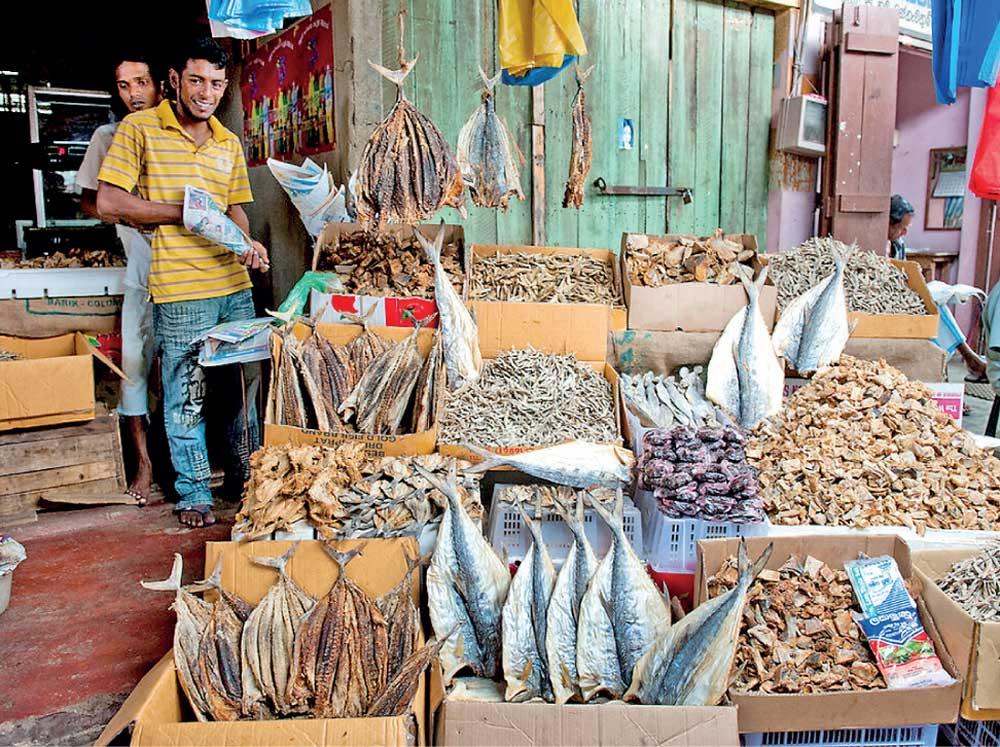
Blindly following IMF dictates means great hardships to consumers (courtesy Lookphotos)
The IMF’s strategy involved delaying the Executive Board approval of the 17th IMF programme until a number of prior measures such as massive devaluation of the rupee, drastically increasing the interest rates, market pricing of energy and halting subsidies.[3] This was a tremendous shock to the economy and the people of Sri Lanka, where close to half a million jobs out of an 8 million work force were lost, electricity costs quadrupled in some areas, and poverty rates ballooned from 6% to over 25%.[4] Such drastic measures were made possible because Sri Lanka had now defaulted on its debt and was at the mercy of the IMF, which had unprecedented leverage due to its role in arbitrating debt restructuring. The IMF programme was finally approved in March 2023, after over a year of compliance with IMF conditions. This reality exposed the flawed claims of the national and diplomatic establishment that Sri Lanka’s debt crisis would be solved through an early default and recourse to the IMF for rapid debt restructuring.
Meagre IMF contribution
The IMF programme, billed in the media as a bailout, in fact contributed a meagre US$ 3 billion over four years, amounting to less than 4% of Sri Lanka’s foreign earnings during that period. Another US$ 4 billion in associated budgetary support from the World Bank and the Asian Development Bank was conditioned on further market-oriented programmes and restructuring of state institutions, including new laws that are drastically changing the political economy of the country.[5]
Debt Restructuring -- Debt Sustainability Analysis
One problematic concern of the IMF programme was the institution’s conflict of interest as both lender and the arbiter of Sri Lanka’s debt restructuring. In this context, its Debt Sustainability Analysis (DSA) raised many concerns. The IMF programme involved little debt relief, and the end of the four-year programme was accompanied by a moratorium on debt payments –- the multi-lateral institutions considered super senior were exempt from debt restructuring – was to end with 95% of GDP in external and domestic debt. Furthermore, with the end of the IMF programme in 2027, a crippling 4.5% of GDP in external debt servicing each year is expected, amounting to 30% of government revenue. Furthermore, the servicing of external debt requires floating 1.8% of GDP in International Sovereign Bonds (ISBs) every year.
The IMF programme was in essence designed to return Sri Lanka to the international capital markets, arguably the cause of the crisis.[6] Finally, the DSA called for a reduction of domestic debt servicing by 1.5% of GDP to meet the Gross Financing Needs of the country between 2027 and 2032 at 12.7% of GDP (principal payments: 9.1%, interest payments: 5.9% and primary budget surplus target: 2.3%, all as ratios of GDP) by conflating external debt and domestic debt, and necessitating restructuring of the country’s domestic debt.
Domestic Debt Restructuring
The most egregious aspect of the IMF-led debt restructuring process – despite the claim that it is neutral on the issue of Domestic Debt Restructuring (DDR) – was its collusion with the bondholders in pushing for restructuring domestic debt, even though Sri Lanka had not defaulted on its domestic debt. The bondholders argued that DDR was necessary for comparability of treatment. The consequence was for the Employee Provident Fund (EPF) and other retirement funds that had invested in Treasury Bonds, to reduce their returns by 0.5% of GDP every year over the sixteen years of debt restructuring from 2022 to 2038 so that the Gross Financing Needs of the country can be brought down to 12.7% of GDP.
This amounts to almost an opportunity cost of 47% in returns for the retirement funds.[7] In undertaking such debt restructuring, the Central Bank of Sri Lanka was itself in a situation of conflict of interest as it was both the custodian of retirement funds like the EPF and actively restructuring them to the detriment of their returns. Financial institutions and wealthy individuals that had invested in Treasury Bonds remained unaffected, while the future retirement earnings of workers, including tea-pickers and garment workers whose wages were already below poverty levels were ravaged.
External Debt Restructuring
The External Debt Restructuring (EDR) process was quite lengthy, and reaching agreement with the bondholders took close to two and a half years. The main sticking-point was aggressive bargaining by bondholders despite having an already favourable DSA by the IMF. Their demands consistently failed the comparability treatment test of the bilateral donors. With an authoritarian, pro-Western President at the helm, an agreement was hastily signed with bondholders two days before he was removed from power in the September 2024 presidential elections. This crass manoeuvre, the complicity of the IMF with the bondholders, and the brazen pressuring of the incoming government by the Western bloc to accept the deal, is characteristic of the manner in which debt restructuring is politically fixed in the interest of global finance capital.[8]
The bondholders introduced an unprecedented financial instrument called Macro-Linked Bonds, which ends up in providing very little debt relief if Sri Lanka’s dollar-denominated GDP remains high between 2025 and 2027. Under this structure, even if real GDP growth is weak, an appreciation of the rupee —likely under the IMF’s austerity and inflation-targeting framework —would raise Sri Lanka’s dollar GDP and, in turn, increase its repayment obligations, including both principal and coupon payments, in subsequent years.[9] Current estimates of Sri Lanka’s 2025 GDP at US$ 108.8 billion, suggest it would receive only a 16% haircut from bondholders, compared to 27% if its dollar-denominated GDP were US$ 84.7 billion. As a result, Sri Lanka could pay approximately US$ 4.9 billion more in debt service to bondholders over the period 2028 to 2038 in relation to the lower dollar-GDP scenario.
Social and Economic Consequences
The IMF programme combined with debt restructuring has had devastating consequences for Sri Lankan society. As mentioned earlier, without the choke hold of debt restructuring of which the IMF is the arbiter, it could not have, as evident from the previous 16 programmes, enforced such a crippling policy package with severe austerity measures devastating the citizenry and undermining long-established state institutions.
Sri Lanka’s GDP severely contracted in 2022 and 2023 with the prior actions and conditions of the IMF programme. Such contractions, coming after the two years of downturn with the COVID-19 pandemic, has led to a lost generation. According to the World Bank, Sri Lanka’s GDP will only return to 2018 levels in 2026, and pre-crisis poverty levels will only return in 2034.[10] Poverty rose to above 25%, multi-dimensional vulnerability as calculated by the UNDP is at over 55%, over 500,000 jobs of a workforce of 8 million was lost, and various reports show higher levels of malnutrition and school dropouts. The response to such social suffering was a new targeted social protection programme, named Aswesuma, with an allocation amounting to a mere 0.6% of GDP. The Aswesuma programme, designed by the World Bank and implemented in the middle of a crisis, disrupted the existing programme and is now widely considered a failure.[11]
IMF reforms are designed in such a way that every subsequent shock is immediately absorbed, including by the most vulnerable sections of society. The IMF demanded that Sri Lanka price energy at market levels, leading to several hundred thousand households being disconnected from the electricity grid. Fisher-folk have found it difficult to afford kerosene for small motorised boats and some have shifted to using paddle boats. Austerity measures and the rise in fuel costs more broadly have thus led to lower levels of production.
The so-called GDP growth in 2024 and 2025 is merely the base effect following a massive contraction. Indeed, there was no room for an economic stimulus given an extremely high 2.3% primary budget surplus condition in the IMF programme. It is now widely agreed that the so-called IMF stabilisation of Sri Lanka has deprived the country of a growth strategy.
The long-term consequences of the IMF programme and debt restructuring are deeply worrying. A large number of legal reforms were demanded of the Government, including adjustments to the Central Bank Act, a Banking Act, a Public Finance Management Act, Ceylon Electricity Board Act and many others concerning Public Private Partnerships, and State Owned Enterprises are drastically changing the way state institutions work, and the services the citizens can expect from the state. In effect, this undemocratic push by the IMF and World Bank amounts to Sri Lanka having traded in its sovereignty for restructuring its external debt with the IMF as a pawnbroker.
Lessons for Senegal and Other Countries in Debt Distress
The following are some lessons from Sri Lanka’s experience with debt restructuring under an IMF programme that may be relevant for Senegal and possibly other countries in debt distress.
It would be best if debt restructuring is undertaken through negotiations between the country and its donors without arbitration by the IMF and without recourse to defaulting. Default should be the last resort, particularly if there are no favourable mechanisms for debt restructuring. From Sri Lanka’s experience, it is also clear that the Paris Club and Western and West-aligned powers will push for an IMF-led debt restructuring following default. If default cannot be forestalled, it is best to consider selective default, for example targeting only commercial debt such as ISBs and avoid a return to commercial borrowing. In effect, this would mean remaining in default with some actors for a long period of time. This would require negotiations with perhaps one or more larger bilateral donors to provide a credit line to weather the crisis.
Even in cases where default is the only option on all or partial external debt, it is important to avoid an IMF programme as part of the debt restructuring process, as the IMF and its allied multi-lateral institutions will use this debt restructuring push to combine devastating austerity and market-oriented reforms.
No external debt restructuring negotiation should include DDR. It is clear that the IMF and external creditors, particularly the bondholders, will attempt to conflate external and domestic debt, which also has serious implications for fiscal policy as countries traverse major downturns with external debt distress.
In the worst-case scenario of a default and IMF programme, it is essential to ensure the country conducts its own DSA. Furthermore, negotiations with the IMF should be undertaken with full awareness of the “prior actions” and “structural benchmarks” that could undermine the state’s capacity and functioning. Furthermore, a growth strategy should be prioritised by limiting any primary budget surplus targets; austerity and budget surplus to repay debt will only lead to long-term stagnation and possibly repeated debt crises.
Footnotes: 1-- This paper gained from research support of Ms. Yathursha Ulakentheran and Ms. Shafiya Rafaithu.
2. Kadirgamar, Ahilan. 2013. “Second Wave of Neoliberalism: Financialisation and Crisis in Post-War Sri Lanka.” Economic and Political Weekly, August 2013
3.International Monetary Fund. 2023. “Request for an Extended Arrangement Under the Extended Fund Facility—Press Release; Staff Report; And Statement by the Executive Director for Sri Lanka.” March 2023. 4. World Bank. 2023. “Sri Lanka Development Update: Time to Reset.” April 2023. 5. World Bank. 2023. “World Bank Group Adopts Country Partnership Framework for Sri Lanka to Help Reset the Economy, Protect the Poor.” 28 June 2023. Asian Development Bank. 2023. “ADB Approves $350 Million for Sri Lanka Economic Stabilization Program.” 29 May 2023.
6. International Monetary Fund. 2023. “Request for an Extended Arrangement Under the Extended Fund Facility—Press Release; Staff Report; and Statement by the Executive Director for Sri Lanka.” March 2023 -- 7. Kadirgamar, Ahilan, Madhulika Gunawardena, Shafiya Rafaithu, and Sinthuja Sritharan. 2023. “Frequently Asked Questions on Domestic Debt Restructuring.” Daily FT. 12 September 2023.
8. Kadirgamar, Ahilan, Shafiya Rafaithu, and Yathursha Ulakentheran. 2024. “Debt’s Political Fix: Elections and Bond Deals in Sri Lanka.” Phenomenal World. 23 October 2024.
9.By July 2025, the IMF confirmed this expected scenario: “The stronger projected real exchange rate leads to a higher dollar GDP which triggers the first GDP threshold of the Macro-Linked Bonds (MLB) adjustments. Specifically, the projected average dollar GDP in 2025-27 is now US$98.7 billion compared to the first MLB threshold of US$94.0 billion. This leads to 25-75 basis-point higher coupon rates, depending on bond series, and 13-percent higher principal on the restructured International Sovereign Bonds (ISB). The contribution of debt relief to close the external financing gap remains significant.” International Monetary Fund. 2025 “Sri Lanka: Fourth Review Under the Extended Arrangement Under the Extended Fund Facility, Requests for Waiver of Applicability of Performance Criteria, Modification of Performance Criteria, and Financing Assurances Review-Press Release; Staff Report; and Statement by the Executive Director for Sri Lanka”. July 2025. Chandrasekhar. C.P. 2024. “Sri Lanka’s Debt Restructuring: A Win for Private Bondholders,” Economic and Political Weekly, July 2024.
10. World Bank. 2025. “Sri Lanka Development Update: Better Spending for All.” October 2025.
11. Kadirgamar, Ahilan. 2025. “Long history of failures Sri Lanka’s Lost Decades and Flawed World Bank Projects.” Daily Mirror. 15 September 2025.
Courtesy: IDEAS-Africa Network LBG
Ahilan Kadirgamar is a Senior Lecturer at the University of Jaffna, Sri Lanka
08 Jul 2026 8 minute ago
08 Jul 2026 25 minute ago
08 Jul 2026 47 minute ago
08 Jul 2026 1 hours ago
08 Jul 2026 1 hours ago