29 Jun 2026 - {{hitsCtrl.values.hits}}
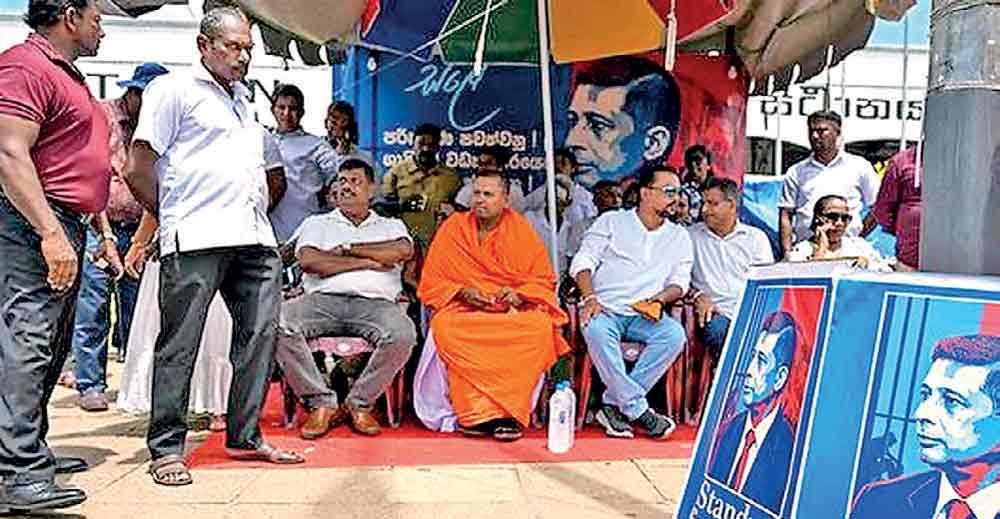
Maj. Gen. Suresh Sallay’s case has sparked a debate about detainees’ rights
 Although the legal systems differ, the underlying issue is remarkably similar. The legitimacy of detention does not rest solely on the authority to arrest
 A renewed debate over custodial treatment and due process has emerged in Sri Lanka following the detention of former State Intelligence Service (SIS) Director Major General Suresh Sallay (Retd.) under the Prevention of Terrorism Act (PTA). Allegations raised by his family regarding his physical condition and treatment in custody, alongside the government’s position that the detention is lawful, have prompted an inquiry by the Human Rights Commission of Sri Lanka (HRCSL).
The controversy is further sharpened by the fact that the NPP/JVP government has repeatedly pledged, both before and after the elections, to repeal the PTA, a law it has long criticised. Critics, therefore, argue that continued reliance on the Act sits uneasily with the government’s stated position on its necessity and legitimacy.
Yet the debate extends beyond the legality of the detention itself. At its core lies a broader question that confronts democracies across the world: what obligations does the state owe to individuals once they are placed in official custody? The question is now being examined not only in Sri Lanka, but also in the United States, where the Supreme Court has agreed to revisit a landmark precedent concerning the treatment of prisoners and the remedies available when state officials are accused of failing in their duty of care.
U.S. Supreme Court Ruling
On June 22, the U.S. Supreme Court agreed to hear a case that could determine whether federal prisoners may continue to seek damages from prison officials accused of deliberate indifference to serious medical needs. The case centres on Kekai Watanabe, an inmate who alleges that prison authorities failed to provide adequate treatment after he was injured in a gang-related assault at a federal prison in Honolulu.
According to court filings, Watanabe should have been hospitalised or referred to a specialist following the attack. Instead, he was allegedly given only over-the-counter pain medication. Months later, medical examinations reportedly revealed a fractured coccyx and bone fragments that had migrated into surrounding tissue. He received no further treatment before his release in 2024.
The case directly challenges the scope of Carlson v. Green, a landmark 1980 Supreme Court ruling that allowed federal prisoners to sue prison officials for damages arising from constitutional violations. That case involved a prisoner’s fatal asthma attack and the alleged failure of prison authorities to provide adequate medical care. The Court held that federal officials could be held personally liable when deliberate indifference to a prisoner’s serious medical condition amounted to cruel and unusual punishment under the Eighth Amendment.
The U.S. Justice Department is now urging the Court to effectively close the door on such claims. Solicitor General John Sauer has argued that “no more Carlson claims should be viable,” contending that prison officials face increasing exposure to burdensome litigation and personal financial liability.
Lawyers for Watanabe and prisoner-rights advocates disagree. They argue that damages actions often remain the only effective mechanism for holding officials accountable when serious abuses occur. Without such remedies, they warn, constitutional protections risk becoming largely symbolic.
The Washington case reflects a dilemma familiar to many jurisdictions. Governments require sufficient authority to manage prisons, maintain discipline and protect public officials from excessive litigation. Civil liberties advocates, however, argue that this authority must be balanced by meaningful accountability mechanisms, particularly where detainees are entirely dependent on the state for their welfare.
The same tension lies at the heart of debates surrounding detention in Sri Lanka.
Once an individual is deprived of liberty, responsibility for his or her well-being largely shifts to the state. A detainee cannot independently seek medical treatment, obtain food, communicate freely with family members or remove themselves from conditions that may threaten their health. Questions relating to medical care, sanitation, legal access and family contact therefore become inseparable from broader issues of human rights and the rule of law.
In letters to the Director of the Criminal Investigation Department (CID) and the Inspector General of Police (IGP), Manori Sallay alleged that her husband had become physically weak and emotionally exhausted while in detention, and required urgent medical attention. She called for his immediate transfer to the hospital and requested an independent medical assessment.
Following concerns over his condition, Sallay was admitted to the Emergency Treatment Unit of the National Hospital, further intensifying public scrutiny of the circumstances surrounding his detention.
Significant issues raised
Whether these allegations are ultimately substantiated remains a matter for the HRCSL inquiry. However, the issues raised are significant. Once an individual is detained, responsibility for their welfare rests largely with the state. In any democracy, the legitimacy of detention is measured not only by its legal authority but also by the manner in which those held in custody are treated.
Responding to criticism, Deputy Minister of Public Security Sunil Watagala defended the detention, stating that Sallay was being held in accordance with the provisions of the PTA and that there had been no political interference. “It is legal and only imposing provisions of an Act,” he said.
The significance of such institutions should not be underestimated. Whether in Sri Lanka, the United States or elsewhere, rights acquire practical meaning only when independent bodies exist to investigate alleged violations and provide remedies where wrongdoing is established.
International human rights law has long recognised this principle. The prohibition against torture and cruel, inhuman or degrading treatment applies regardless of the nature of the allegations against a detainee. Equally, modern legal systems recognise that access to medical care, legal representation and basic human dignity are not privileges granted at the discretion of authorities, but obligations imposed upon the state once liberty is removed.
The comparison between the Washington case and contemporary debates in Sri Lanka is therefore instructive. Both raise a fundamental question: what happens when a person in state custody alleges mistreatment, neglect or inadequate medical care?
In the United States, the Supreme Court is being asked whether prisoners should continue to have a direct legal remedy against officials whose conduct allegedly violates constitutional rights. In Sri Lanka, the focus is on whether existing institutions are capable of independently examining such allegations and ensuring accountability when concerns arise.
Although the legal systems differ, the underlying issue is remarkably similar. The legitimacy of detention does not rest solely on the authority to arrest. It also depends on the manner in which detainees are treated once the state’s coercive power has been exercised.
The comparison between the present Sallay controversy and the debate unfolding before the U.S. Supreme Court is not about the equivalence of cases. Rather, it highlights a recurring challenge faced by democratic societies: how to balance public security with the obligation to protect the dignity, health and fundamental rights of those in custody.
29 Jun 2026 34 minute ago
29 Jun 2026 46 minute ago
29 Jun 2026 51 minute ago
29 Jun 2026 55 minute ago
29 Jun 2026 58 minute ago