 MOHAMED AYUB
 Reply To:
Name - Reply Comment
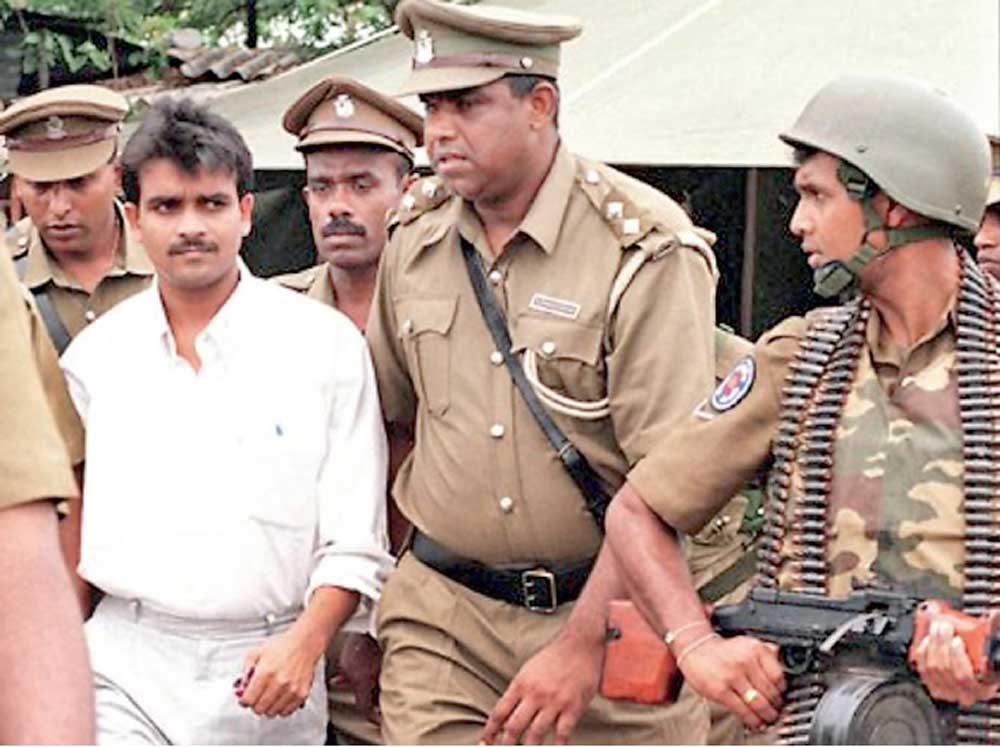 It’s the Krishanthi Kumaraswami murder trial which led to the discovery of the Chemmani mass grave
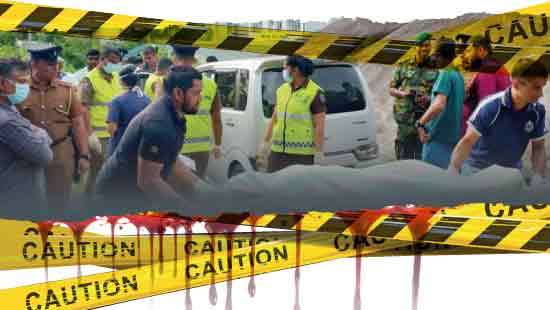
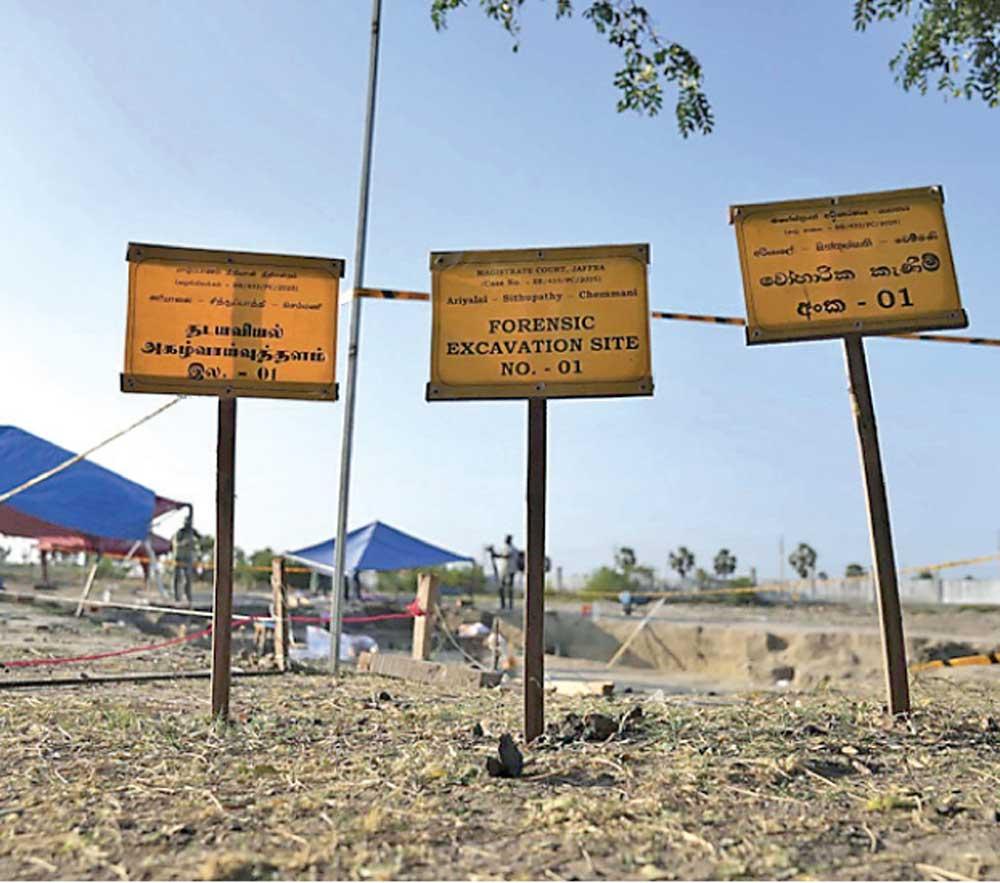
Excavations of over a year at the Chemmani mass grave at the entrance of Jaffna city have unearthed over 400 skeletal remains, many belonging to children. Some reports put the number at 412 by Monday, with the exhumation of 13 more skeletal remains on that day.
Even before the completion of this gruesome task, the grim discovery has officially made Chemmani the largest mass grave site in Sri Lanka, surpassing the 376 remains recovered in 2018 at a former wholesale depot in the heart of Mannar town.
Chemmani drew more attention than Mannar even before it surpassed the latter in number of victims. In Mannar, numbers were undermined by a controversy over the possible period of deaths of those whose skeletal remains were found. Despite Mannar being situated in the three-decade-long ethnic war theatre in the Northern Province, samples sent for radiocarbon dating to a US laboratory suggested the remains were centuries old (dating to the 15th-18th centuries).
There was a possibility of this suggestion being corroborated by a historical incident where hundreds of Tamils were executed by a Tamil king for converting to Catholicism in 16th century during the Portuguese occupation of the coastal areas of Sri Lanka.
History has it that thousands of Paravar and Karaiyar people on Mannar Island embraced Catholicism in the early 1540s, receiving baptisms from missionaries. Fearing that the conversions were a precursor to Portuguese expansion, King Sankili of the Jaffna Kingdom had between 600 to 700 of Christian converts—including his own eldest son — put to the sword in December 1944, as they had refused to renounce their new faith.
Nevertheless, local archaeologists and lawyers representing families of the missing strongly challenged these US laboratory findings, arguing the remains were from the recent past, pointing to modern artifacts found at the site. Yet, that Mannar grave site was forgotten very soon.
Excavations at Chemmani have continued under the supervision of the Jaffna Magistrate’s Court since May, 2025, and are being carried out by a team led by veteran archaeologist Prof. Raj Somadeva. It has drawn international interest, as made headlines in 1990 as well following the rape of a school girl, Krishanthi Kumaraswami, and the murder of her mother, brother and another person along with her, in 1996.
Six soldiers were found guilty of the brutal crime in 1998 and sentenced to death. One soldier, Somaratne Rajapaksa, had told court after his conviction that he did not kill anybody, but only buried bodies. In a statement from the dock, he had stated that “300 to 400 bodies” lay in mass graves near Chemmani and offered to identify the sites if investigators took him there.
His statement corroborated the reports that were circulating those days that around 600 people had gone missing during “Operation Riviresa” launched by the armed forces in 1995 to recapture Jaffna Peninsula which had then been held by the LTTE. With Rajapaksa’s assistance, 15 bodies were later found buried in the area, but legal actions discontinued subsequently due to administrative snags.
Accidental discovery
This time, following the accidental discovery of remains by construction workers, full-scale excavations began in May 2025. The National People’s Power (NPP) government provided funds and facilities for the excavation of the site. With the number of skeletal remains unearthed increasing, more international interest was also drawn.
United Nations High Commissioner for Human Rights Volker Türk also visited the Chemmani mass grave site exactly a year ago, on June 25 2025, amidst protests by several south-based political parties. The Jaffna Magistrate had also permitted diplomatic representatives from the EU, France, Germany, Italy, and Romania to observe the ongoing excavations.
Justice and National Integration Minister Harshana Nanayakkara visited the excavation site on June 19 together with representatives of the Office on Missing Persons (OMP) to observe the ongoing work. Later, he joined a meeting of representatives of the people who disappeared during the war, including former Northern Provincial Council minister Ananthy Sasitharan, the wife of Sinnathurai Sasitharan alias “Major Elilan” who was a senior leader of the Liberation Tigers of Tamil Eelam (LTTE). Ananthy demanded at the meeting the disclosure of the fate of their loved ones, including her husband, who were handed over to the army by her and some others in May 2009, following the decimation of the rebel leadership.
Minister Nanayakkara said that those responsible for crimes would be punished whether they were from the North or the South, but that arrests could not be made without investigations, and that action would be taken against military personnel if evidence emerged that they had been involved in killings.
Mass graves in the north are always talked about along with the fate of the people missing in the war, or what is described in Tamil political circles as involuntary disappearances. This is an indication of the pathetic fading away of the hopes of relatives of those who went missing to see their loved ones alive again. Former President Gotabaya Rajapaksa had bluntly told the UN Resident Coordinator, Hanaa Singer, on January 17 2020 that “these missing persons are actually dead,” drawing criticism from Tamil leaders and human rights activists for being insensitive.
The problem of those who disappeared during the war has thus far been handled haphazardly, while thousands of others who met a similar fate in the southern parts of the country are totally forgotten. Even the authorities are not consistent in their numbers. The Paranagama commission or the Missing Persons Commission appointed in 2013 had stated that it had received over 19,000 complaints, while Justice Minister Dr. Wijeyadasa Rajapakshe on March 23, 2024 put the number of complaints handled by the Office of Missiong Persons (OMP) as 14,700.
Justice to the victims of the mass grave seems to be far away if not be meted out at all, given Minister Nanayakkara’s explanation and the views expressed by lawyers in the north on the legal procedures to be followed in the process. Jaffna based attorney-at-law Ranitha Gnanarajah who is handling issues pertaining to the missing persons has stressed that further examination was required before details such as age, sex and cause of death could be established, and DNA testing would become possible only once relatives searching for missing family members came forward seeking information. Her indication seems to be that the relatives do not even think that their loved ones are among the dead.
No effort had been made by the Office on Missing Persons (OMP) or any other relevant authority to collect and preserve DNA samples from the relatives of the disappeared so far, Gnanarajah had said. And Minister Nanayakkara points out that action would be taken based on evidence. Such evidence might have been long lost due to the time gap that has lapsed since the disappearances occurred. Will then justice be meted out?