02 Sep 2016 - {{hitsCtrl.values.hits}}
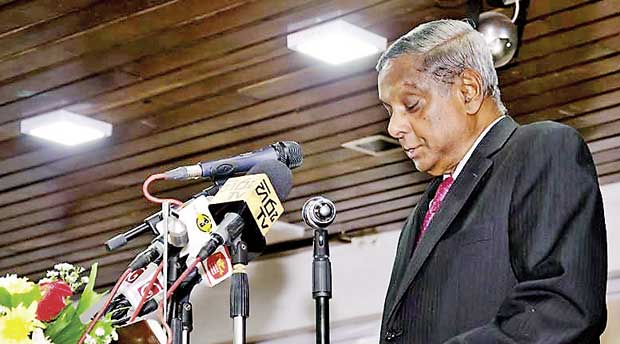
Address by Senior Professor Ravindra Fernando, Director of the Centre for the Study of Human Rights, University of Colombo at the inauguration of the International Conference on Human Rights, Citizenship and Democratization.
The Human Rights education is increasingly gaining recognition as an integral part of the right to education as knowledge of rights and freedoms is considered a fundamental tool to guarantee respect for the rights of all.
Education should encompass values such as peace, non-discrimination, equality, justice, non-violence, tolerance and respect for human dignity.
International quality education based on a Human Rights approach means that rights were implemented throughout the whole education system and in all learning environments.
Whatever the weaknesses of the recently enacted Office of Missing Persons Act, we should have such a body, as we suffered from thousands of involuntary disappearances in 1971 and 1987 to 1989 in the South and throughout the 30 year war in the North and East, as well as, in the rest of the country.
Thousands of people are lamenting the losses of their loved ones. Therefore, we need a mechanism to address this issue, its scope and nature that can be debated.
“I wish to remind everyone what former Foreign Minister Lakshman Kadirgamar said at an Army Cadets passing out parade in 1998.”
“While it is universally recognized that the armed forces of the state have a duty to protect and assert the sovereignty of the state, to fight the battles of the state, they also have a duty to protect the Human Rights of the non-combatant civilians. The government owes a duty to the parents and kith and kin to help them to ascertain the fate of the loved ones and offer some compensatory relief to lighten their misery.”
During the 30 year war in the country, due to war propaganda and state backed ideology, Human Rights had become a controversial concept within Sri Lankan society. Actually, in any country in a war situation, we can find such developments. But after ending the war, we have to move away from that war mentality. Accordingly, we are now more focussed on healing the wounds of the war. In this context, Human Rights actors have a special duty to promote Human Rights discourse and make it the leading ideology of the post-war reconciliation process. It is the only way we can assure that our society will not plunge into the past blunders again and ensure equality and freedom for all human beings living in this land.
The present unity-government or the consensual government is unique and entirely a new experience to the Sri Lankan citizens. We are used to strong one-party governments. Today, we have a unity-government of two major political parties. It has to work to protect democracy, Human Rights and the rule of law. As citizen’s we should demand the government to work to achieve the above principles.
Post-2015 has seen a progress in the field of Human Rights, rule of law, democracy and good governance. But we have a long way to go. Whichever party is in power or whatever the government’s political agenda is, we should take the initiative, as citizens of this country, to ensure that our rights are protected and democracy, as well as, the rule of law is upheld. We must demand for good governance. In Sri Lanka, people always look-up to the government. We should promote the concept of citizenship and encourage citizens to be alert about the safety of Human Rights, although not in an unruly or violent manner. Fighting for citizen’s rights, however, is a never ending struggle.
A steering committee has been appointed to draft a new Human Rights Action Plan for 2017 to 2021. The government has also appointed a committee to “Eradicate Torture, and Other Cruel, Inhuman, Degrading Treatment and Punishment from Police Practices.” I am a member of both these committees as the Director of the Centre.
Sri Lanka would require the adoption of a balanced framework, encompassing economic and social rights, personal security, political participation and administration of justice, implemented through a rights-based approach with higher levels of participation, accountability, equality, non-discrimination, empowerment, and the rule of law.
To these ends, the agenda of the government should be explicitly aligned with the international Human Rights standards and mechanisms, developed in a participatory process. Clear, transparent and objective criteria should guide the task of selecting a manageable number of global goals, targets and indicators and these should be aligned to Human Rights treaty obligations.
In the last 25 years we have travelled far, but there is still a long way to go. There are many more local and foreign institutions monitoring the Human Rights situation in Sri Lanka than ever before. We need to address the Human Rights violations where they occur – locally. Citizens and civil society need to be fully involved, for a sustainable future. “With your cooperation, I am certain that the CSHR would continue to be a centre of excellence in Human Rights education, research, capacity building and knowledge services for many years to come,”.
The Centre was established in 1991, with support from The United States Agency for International Development (USAID), when Sri Lanka was undergoing a period of political instability, when the state was faced with a conflict situation where Human Rights violation was involved. We are extremely grateful to USAID for their generous support.
For the past 25 years, the Centre has engaged with all tiers of society from grassroots level to policy making to realize its vision “to create a nation with a rights consciousness in which the dignity and rights of all people are respected’.
The Centre has delivered numerous educational programmes on Human Rights and democratization, from Certificate to Masters Level, during the past decades. It has engaged in multidisciplinary research on Human Rights with local and international stakeholders.
The Centre has capacitated various sectors of the government, police, armed forces, civil society, media personnel, students, teachers and undergraduates on Human Rights. Its library and knowledge services further disseminated Human Rights knowledge in the country.
29 Jun 2026 32 minute ago
29 Jun 2026 44 minute ago
29 Jun 2026 49 minute ago
29 Jun 2026 53 minute ago
29 Jun 2026 56 minute ago