07 Jun 2025 - {{hitsCtrl.values.hits}}
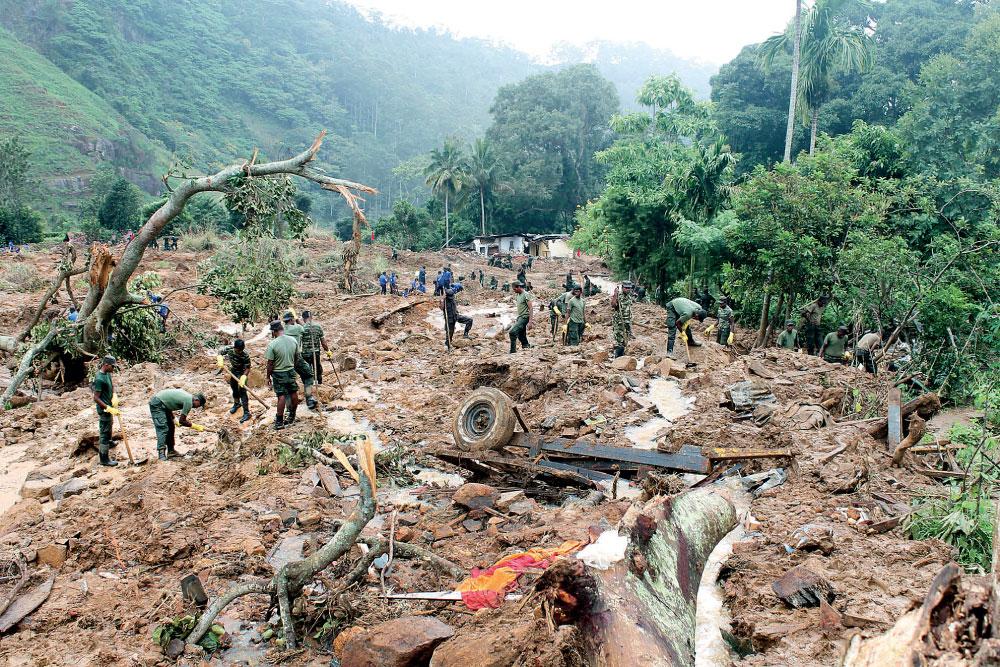
Aftermath of the Koslanda landslide in 2014 - According to authorities Sri Lanka has mostly experienced climate-induced hazards such as frequent floods, droughts, landslides, and cyclones

According to the World Health Organisation (WHO), climate change is directly contributing to humanitarian emergencies caused by heatwaves, wildfires, floods, tropical storms, and hurricanes. These disasters are increasing in scale, frequency, and intensity. Research shows that 3.6 billion people already live in areas highly susceptible to climate change. The organisation stresses that between 2030 and 2050, climate change is expected to cause about 250,000 additional deaths a year from undernutrition, malaria, diarrhoea, and heat stress.
According to the world body, the direct damage costs to health—excluding costs in health-determining sectors such as agriculture, water, and sanitation—are estimated to be between US$2–4 billion a year by 2030. The WHO notes that areas with weak health infrastructure—mostly in developing countries—will be the least able to cope without assistance to prepare and respond. This highlights the importance of reducing greenhouse gas emissions, as better choices in transport, food, and energy use can result in significant health gains, particularly through reduced air pollution.
It is in this context that the United Nations (UN) marked World Environment Day on June 5, with the theme being “Beat Plastic Pollution.” The Daily mirror reached out to experts in the field to gather their views on this global celebration and the environmental issues facing Sri Lanka.
Government’s Role
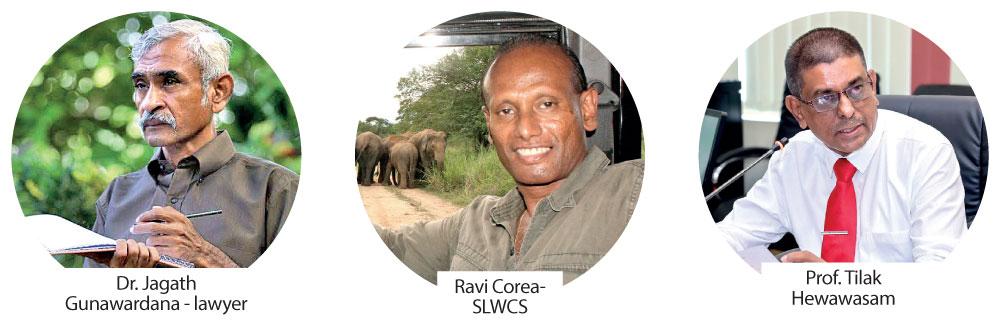
Providing insights on the occasion, Central Environmental Authority (CEA) Chairman Prof. Tilak Hewawasam said: “World Environment Day this year specifically focuses on plastic pollution because it has become a serious threat to the environment. With population growth and the escalation of consumption, nature is adversely affected. The Sri Lankan government has declared an environmental week by issuing a circular by the Presidential Secretariat.”
He noted that Sri Lanka mostly experienced climate-induced hazards such as frequent floods, droughts, landslides, and cyclones. According to prof. Hewawasam the government and the mandatory organisations such as Disaster Management Centre, National Building Research Organisation, Meteorological Department, Irrigation Department, etc., have implemented monitoring mechanisms and mitigation measures to reduce the risk of natural hazards.
Prof. Hewawasam emphasised that as a governmental organisation, the CEA was mandated to protect and manage the environment. He explained that this implies the CEA is prepared to control any harmful activities that threaten the environment. “The National Environmental Act was formulated in 1980 for this purpose and has played an important role since then. We now have proper coordination for environmental protection within the country amongst government organisations such as Geological Survey and Mines Bureau, Forest Department, Wildlife Department, Water Resource Board, Timber Corporation, Coastal Conservation Department, Marine environmental Protection Agency, etc, since all of them are under the same Ministry of Environment,” he said.
Collective Action
Speaking to the Daily mirror, lawyer and environmentalist Dr. Jagath Gunawardana said: “Sri Lanka needs to be more focused on climate resilience, given the country’s high vulnerability to natural disasters. Deforestation is an important issue that the government needs to take seriously.”
According to Dr. Gunawardana, deforestation has had a severe impact on many species of fauna and flora. He also emphasised that focusing attention on a single issue, such as the human-elephant conflict, does not fully reflect the environmental catastrophe the country is facing.
Dr. Gunawardana highlighted three key groups involved in climate action and environmental conservation: the government, the community, and interested non-governmental organisations. “It is through these groups coming together that climate change and environmental degradation can be addressed comprehensively,” he said.
Endangered Wildlife
“Deforestation, habitat loss, and habitat fragmentation due to agricultural expansion, urban development, mega development projects, unplanned and unsustainable land use, human-wildlife conflict, poaching, pollution, overfishing, and climate change are significant threats to Sri Lanka’s unique and endangered wildlife,” said Mr. Ravi Corea, President of the Sri Lanka Wildlife Conservation Society (SLWCS).
He explained: “Today, as a result, there are increasing conflicts with various species, ranging from porcupines, primates, and peacocks to leopards and elephants.” One of the primary reasons for these increasing conflicts, he said, is the ongoing investment in the expansion of agriculture—an industry he described as the least dynamic, contributing less than six percent to the gross domestic product. “Poaching is pervasive on the island, but there are very few strategic efforts to combat it,” he noted.
Speaking about the government’s role in environmental conservation, Mr. Corea said: “Expecting the government alone to address habitat loss and human-elephant conflicts is not realistic, and so far, it has not yielded significant results.” He suggested that the government should facilitate private sector involvement. “Through public-private collaborative efforts, long-lasting and effective solutions can be generated to benefit both wildlife and people,” he added. At a time when the climate crisis is affecting every aspect of human life, he emphasized: “We need to be bold and proactive in our efforts to save our wildlife and their habitats.” He stressed that it was not the government’s responsibility alone to protect the environment. “It is the responsibility of every citizen in the country. Therefore, the people and the government must work together collaboratively to safeguard our wildlife and our environment,” Mr. Corea said.
13 Jun 2026 4 hours ago
13 Jun 2026 4 hours ago
13 Jun 2026 6 hours ago
13 Jun 2026 6 hours ago
13 Jun 2026 7 hours ago