Reply To:
Name - Reply Comment
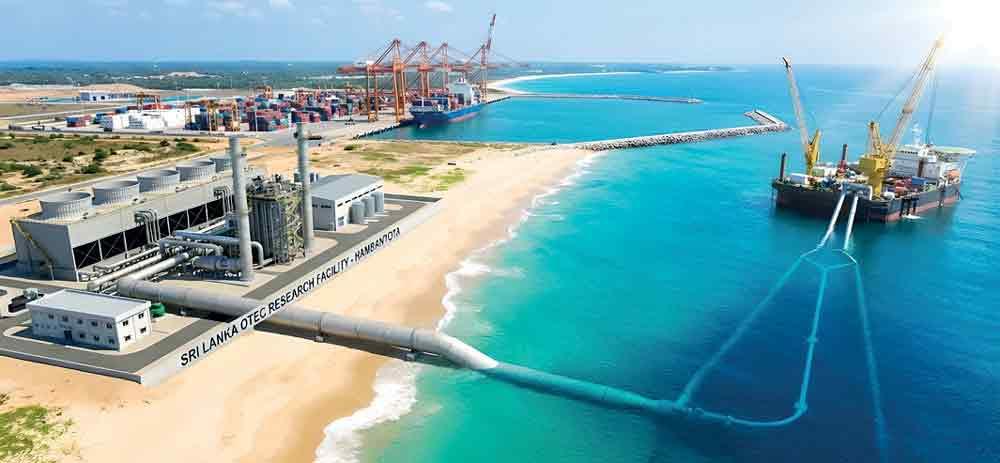
Conceptual representation of an Ocean Thermal Energy Conversion (OTEC) plant and its associated infrastructure, illustrating the potential application of OTEC technology for sustainable and environmentally friendly energy generation
CAN THE OCEAN GENERATE POWER? UNDERSTANDING OTEC |
|
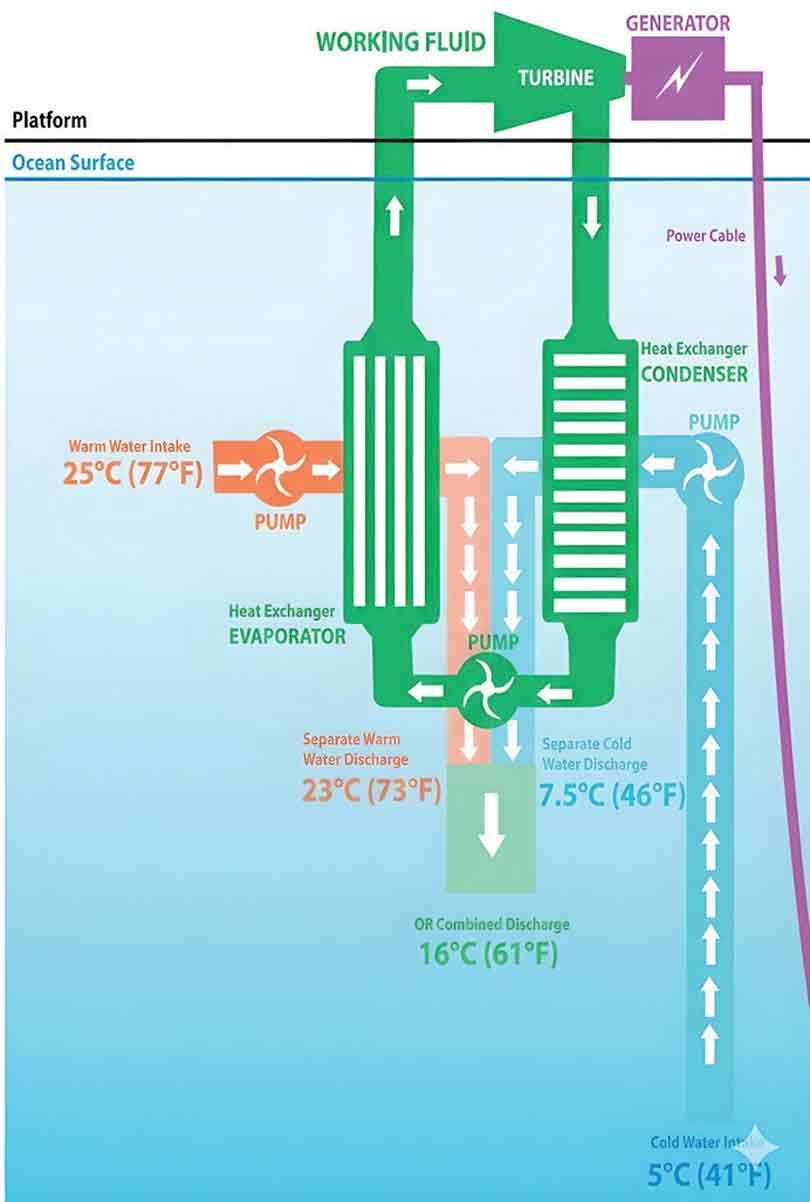
Schematic diagram of an offshore closed-cycle Ocean Thermal Energy Conversion (OTEC) system, illustrating the key components and operational process used to convert ocean thermal energy into electrical power. |
Ocean Thermal Energy Conversion (OTEC) is an innovative renewable energy technology that generates electricity by utilizing the natural temperature difference between warm surface seawater and cold deep-ocean water. In tropical regions such as Sri Lanka, this temperature gradient remains nearly constant throughout the year, enabling OTEC systems to produce stable and continuous power. Unlike solar or wind energy, OTEC does not depend on sunlight or weather conditions, making it a reliable base-load energy source.
OTEC systems operate by using warm seawater to drive a low-boiling working fluid or seawater vapor, which turns a turbine to generate electricity. Cold deep-sea water is then used to condense the vapor, allowing the cycle to repeat efficiently. Beyond electricity generation, OTEC offers additional advantages, including freshwater production through desalination, seawater air-conditioning, and opportunities for marine-based industries such as aquaculture.
As Sri Lanka faces increasing energy demand and rising fuel import costs, the need for sustainable and locally available energy sources has become more urgent. With its extensive coastline and favorable ocean conditions, the country holds strong potential to harness ocean-based renewable energy. OTEC presents a long-term solution that aligns with national sustainability goals while supporting environmental protection, technological advancement, and energy security for future generations.
OTEC at a Glance:
 Works 24/7, day and night
The ocean itself is a fuel
It is freezing, because the pipes are 1000m deep under the sea
After the NEWater, here is your OTEC water
The idea is older than us, but the future is hanging on OTEC
THE OCEAN THAT NEVER SLEEPS: CONTINUOUS POWER THROUGH OTEC |
Technical Overview of OTEC Technology
Ocean Thermal Energy Conversion (OTEC) is a renewable energy technology that generates electricity by utilizing the temperature difference between the ocean’s warm surface water and the cold water found at depths below. For this process to work effectively, a temperature gap of at least 20°C must exist between the surface and the deep sea.
There are three main ways engineers design these systems. The first is the Closed-Cycle system, which uses warm surface water to heat a specific "working fluid," such as ammonia. Because ammonia boils at a low temperature, it turns into vapor easily, which then spins a turbine to create power. The second type is the Open-Cycle system. This method boils the seawater itself by placing it in a low-pressure vacuum chamber. The steam drives the turbine and, when condensed, produces pure fresh water. The third and most advanced option is the Hybrid-Cycle system. This combines both methods: it uses steam from seawater to heat the ammonia. This design is often preferred because it maximizes electricity production while also providing drinking water as a valuable byproduct.
An OTEC facility can be constructed either onshore (on the coast) or offshore (on a floating platform). Regardless of the location, the most critical component is the Cold-Water Pipe. This massive pipe must reach depths of roughly 1,000 meters to access water that is cold enough (around 5°C). Engineers typically use materials like High-Density Polyethylene (HDPE) for these pipes because they are flexible enough to withstand ocean currents and offer good insulation to keep the water cold as it travels up.
Inside the plant, the machinery runs continuously. Unlike wind or solar power, OTEC does not rely on the weather, allowing the specialized radial-inflow turbines to generate steady electricity 24 hours a day.
FUTURE POTENTIAL, POLICY DIRECTION, AND SOCIETAL READINESS FOR OTEC IN SRI LANKA |
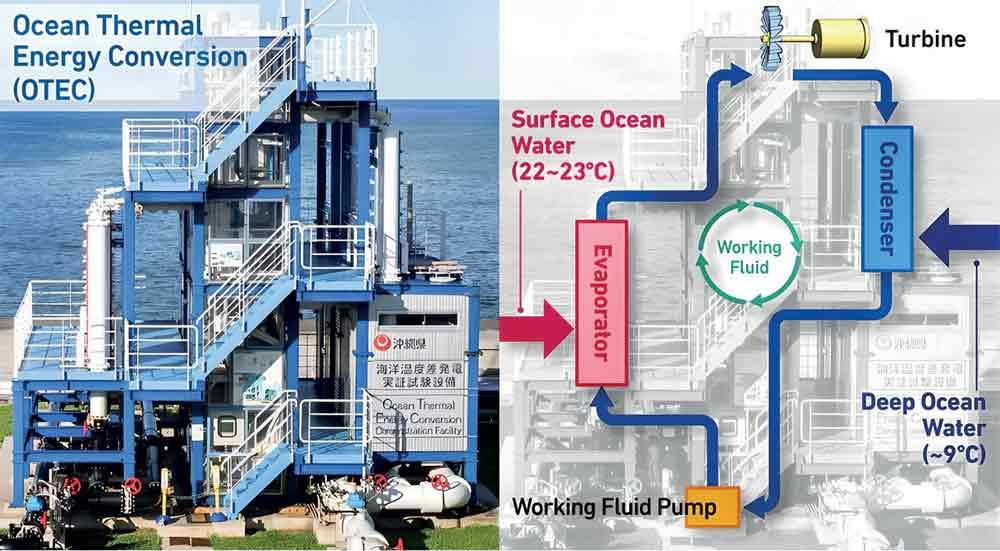
OTEC demonstration plant on Kumejima Island, Japan, and a schematic representation of the Ocean Thermal Energy Conversion power generation mechanism, highlighting how thermal gradients in the ocean are harnessed to generate clean and renewable energy.
Sri Lanka’s future electricity demand is guided by the Ceylon Electricity Board (CEB) Long Term Generation Expansion Plan 2025–2044, which promotes a transition toward renewable energy while ensuring reliability and energy security. Although the plan currently focuses on solar, wind, and hydro power, it also highlights the need for diversified and reliable energy sources. In this context, Ocean Thermal Energy Conversion (OTEC) could complement existing renewables by providing continuous, weather-independent power.
For OTEC to become a reality, several structural and policy changes will be required. New investment opportunities, public–private partnerships, and incentives for emerging technologies are needed to attract funding. The legal and regulatory framework must also accommodate ocean-based energy systems through clear guidelines for marine zoning, environmental approvals, and offshore infrastructure development.
Regulations related to coastal use, fisheries, port operations, and national security should be carefully aligned to avoid conflicts with existing activities. Public awareness, community engagement, and education will also be essential for building confidence in this technology.
With effective planning, supportive policies, and collaboration among government agencies, universities, and industry stakeholders, OTEC can become a valuable addition to Sri Lanka’s sustainable energy future while supporting national development and environmental responsibility.
YOUNG ENGINEERS FROM RUHUNA SHAPE SRI LANKA’S OCEAN ENERGY FUTURE |
The Faculty of Engineering, University of Ruhuna, is taking the initiative to develop Ocean Thermal Energy Conversion (OTEC) as a model research project, with Hambantota identified as a strategic location for future study and implementation. The proximity of the university to the southern coastal region provides convenient access for field studies, data collection, and practical research activities.
The faculty possesses valuable resources for OTEC development, including laboratory facilities, renewable energy modules, and ocean-related engineering education. Undergraduate students are actively involved in renewable energy research, particularly in marine-based technologies such as wave energy conversion and other sea-related power generation systems. This experience provides a strong foundation for expanding research into OTEC technology.
Although OTEC presents technical and financial challenges, the dedication of students and academic staff creates opportunities for innovation and long-term success. Their efforts help transform theoretical knowledge into practical solutions for sustainable energy.
Government support will be essential through research funding, access to oceanographic data, supportive policies, and streamlined approval processes. Collaboration with energy authorities, coastal agencies, and other universities will further strengthen this initiative and help position Sri Lanka as a future leader in ocean-based renewable energy research and development.

Prof. H. C. P. Karunasena Dean, Faculty of Engineering, University of Ruhuna

Mr. S. Prasaath Third Year Undergraduate Mechanical and Manufacturing Engineering

Ms. K. N. K. Premarathna Third Year Undergraduate Mechanical and Manufacturing Engineering
WHY SRI LANKA’S SOUTHERN COAST IS IDEAL FOR OCEAN ENERGY… |
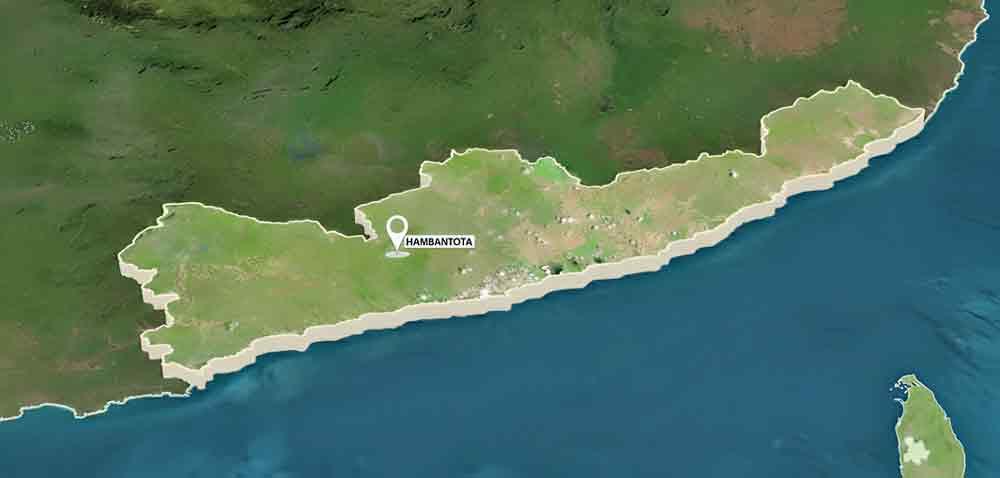
Map of Sri Lanka’s southern coastline showing the Hambantota region, indicating its strategic coastal location with access to deep-sea conditions favorable for Ocean Thermal Energy Conversion (OTEC) development.
When geographical and oceanographic conditions in Sri Lanka are considered, Hambantota stands out as one of the most suitable locations for an Ocean Thermal Energy Conversion (OTEC) plant. The region offers a unique combination of warm surface water and access to deep, cold ocean water, both of which are essential for efficient OTEC operation.
One of Hambantota’s greatest advantages is the steep drop of the seabed close to the coastline. A short distance offshore, the ocean reaches depths of nearly 1,000 meters, where seawater temperatures are around 5°C. This reduces the length and cost of the pipelines needed to transport cold water, improving the economic feasibility of the project.
At the same time, surface seawater temperatures remain consistently high throughout the year, averaging around 28°C. This stable temperature difference creates ideal conditions for continuous OTEC power generation.
Another important benefit is the region’s relatively stable ocean conditions, which support reliable marine operations and infrastructure. Unlike solar and wind energy, which depend on weather conditions, OTEC can provide continuous electricity generation throughout the day and night.
With its favourable ocean depth, warm waters, and strategic coastal location, Hambantota offers a promising opportunity for developing ocean-based renewable energy and strengthening Sri Lanka’s sustainable energy future.
HOW THE WORLD IS HARNESSING OCEAN ENERGY: OTEC IN ACTION |
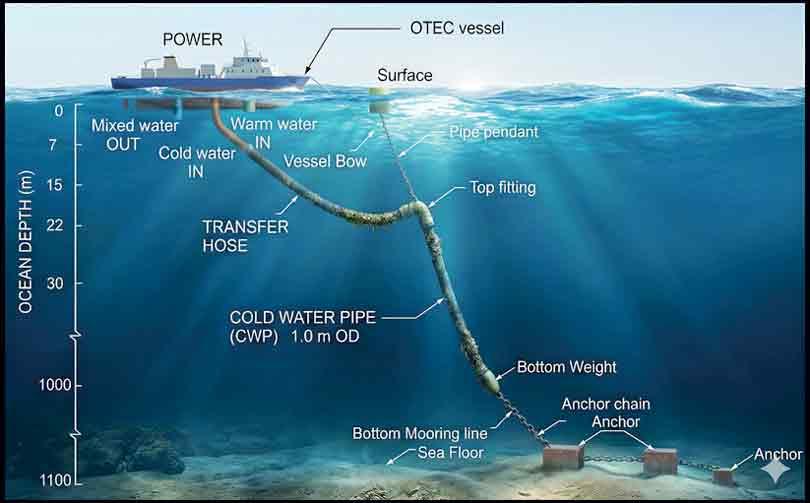
Conceptual diagram of the cold-water pipe configuration in a floating Ocean Thermal Energy Conversion (OTEC) plant, illustrating the intake of cold deep seawater essential for efficient power generation.
Hawaii, USA – Makai OTEC Plant (NELHA)
 Capacity: 100 kW | Operational since 2015
World’s first grid-connected OTEC; used for research and technology validation
Kumejima, Okinawa – Japan
Capacity: 100 kW (demonstration) | Operational since 2013
Expansion planned to 1 MW; supports desalination and local industries
Nauru – Mini OTEC Plant
Capacity: 50 kW | Operated in 1980s
One of the earliest successful OTEC demonstration projects
India – NIOT Experimental Projects
Capacity: Prototype-scale | Ongoing research
Combines power generation with freshwater production
Mauritius, Maldives, Seychelles, Caribbean Islands
Capacity: Pilot / Feasibility | Planning / Feasibility
Focused on base-load renewable energy and desalination for islands
Existing OTEC plants have largely demonstrated the technical feasibility of generating electricity from the ocean’s natural temperature difference. The Makai OTEC plant in Hawaii and the Kumejima demonstration in Japan have proven that continuous, base-load power is possible, while also supporting applications such as desalination and local industrial use. Early projects like Nauru highlighted that even small-scale systems could produce reliable electricity, offering valuable operational insights.
The main advantages of these plants include 24/7 power generation, low carbon emissions, and opportunities for freshwater production, making them ideal for island nations. On the other hand, high initial costs, technical complexity, and infrastructure requirements remain significant challenges.
The key takeaway from these global examples is that OTEC technology is practically feasible and scalable. Still, success depends on careful site selection, consistent ocean conditions, and strong support from research institutions and governments. For countries like Sri Lanka, these lessons provide a blueprint for future sustainable ocean-based energy projects.