22 Jan 2025 - {{hitsCtrl.values.hits}}
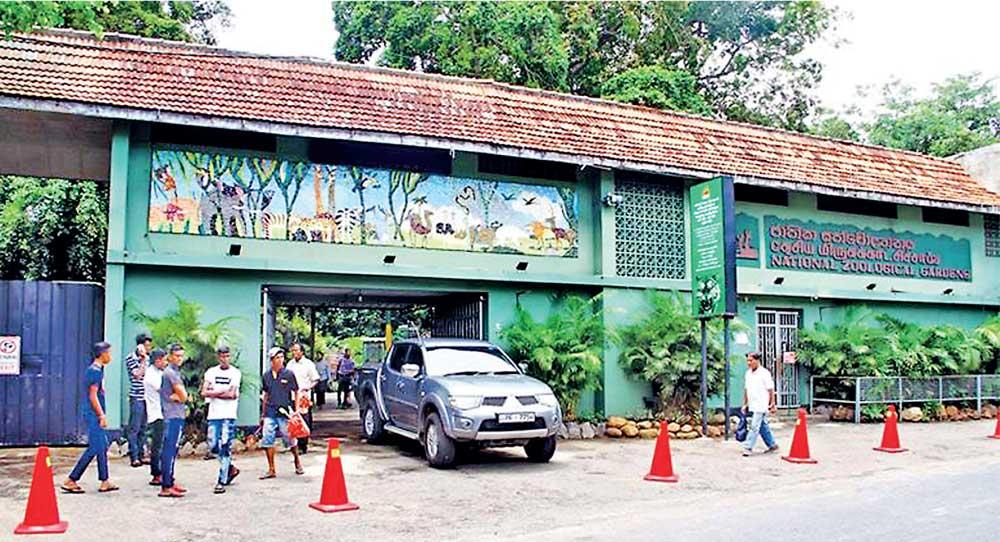
In November 2010, ‘Sakifo’ made history as the first Sumatran orang-utan to be born at the Dehiwela Zoo. Sakifo’s parents, Aki (mother) and Ufo (father) became residents of the Dehiwela Zoo in 2003. They were received through an animal exchange programme with Indonesia’s Rangunan Zoo. Sadly, after 15 years of entertaining crowds with its high-pitched whistles, elegant poses and expressions, on January 6, the Dehiwela Zoo announced that Sakifo had died while receiving treatment for a ‘brief’ illness.
The only great Ape in Asia
Orang-utan means ‘man of the forest’ in the Malay language. World Wildlife Fund describes orang-utans as the only great ape in Asia and are also known to be the world’s largest tree-climbing mammals. There are three species of orang-utan - the Bornean, Sumatran and Tapanuli - which differ a little in appearance and behaviour. The Bornean and Sumatran species have shaggy reddish fur while Sumatran orang-utans have longer facial hair. The Tapanuli orang-utan was discovered in 2017 and is considered to be the most endangered of all great apes with just 800 individuals in existence. The Sumatran orang-utan has also been categorised as critically endangered and are said to be found only in northern Sumatra. Orang-utans can live up to 50 years in the wild.
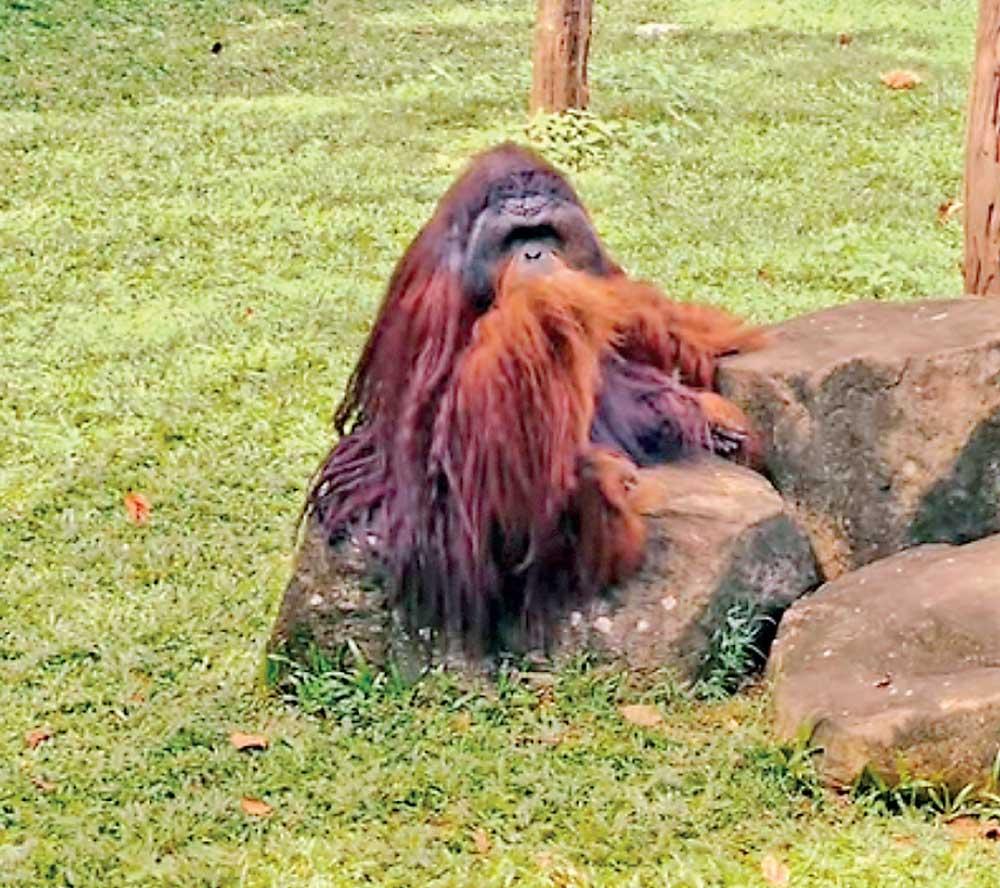
‘Sakifo’, made history as the first Sumatran orang-utan to be born at the Dehiwela Zoo
Speculations about Sakifo’s death
Sakifo died at the age of 15, but the fact that an orang-utan could live up to 50 years in the wild has raised concerns among the wildlife fraternity. Environmentalists speculate whether there had been any mismanagement or shortcoming on the part of the staff that led to the untimely death of the animal. Speaking to the media, Environmentalist Nayanaka Ranwella raised concerns about certain vaccines that had been administered on the animal and whether the medication were of poor quality. He said that numerous animal deaths were reported from time to time, but no action had been taken so far and the perpetrators haven’t been punished to date.
Environmentalists have continued to protest against the poor conditions at the zoo while pointing out various administrative shortcomings from time to time. A campaign calling to shut down the Dehiwala Zoo also did its rounds on social media during the recent past. While the debate continues, they urge the incumbent government to pay attention to this matter and to take decisions in the best interest of animals held in captive enclosures.
“Unfortunately it died on January 6. By obtaining the post mortem report we want to find out whether there were any external factors that contributed to the death of this animal. We still didn’t receive the final post-mortem report as several body parts and organs have to be examined”
- Chandana Rajapaksa
Following Sakifo’s death, the carcass of the animal had been sent to the Veterinary Unit of the University of Peradeniya for further investigations. According to Chandana Rajapaksa, Director at the National Zoological Gardens the staff had observed certain improvements even though the orang-utan had been ill for some time. “Unfortunately it died on January 6. By obtaining the post mortem report we want to find out whether there were any external factors that contributed to the death of this animal. We still didn’t receive the final post-mortem report as several body parts and organs have to be examined. But we are expecting a report in about a week’s time,” he added.
Responding to claims about the quality of medicine and food raised by environmentalists, Rajapaksa said that even though he recently assumed duties as the director of the zoo, he had been working as the Director of Animal Health and Nutrition at the zoo. “Therefore I can guarantee that there had been no shortcomings when providing food for animals. We check the food for its quality before distributing it among the animals. Whenever there is an animal death, claims of poor quality medicine are highlighted on social media. Some even claim that the medicine had become toxic. But it is pathetic that such claims are being made. The veterinary unit and the staff take every precaution to ensure the wellbeing of all animals. There is no possibility or chance for the staff to administer poor quality medicine to animals,” Rajapaksa affirmed.
Speaking further about Sakifo’s health, Rajapaksa recalled the animal’s medical history. “It was diagnosed with a tuberculosis-like condition sometime back. But we diagnosed this condition and treated the animal until it was fully cured. The medication was stopped two years ago. Unlike humans, it is not an easy task to diagnose an illness of an animal and treat it. Some animals reject medicine and we need to tame them prior to giving them required doses. Therefore it takes a lot of dedication and effort to look after animals at the zoo,” added Rajapaksa.
Speaking further, Rajapaksa said that some animals such as the brown bear are quite old and they still live because they are living in a zoo. “They get their food, treatment and care round the clock. It is over 30 years old, but just because they are old we haven’t neglected them. If we observe that an animal has become weak we will pay special attention to them. There are many other animals that have reached their maximum lifespan. But due to suitable living conditions at the zoo they are in quite a healthy state,” he added.
Rajapaksa further said that preparations are underway to procure two orang-utans – a male and female- to be added to the orang-utan enclosure at the Dehiwela Zoo. “But in order to do that, we have to come into an agreement with a zoo in a respective country and it will happen like in an exchange programme. So we have to provide them with animals that they request. Usually some animals that are in high numbers and those that they think are important to their zoo are being exchanged this way. In return we will obtain a pair of orang-utans. Here we have to be concerned about the health of animals and adhere to proper quarantine procedures requested by the respective country. It is a long process and we don’t obtain animals in an ad hoc manner,” he explained.
When asked from what country the Dehiwela Zoo is planning to obtain the pair of orang-utans, Rajapaksa had this to say, “We still haven’t selected a country and it is still at discussion stage. But within a month’s time we will be receiving two brown bears in addition to Bingo. A similar project is underway to obtain two orang-utans, but it would take a little bit more time.”
He further said that under his jurisdiction as the zoo director, one of the main priorities would be to ensure the wellbeing of animals in all the zoos including the Dehiwela Zoo, Pinnawala Elephant Orphanage, Pinnawala Zoo and Ridiyagama Safari Park. “We have to improve the conditions within animal enclosures. The environment in each one of them needs to be brought up to standard. On the other hand, the relationship between animals and their caretakers needs to be improved. The staff needs to be trained on animal behaviour and related aspects. We will provide opportunities for our staff to be trained under the expertise of international animal behaviourists and trainers. There’s no point in constructing new units spending billions of rupees. Animal welfare is our topmost priority and this way that we can ensure a quality life for all animals,” he underscored.
11 Jun 2026 52 minute ago
11 Jun 2026 1 hours ago
11 Jun 2026 2 hours ago
11 Jun 2026 2 hours ago
11 Jun 2026 2 hours ago