06 Oct 2025 - {{hitsCtrl.values.hits}}
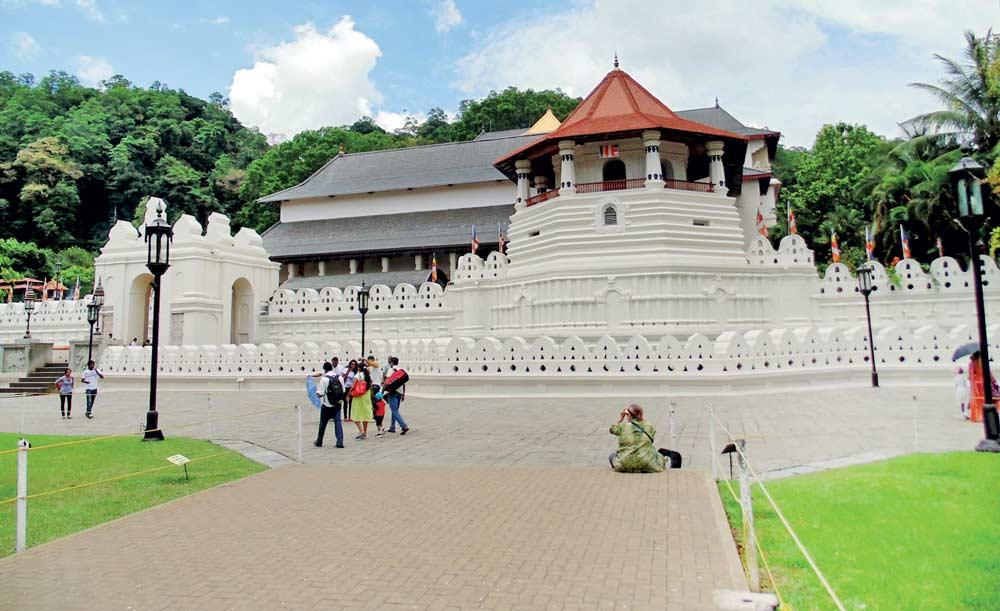
Pattirippuwa at the Dalada Maligawa is a masterpiece of Upcountry architecture
|
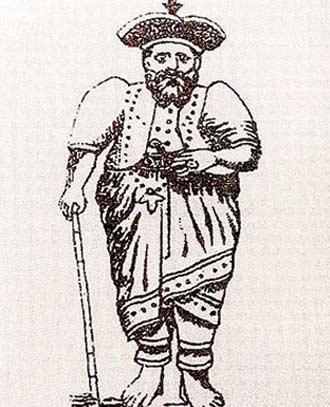
Devendra Mulachari alias Dingittha Appu |
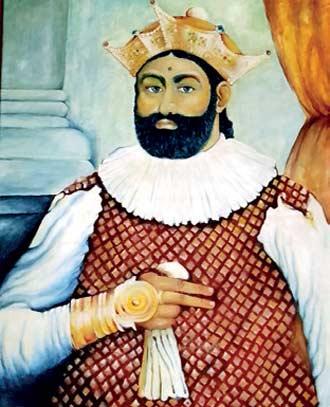
King Sri Wickrema Rajasinghe |
 Devendra Mulachari alias Dingittha Appu had been in service under several Kandyan kings including Kirthi Sri Rajasinghe, Rajadhi Rajasinghe and Sri Wickrema Rajasinghe and elevated to the position of Royal Architect. He was one of the senior most officials in the King’s Court
By Shantha Chandrasiri
Pattirippuwa or the Octagonal Pavilion in Kandy Sri Dalada Maligawa is a masterpiece of architecture that stands to the credit of the traditional upcountry architects. It is used as the symbol of Sri Dalada Maligawa, the place which houses the sacred tooth relic of Gauthama Buddha.
History has it recorded that the Pattirippuwa was built in 1811 during the reign of Sri Wickrema Rajasinghe (1798-1815) who was the last king of Sri Lanka. It is said that the king had summoned to court several traditional architects and explained to them of the design in his mind. They had made a host of designs, but the king’s attention had been captured by the magnificent architectural design made by Devendra Mulachari alias Dingittha Appu; this design was the one that the king had visualised. The king who was pleased with Dingittha Appu’s dummy run during which he used banana trunks to erect the pavilion. He had completed this undertaking to the utter satisfaction of the king. The year was 1812.
Devendra Mulachari alias Dingittha Appu had been in service under several Kandyan kings including Kirthi Sri Rajasinghe, Rajadhi Rajasinghe and Sri Wickrema Rajasinghe and elevated to the position of Royal Architect. He was one of the senior most officials in the King’s Court.
Several magnificent architectural creations including the Magul Maduwa lounge, the mote in front of the Sri Dalada Maligawa, the Kandy lake and its decorative wall and Diyathileka Madapa island in the middle of the Kandy Lake stands to his credit.
Dehigama Lokubanda Nilame had supplied timber from Matale area and provided advice. Etymologically the word Pattirippuwa has originated from the Tamil language and it is a combination of the Tamil words Pathar (watching) and Irippu (sitting). In the past it had been called as ‘Atas Mandapa’ or ‘Ashtakara Mandapa’. (Octagonal Pavilion)
Patttirippuwa is the foremost section of the Sri Dalada Maligawa, arising to the view of the visitors on entry. The king erected a mote in front of the Sri Dalada Maligawa to provide it with enhanced protection.
It is said that the king had planned it not as a part of the Sri Dalada Maligawa, but from there to review the parades and other public events in the esplanade and to appear before the people. The king’s palace was in close proximity to the Sri Dalada Maligawa.
A makeshift Pattirippuwa had been erected below the main Pattirippuwa for the king to watch the Kandy Esala Perahera in keeping with the advice of the Buddhist monks. This is because it was unbecoming of the king to occupy a place above the casket, containing the sacred relics, to watch the procession. He had used the Pattirippuwa as a quiet resting place and spent long hours watching the surroundings. In case of an emergency, the people sounded the “Bonsho of Justice”, a large bronze bell used to summon the attention of the king, who would appear before the people assembled in the esplanade below from Pattirippuwa to mete our justice. There he could see all that was done in the area overlooking the city and be safe from any hostile attack.
After the British annexed the Kandyan Kingdom in 1815, a section of the Kandy Kachcheri and Governor Brownrigg’s office had been housed in the Pattirippu. Later they had used it for a library for the British officials and the planters in the Kandy district.
Today the Pattirippu is a part of the Kandy Sri Dalada Maligawa that adorns the city.
22 Jul 2026 2 hours ago
22 Jul 2026 3 hours ago
22 Jul 2026 3 hours ago
22 Jul 2026 4 hours ago
22 Jul 2026 4 hours ago