 KELUM BANDARA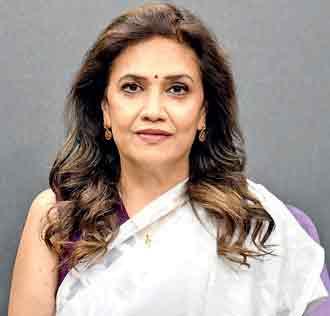
Reply To:
Name - Reply Comment
|
Ms Smita Prakash, the Chief Editor and Deputy CEO of Asian News International (ANI) of India |
Communication has evolved prehistoric era cave paintings and gestures to the digital era. Communication is fundamental to all aspects of life , be it personal, professional or social. It has kept shaping human society over the centuries.
The early forms of communication included signals such as smoke signals and even used carrier pigeons. With the development of languages, communication progressed by leaps and bounds. The advent of the press and the invention of electronic media created media revolutions.
Today, it is the era of wearable technology gadgets. The moment you open your devices such as smartphones, you are flooded with all kinds of information whether you like them all or not.
The AI technology enables algorithms to read you and feed you accordingly, eventually leading you to echo chambers where you reinforce your convictions or get misled depending upon the kinds of information, misinformation and disinformation you receive.
Unlike ever before, it is an era of information, disinformation, misinformation, and too much information. Anybody with a digital device can post anything. It is flashed across. It has become challenging for journalism to stay relevant in such an era.
Against this backdrop, the Sri Lanka India Media Friendship Association (SLIMFA) organized the second edition of the Media Fest Sri Lanka 2026 under the theme “Staying Relevant in a Changing World” last Saturday in Colombo.
Ms Smita Prakash, the Chief Editor and Deputy CEO of Asian News International (ANI) of India, delivered her keynote speech, stressing the need for strategizing all the time. “How do we remain accurate and regain trust? It’s something that we as practicing journalists have to keep thinking about this and relearning, restrategizing almost on a daily basis. The threats are so immediate that we need to rethink all the time.
“We need to restrategize all the time. There’s a profound cultural shift which is happening in democracies and the desire for popularity is such that everybody’s competing with each other with platforms in order to be relevant today,” she said.
She said that it is time for journalists to get their heads together.
“It’s a simple question that I have for all of you. What does the word trust mean to you? Trust as a citizen, trust as a practitioner of journalism, trust as a consumer of journalism because that is what journalism is built on,” she said. Democracies are built on trust, not technology. Technology is something that we use but trust is something which is inherent in us. It’s not a business model, she said. In the current era, trust matters more than ever. She said it is trust in the written word, in the spoken word and in the visual medium, and perhaps it is the most endangered resource in today’s journalistic profession.
Confidence in information is scarce today though we have more access to information than any generation. Yet uncertainty is what grips us when we see or read something. That is because algorithms are determining what we are reading. We cannot battle it, according to her. “I am just convinced that it’s impossible to battle the tsunami of algorithms which are determining what we see and what we get to read. Interviews which we are not interested in are delivered to us. Reels which we don’t want to watch are delivered to us time and time again. We are bombarded with it. As a result of that, erosion of trust is taking place in algorithms, in the medium that is coming to us. So as news organisations across the world we are struggling financially, in our mind space,” she said.
She said:
“Advertising has moved from newspapers to technology platforms. Governments are becoming more assertive and even dismissive of traditional media like us. Political polarisation which has gripped every democracy. It has deepened its tentacles into every democracy around the globe,”
The end result, according to her, is that audiences are increasingly becoming consumers of these ‘ideological bubbles’.
However, she was not pessimistic about the future of journalism since it survived past onslaughts but struck caution because the current scenario was different. With the advent of Artificial Intelligence (AI), what you don’t want to hear is always there, she said.
“It is as much as your family is there, as much as the food on your table, as much as the water in that bottle in front of you. It’s there and it is producing journalism. It’s not just how you consume it, it’s producing that. Anyone can generate a convincing article, a convincing political speech, a convincing exposition on anything within minutes, within seconds in fact,” she said.
It has become a battle all the time because propagandists are imitating political leaders with such fabulous and frightening accuracy that it’s very difficult to determine what the truth is.
“When you open your social media, there are influencers out there manipulating your minds to invest in a certain stock. Our stock markets are increasingly being affected by these influencers as they are called. These are very dangerous. People are losing their savings. Every country is waking up to that danger. As journalists, we have a battle with these influencers,” she said.
The event was attended by stakeholders of the media fraternity in Sri Lanka, who shared their experience in countering contemporary challenges in the era.
In a democracy, our ability to process information and to act on that information is central to being informed citizens in a democracy, for sure. People are required to make decisions based on information with evidence. When people are flooded with information, their brains react differently. Quality journalism matters more than events in the era of misinformation and disinformation.