28 Mar 2026 - {{hitsCtrl.values.hits}}
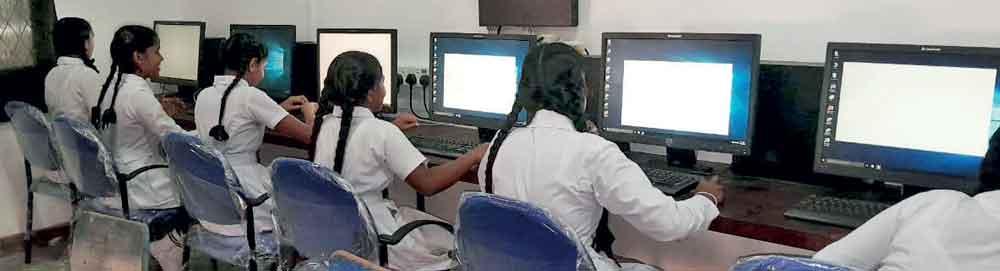
Most schools do not have access to modern laboratories

Sri Lanka stands today at a critical turning point in its national development. Across the world, economies are being reshaped by rapid advances in artificial intelligence (AI), robotics, mechatronics, automation, advanced manufacturing, Internet of Things (IoT) technologies, cyber physical systems, and next generation digital infrastructures such as 5G communication networks. These technological transformations are driving the emergence of Industry 4.0 and the evolving Industry 5.0 paradigm, which integrate intelligent machines, connected systems, data driven decision making, and human centered innovation.
Nations that invest strategically in Science, Technology, Engineering, and Mathematics (STEM) education are positioning themselves to lead the future global engineering and technology economy. For Sri Lanka, strengthening STEM education is therefore not merely an educational priority but a national economic necessity.
Sri Lanka has long been recognised for producing talented students with strong academic performance in mathematics and science. However, despite this strong theoretical foundation, a major challenge remains. Most school students have very limited opportunities to experience modern engineering systems, advanced technologies, and hands on innovation environments. Many schools lack access to laboratories, advanced equipment, and practical learning environments that expose students to modern engineering systems and emerging technologies.
As a result, a growing gap exists between what students learn in classrooms and the technological and engineering skills required in the modern global economy. In the coming decades, national competitiveness will increasingly depend on a country’s ability to produce highly skilled engineers, scientists, and technology innovators capable of driving industrial development and technological advancement. If Sri Lanka is to remain competitive in the rapidly evolving global technology landscape, strengthening STEM education must become a national priority. Without timely and strategic intervention, the country risks falling behind in the global technological race by 2030.
To address this challenge, the establishment of National STEM Technology Innovation Hubs (NSTIH) across Sri Lankan schools is proposed as a strategic national initiative. The Government of Sri Lanka, together with the Ministry of Education, universities, industry stakeholders, and other relevant authorities, should consider adopting this programme as a national effort to strengthen STEM education and prepare the country’s future engineers, scientists, and technology innovators for emerging global technology domains including artificial intelligence, smart manufacturing, connected systems, advanced communication technologies, and the rapidly evolving digital economy.
The proposed initiative recommends establishing one National STEM Technology Innovation Hub in a selected leading school in each district of Sri Lanka. These hubs will function as district level technology centres providing advanced STEM learning opportunities to students. Each hub will serve not only the host school but also a cluster of surrounding schools within the district. Through this cluster based model, students from multiple schools will gain access to advanced laboratories, training programmes, technology workshops, and innovation activities.
Strengthening Collaboration Between Schools, Universities, and Industry
The proposed programme emphasises strong collaboration between schools, universities, research institutions and industry partners. The initiative is expected to be coordinated by a Special Advanced Engineering and Technology Education Unit under the Ministry of Education. The University of Moratuwa, Sri Lanka’s leading engineering university, is expected to provide academic leadership, curriculum guidance, and technical expertise. Other universities such as the University of Peradeniya, University of Ruhuna, University of Jaffna, and University of Sri Jayewardenepura could also contribute through training, mentorship, and research collaboration.
Industry partners including technology companies, manufacturing industries, and innovation organisations will help expose students to real world engineering applications and industrial practices.
International collaboration will also play an important role during the early stages of the programme. Partnerships with universities and research institutions in countries such as Japan, the United States, China, Australia, New Zealand, Canada, and the United Kingdom could provide valuable expertise in robotics, automation, advanced engineering education, and technology innovation. Such collaborations may include visiting professors, joint student innovation programmes, international competitions, research collaborations, and technology exchange initiatives. These partnerships can help create a strong national innovation ecosystem linking schools, universities, research institutions, and industry partners. The National STEM Technology Innovation Hubs will focus on several advanced engineering and emerging interdisciplinary technology domains. These include robotics engineering, mechatronics systems, industrial automation, artificial intelligence(AI), Internet of Things (IoT) technologies, cyber physical systems, advanced sensors and embedded systems, semiconductor technologies, micro and nano electro mechanical systems (MEMS/NEMS), smart manufacturing, and Industry 4.0 technologies. Other emerging interdisciplinary areas include biomedical engineering, aerospace and drone technology, automotive engineering, marine and ocean engineering, renewable energy systems, smart agriculture technologies, environmental engineering, data science, digital twins, virtual and augmented reality, smart city technologies, and next generation communication technologies such as 5G enabled intelligent systems.
Additional strategic technology areas relevant to future global industries include advanced materials and nanotechnology, precision engineering, autonomous systems, smart infrastructure technologies, and sustainable engineering systems.
The hubs will conduct a wide range of activities designed to inspire creativity and develop practical technological and engineering skills among students. These include hands on technology training programmes, robotics and artificial intelligence workshops, mechatronics education programmes, engineering design projects, research and prototype development initiatives, and national STEM competitions.
Students will also have opportunities to participate in international robotics and engineering competitions, attend technology exhibitions and symposiums, visit advanced technology industries, and collaborate with universities, research institutes, and technology companies.
Additional activities may include student innovation incubator programmes, young inventor competitions, technology hackathons, engineering design challenges, and early stage technology entrepreneurship initiatives that encourage students to translate their ideas into practical and innovative solutions. The hubs may also organise national robotics competitions, mechatronics design contests, STEM innovation fairs, and regional technology symposiums that provide platforms for students to present their inventions, prototypes, and research ideas. One of the most important objectives of this initiative is to identify and nurture highly talented students with strong aptitude in science, engineering, and advanced technologies. Early exposure to modern technological systems, engineering design practices, and innovation driven learning environments will prepare students for higher education opportunities in leading international universities and increase Sri Lankan student representation in global scholarship programmes, international research initiatives, and advanced STEM degree programmes.
Preparing Sri Lanka for the Global Engineering and Technology Economy of 2030
By the year 2030, the global job market will increasingly demand expertise in advanced engineering and technological fields such as artificial intelligence (AI), robotics, automation, smart manufacturing, Internet of Things (IoT), cyber physical systems, semiconductor technologies, data science, and intelligent digital systems. Rapid developments associated with Industry 4.0, emerging Industry 5.0 concepts, and next generation communication technologies such as 5G are transforming industries and creating new opportunities for innovation driven economic growth.
Countries that invest strategically in STEM education today will lead the global engineering and technology economy tomorrow. For Sri Lanka, building a strong foundation in science, engineering, and technological innovation is essential for participating effectively in the future global economy. Strengthening STEM education and providing early exposure to advanced technologies can help develop a generation of highly skilled engineers, scientists, innovators, and technology leaders capable of contributing to national development and global technological progress.
The establishment of National STEM Technology Innovation Hubs represents a strategic national investment in Sri Lanka’s future. It is not merely an educational reform or a laboratory development project. Rather, it represents a long term national initiative aimed at transforming how the country prepares its younger generation for a rapidly evolving global engineering and technology driven economy.
Today, economic growth across the world is increasingly powered by engineering, advanced technologies, innovation, and knowledge based industries. Countries that have invested early in STEM education have been able to develop strong technology sectors, attract high value industries, and create highly skilled professional workforces. Nations such as Japan, South Korea, Singapore, and China have demonstrated how sustained investment in science, engineering, and technology education can accelerate national economic development and technological leadership.
Sri Lanka possesses a strong foundation in mathematics and science education and continues to produce talented students every year. However, a significant gap exists between theoretical knowledge delivered in classrooms and practical exposure to modern engineering and technological systems. Most schools do not have access to modern laboratories, advanced equipment, or environments that encourage experimentation, innovation, and technological problem solving.
Without addressing this gap, Sri Lanka risks falling behind in the global engineering and technology race. As the world moves rapidly towards Industry 4.0, intelligent manufacturing, artificial intelligence driven systems, robotics, cyber physical technologies, and digital innovation ecosystems, the demand for highly skilled engineers, scientists, and technology innovators will continue to grow. Countries that fail to invest in advanced STEM education today may struggle to compete in the global economy of tomorrow. The proposed National STEM Innovation Hubs therefore represent a strategic national investment in human capital development. By establishing advanced STEM learning centres in selected schools across all districts and connecting surrounding schools through a cluster based network, Sri Lanka can create a national ecosystem that nurtures young innovators, engineers, and technology leaders from an early stage of education. This initiative addresses several critical national priorities simultaneously. Equally important, the programme will help develop a future workforce capable of supporting emerging technology sectors, advanced manufacturing industries, digital innovation ecosystems, and innovation driven economic growth. The establishment of National STEM Innovation Hubs is therefore not simply about improving school laboratories. It is about building a national framework that prepares Sri Lanka’s youth to lead in engineering, technology, and innovation, while supporting the country’s long term technological and economic development.
12 Jun 2026 6 hours ago
12 Jun 2026 7 hours ago
12 Jun 2026 7 hours ago
12 Jun 2026 8 hours ago