30 Dec 2025 - {{hitsCtrl.values.hits}}
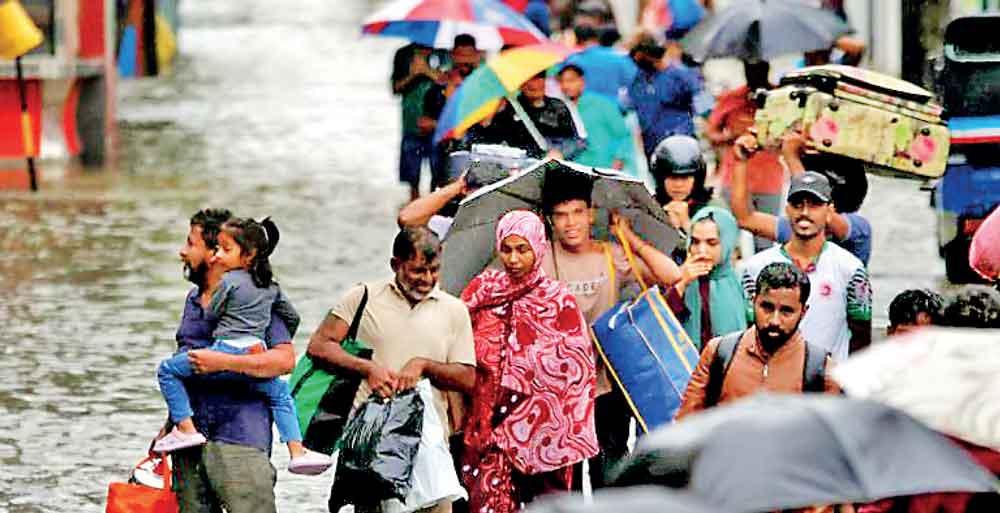
In the aftermath of the floods the state programme ‘Healing Sri Lanka’ is focused on healing the mental health of the affected people and helping them cope with anxiety and trauma after the disaster
By Mirudhula Thambiah
As Sri Lanka continues to recover from Cyclone Ditwah, communities in affected districts face various challenges not only from damaged homes and infrastructure, but also from the psychological and emotional impact of the disaster. Mental health professionals and government authorities are emphasising the need for targeted psychosocial support and measures to ensure the safety and security of displaced and vulnerable populations
The ‘Beyond Recovery’ initiative, launched on December 19 under the Clean Sri Lanka programme, aims to strengthen the psychological well-being of communities affected by Cyclone Ditwah. A training workshop for government officials was held at the Presidential Secretariat. Officials from District and Divisional Secretariats in six major disaster-hit districts, with prior experience in mental well-being, will receive specialised training from leading mental health professionals. The workshop is focused on developing structured programmes, counselling frameworks and psychosocial support initiatives for implementation at relief centres.

Somebody should sit and listen to their stories, not say anything, not do counselling, but just sit and listen, accept their emotions and help them cry if they need to”
Dr. M. Ganesan, Consultant Psychiatrist
While initiatives like ‘Beyond Recovery’ aim to equip officials with tools to support affected communities, mental health experts emphasise that immediate and sustained psychosocial care, adapted to the realities of displaced families and vulnerable children, remains crucial on the ground.
Psychological First Aid and basic needs
Consultant Psychiatrist Dr. M. Ganesan told Daily Mirror that in the immediate aftermath of a disaster, what affected people need first is psychological first aid. “Somebody should sit and listen to their stories, not say anything, not do counselling, but just sit and listen, accept their emotions and help them cry if they need to,” he said. He emphasised that providing adequate information is equally critical, as people are overwhelmed by questions about safety, food, schooling, resettlement and whether another cyclone, landslide or flood would occur. He noted that people should be told honestly that answers to such questions will take time.

In the directly flood affected areas, starting schools may be a challenge because children will not have uniforms and shoes. Their books could be drenched in water. In that case, the child should be allowed to come back to school in coloured clothing. If they are displaced, they may be at the school already in the villages that are heavily affected”
Prof. Miyuru Chandradasa, Professor in Psychiatry Consultant Child and Adolescent Psychiatrist and Head of the Department of Psychiatry University of Kelaniya
Dr. Ganesan stressed that meeting basic needs and ensuring safety is central to psychological wellbeing, particularly for vulnerable groups such as single mothers, pregnant women, children, older persons and people with disabilities. He noted that women and children in shelter camps face increased risks of harassment and that camp authorities may not fully consider the specific needs. Highlighting people’s resilience he said, “If these immediate needs are addressed, 95 percent will fully recover”. He also pointed out the importance of continuity of medical care for people with conditions such as diabetes, hypertension and mental illness who may have lost their medication.
He said that people who have lost loved ones require follow up and long term support, noting that many will not come forward to ask for help and that support must be continuous. He warned that loss of homes and land can generate sadness and anger, which must be handled sensitively, as anger often stems from grief and loss. “Unfortunately, when they express anger, the officers also respond with anger. That approach won’t work,” he added.
He said that those working on resettlement should have support from mental health professionals to understand these reactions.
Supporting vulnerable children
Around 73 children have lost their parents in the disaster, according to the National Child Protection Authority (NCPA). According to United Nations Children’s Fund (UNICEF) more than 460,000 children were affected by the cyclone.
Dr. Ganesan pointed out that children who have lost parents need to have their lives restored to normalcy. He said they should ideally live with relatives they know, such as grandparents, aunts, uncles and that someone must regularly check that they are safe, fed and clothed. He stressed that those following up with children must be trained to work with them and build trust over months or even years. He said children should be told the truth about the death of parents or siblings and not misled with false explanations, warning that lying destroys trust. “They should not lie. That’s a mistake people make. They say your mother has gone abroad or she’ll come back. You have to tell the truth to the child. If you tell lies, then you’re going to lose the trust of the child,” he noted.
Beyond immediate mental health interventions, child development specialists underscore the importance of structured routines and safe learning environments, noting that schools can play a critical role in helping children affected by the disaster regain a sense of normalcy and security. Speaking to Daily Mirror, Prof. Miyuru Chandradasa, Professor in Psychiatry Consultant Child and Adolescent Psychiatrist and Head of the Department of Psychiatry University of Kelaniya said subtle signs of post-disaster anxiety or trauma can appear as changes in thinking, feelings and behaviour. He said that affected individuals may express hopelessness, pessimism or an inability to feel happy, experience fear or apprehension or show behavioural changes such as withdrawal, silence, anger or startle reactions. These changes, he said, indicate change of anxiety after trauma.
School as a healing space
“In the directly flood affected areas, starting schools may be a challenge because children will not have uniforms and shoes. Their books could be drenched in water. In that case, the child should be allowed to come back to school in coloured clothing. If they are displaced, they may be at the school already in the villages that are heavily affected,” Prof.Chandradasa said.
He noted that school is not about uniforms or books, but a place of learning and connection. “School activities could restart without uniforms, without books, just sitting in a circle talking to each other, guided by a teacher,” he said. Prof. Chandradasa added that even in a severely flood affected area, school can be a healing place thus, children could connect with each other.
Currently, there is a large shelter camp in Kandapola, Nuwara Eliya, with 700-800 flood affected people. This isn’t a new pattern. Each time disaster strikes, shelters are set up in schools, temples or other public buildings and once waters recede, people are sent back to their same unsafe homes. Despite decades of contributions to the country’s economy, upcountry residents are treated as second-class citizens”
Project Manager, Gender at the Institute of Social Development (ISD) K. Yogeshwari
Peer support
He further pointed out that it is vital for a child to spend time with other children, thus building on their peer relationships by talking to each other, empathise and ventilate. Prof. Chandradasa states this helps children return to their normal ways of living. “It is important when the schools reopen that there is time for expression of their distress and some time for healing as well. Teachers should focus on psychological recovery of children affected by the flood directly and indirectly. They should spend more time on talking to children, maybe allow them to play a little bit more than usual and postpone covering the syllabus for a few days or few weeks,” he said.
Prof. Chandradasa said they should be allowed to express themselves through drawing, singing and playing with one another, so that they can express their feelings in a healthy manner.
Protecting Dignity and Livelihoods
While restoring children’s routines and educational spaces is essential for recovery, Human Rights Activists stress that psychosocial support must also safeguard the dignity and livelihoods of entire communities, particularly women, as they rebuild their lives after the disaster. Human Rights Activist and Co-founder of the Mannar Women’s Development Federation, Shreen Saroor said disasters have shaken people’s dignity regardless of wealth. She said relief efforts must be grounded in empathy and dignity rather than sympathy that portrays people as helpless victims. “Aiyo Pavam (Oh! Poor thing- translated from Tamil language) is not something that we need to do,” she noted.
She also cautioned the importance of preparing communities for future disasters. “I feel that psychosocial and mental well-being is very important, to prepare these people to be vigilant and careful for the future calamity,” she added.
Aiyo Pavam (Oh! Poor thing- translated from Tamil language) is not something that we need to do. I feel that psychosocial and mental well-being is very important, to prepare these people to be vigilant and careful for the future calamity”
Shreen Saroor, Human Rights Activist and Co-founder of Mannar Women’s Development Federation
She highlighted how relocation can disrupt livelihoods, particularly for estate workers and women tea pluckers whose work is closely tied to their living environment. She warned that moving communities without transport, livelihood planning or consultation creates further psychological and economic stress. They (women tea pluckers) are used to it. Then you put them somewhere else and ask them to go back and work in the tea estate without facilitating the process. Then there are livelihood issues. It is mostly women’s earning. Women put in a lot of effort to build houses,” she added. Saroor said that women’s earnings often sustain households and disasters risk eroding their agency, potentially leading to increased patriarchal control. She said psychosocial wellbeing must be addressed holistically, including protection against gender-based and structural vulnerabilities.
Structural challenges and official responses
Building on the importance of dignity and community support, experts highlight how inadequate housing, unsafe shelters and gaps in official responses continue to exacerbate stress for families in disaster-affected areas.
Project Manager, Gender at the Institute of Social Development (ISD) K. Yogeshwari said last week, the government officials instructed people in shelter camps to return to their homes. According to her this directive overlooked the reality on the ground. Some officials had only visited a few houses in nearby areas and, finding no floodwater there, told residents it was safe to return. “Many houses, especially in remote upcountry areas, were structurally unsafe, some had cracks from landslides, others were inundated, but officials did not visit these homes. Despite residents raising these concerns, they were ignored. Even before the floods, these houses already had issues,” Yogeshwari explained. “Most of these settlements, including line houses, have long been excluded from attention of authorities. They do not routinely inspect estates, leaving these communities vulnerable,” she added.
Yogeshwari said, “Currently, there is a large shelter camp in Kandapola, Nuwara Eliya, with 700-800 flood affected people. This is not a new pattern. Each time a disaster strikes, shelters are set up in schools, temples or other public buildings and once waters recede, people are sent back to their same unsafe homes. Despite decades of contributions to the country’s economy, upcountry residents are treated as second-class citizens. Many have requested alternative housing, but some officials have denied these requests”. She noted such issues have intensified psychological stress and raise questions about whether these communities are truly included in the country’s sustainable development agenda.

“Access to clear information and ability to access appropriate relief, compensation and recovery schemes can ease uncertainty and prevent additional stressors from increasing vulnerability to mental health and psychosocial problems. Similarly, being able to maintain connections with loved ones or to access social support is protective of their mental health and wellbeing”
Ananda Galappatti, Director of Strategy at Mental Health and Psychosocial Support Network (MHPSS.net) and Medical Anthropologist
Yogeshwari emphasised that psychological support alone is insufficient. A proper framework must include tangible aid, providing houses or the promised Rs.25,000-Rs.50,000 for temporary rented housing. She noted such measures would offer genuine comfort and reassurance, beyond counselling. “The loss of essential documents such as birth, death, marriage certificates also exacerbates stress. While steps have been taken to provide replacements, a more robust system is required to fully address these challenges,” she added.
She stressed that children are unable to attend school due to damages to roads and other disruptions. She noted that issues in upcountry areas are only highlighted post-disaster, despite these communities being historically neglected by evaluations by relevant authorities. Yogeshwari pointed out that upcountry residents pay taxes, vote and contribute to the nation, yet services routinely fail to reach them and some officials often cite distance and transport difficulties, but no alternative solutions have been implemented. “Shelter camps present further challenges, particularly for women. Privacy is severely compromised, making it difficult to manage menstrual hygiene or care for infants and pregnant women. With only 3-4 toilets for 500 people, basic sanitation is inadequate. This is a situation seen across shelter camps,” she said.
Yogeshwari stressed that these structural and administrative failures are not merely logistical, they have profound psychological consequences. The neglect of upcountry communities during and before disasters has created immense stress for those people, underscoring the urgent need for an inclusive approach that combines safety, basic amenities and psychological support.
Community-based recovery approaches
The challenges of unsafe housing, insufficient support by the authorities and the resulting stress on affected communities underscore the need for broader, systemic approaches to mental health and psychosocial support that integrate families, local structures and long-term recovery strategies. Director of Strategy at Mental Health and Psychosocial Support Network (MHPSS.net) and Medical Anthropologist Ananda Galappatti said “From our experience with the 2004 Indian Ocean tsunami disaster and other crises in Sri Lanka and globally, we know that support for affected children and adults is primarily provided from within their families and communities,”
He pointed out that children’s reactions and recovery are crucially mediated by the capacity of their parents or caregivers to provide them a sense of safety, stability and confidence that the adults can manage the difficult situations or its consequences. Ensuring that children are not separated from their trusted caregivers and siblings during displacement or afterwards is a key factor in protecting their wellbeing. He stated that the relatively few children who may have lost their parents in the disaster should also have care arrangements that prioritise living with relatives whom they know, trust and feel cared for by.
He noted that adults will often cope and recover better and faster if they feel safe and their basic needs are met and can be accessed in ways that preserve their dignity and involve them in meaningful ways. “Access to clear information and ability to access appropriate relief, compensation and recovery schemes can ease uncertainty and prevent additional stressors from increasing vulnerability to mental health and psychosocial problems. Similarly, being able to maintain connections with loved ones or to access social support is protective of their mental health and wellbeing,” he said. Community-based approaches that help adults to participate in inclusive recovery processes whilst fostering cooperation, social connection and development of skills and confidence can be vital for recovery of psychosocial wellbeing and promotion of mental health, Galappatti noted. “For some individuals, the experiences of the disaster and its aftermath may result in more severe distress or mental health conditions. In such instances, it is important that families, community members and frontline service providers are able to refer them to the nearest mental health professional. Within the public sector, this can be through a mental health clinic or a mental health unit at a government hospital in their district or by contacting a counsellor via a nearby divisional secretariat office,” he added.
Galappatti said that the major investments that remain to be made in relation to mental health outcomes are not actually so much in mental health infrastructure, but in the integration of mental health and psychosocial considerations into the disaster risk management approaches, mechanisms and institutions. “There is much that can be done in terms of prevention and mitigation work that can reduce the vulnerabilities of communities to disaster exposure and mental health impact. Similarly, preparedness can integrate MHPSS considerations and actions to ensure that every aspect of the response contributes to protecting and recovering mental health rather than compounding harms caused by the disaster,” he added.
Further, Galappatti said that there is evidence from other flood and landslide disasters that suggest that some of the serious medium and longer-term mental health impacts are mediated by factors such as pre-disaster poverty or experiencing difficulties in rebuilding or recovering livelihoods. “We cannot afford to ignore the role of material and social factors in shaping the future outcomes in the mental health of affected communities,” he said.
He underscored that the government could commission an independent review of preparedness and response for mental health and psychosocial support, including how other aspects of the disaster response such as relief distribution, information provision, camp management and administration of re covery assistance may have supported or undermined wellbeing.
“We have started counselling programmes”- Minister Paulraj
 Minister of Women and Child Affairs, Saroja Savithri Paulraj said that the government is approaching the psychosocial development of the victims under the Healing Sri Lanka programme. This will be carried out in parallel with the Rebuilding Sri Lanka programme. She told Daily Mirror that the Rebuilding Sri Lanka programme focuses on physical construction, development, reconstruction of roads, and other infrastructure, while Healing Sri Lanka is focused on healing the mental health of the affected people, helping them cope with anxiety and trauma from the disaster. “We are supporting and guiding the affected people through this process,” she added.
Minister Paulraj noted the increased risks that come with displacement. “We have brought people to public places where there are many possibilities for sexual abuse. People have lost their belongings. We have started counselling programmes to empower children and women who are struggling with nothing. There are also those suffering from backgrounds that cannot bear certain losses and the most vulnerable among them are children who have lost their parents,” she said.
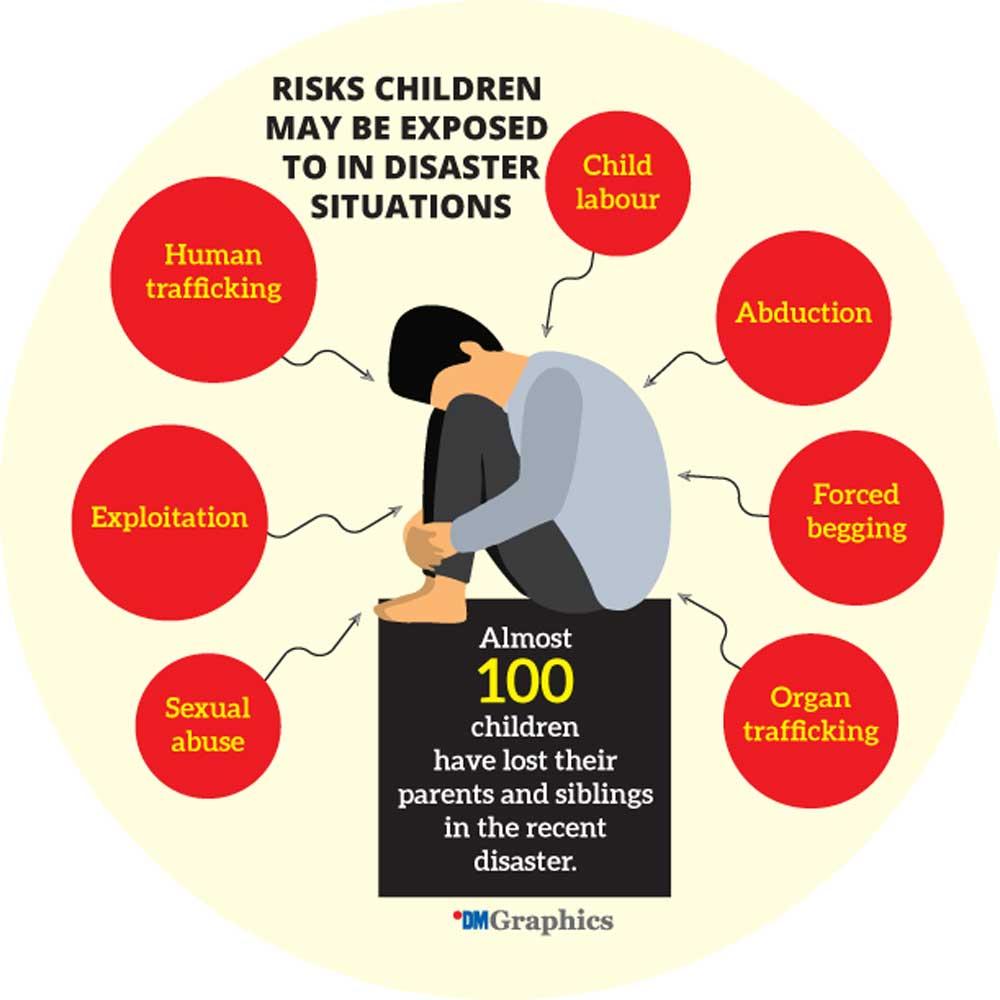
She also highlighted the strict legal safeguards for children in these situations. “Almost 100 children have lost their parents and siblings in the recent disaster. Since they do not have guardians, they may be at risk of human trafficking, exploitation and sexual abuse, child labour as domestic aides, or even abduction for forced begging. There is also a risk of organ trafficking, although such cases are more commonly reported in other countries. We have to protect these children from such issues. There is only one maintenance rule, nobody can adopt a child without following the correct laws in the country. If anyone chooses adoption, they must follow adoption laws under the Department of Probation. Only then can children be adopted,” she added.
Minister Paulraj explained how fostering is legally and carefully managed. “During the aftermath of the Tsunami, fostering of children was offered to relatives or non-relatives. Foster caring procedures are supervised by a probationary officer according to legal advice. Other than these procedures, children cannot be given for fostering to any individual, not even relatives. They have to prove their willingness with evidence according to laws,” she added. On trauma counselling, she acknowledged past challenges and current measures. “Trauma counselling is an important part of recovery. If you look at the counselling during the tsunami, it was crucial. But after that, there has been a shortage of trained mental health counsellors. Due to this, we have brought together counsellors under the Ministry of Women and Child Affairs, school mental health counsellors under the Ministry of Education and counsellors from the Ministry of Social Development and Ministry of Health in consultation with psychiatrists. We have conducted trainings to prepare them to care for affected people during disasters. School counsellors and our ministry counsellors needed scientific training and we have already commenced the work plan in collaboration with the Ministry of Health,” she said.
“Every camp has been detailed with directives of the IGP”- ASP Wootler Police Spokesperson
 Sri Lanka Police have warned of potential child trafficking attempts targeting children displaced by the recent cyclone, urging the public to remain vigilant and report any suspicious activity immediately. Police Media Spokesperson Assistant Superintendent of Police (ASP) F.U. Wootler told Daily Mirror the police had identified instances where social media posts and WhatsApp messages circulated phone numbers asking the public to provide information about children and women who had lost family members, claiming they would take care of their education and future.
“We strongly deny and oppose these actions because some people may cheat. This may lead to human trafficking,” ASP Wootler said. Explaining the risks, he added, “Human trafficking is when you cheat and take them under deception. Then children will be left for sexual activities, porn activities and to work in houses as domestic aid,” He stressed that such acts would not be tolerated and urged the public to report threats involving children to the nearest police officer, the Grama Sevaka, other government authorities or the NCPA hotline 1929.
Addressing concerns over women’s safety during the post-disaster period, ASP Wootler acknowledged reports of harassment incidents and said that police had taken special measures to protect women and their property. He said houses vacated due to the cyclone were being monitored by respective police stations, with officers deployed in mufti and special mobile patrols operating near isolated homes to prevent harassment, theft or intimidation.
Detailing the broader security response, ASP Wootler said that Sri Lanka Police had deployed more than 40,000 officers island-wide during the crisis, with over 25,000 personnel currently deployed in the post-disaster phase to ensure public safety. “Every camp has been detailed with an additional two police officers with the directives of the Inspector General of Police,” he said.
He emphasised that police would take immediate legal action if any crimes were reported at relief camps. “If there are any thefts, intimidation, humiliation, sexual assaults or any crime, the police will then and there record the statement and take legal action,” he said.
13 Jun 2026 7 hours ago
13 Jun 2026 7 hours ago
13 Jun 2026 9 hours ago
13 Jun 2026 9 hours ago
13 Jun 2026 13 Jun 2026