24 Apr 2026 - {{hitsCtrl.values.hits}}
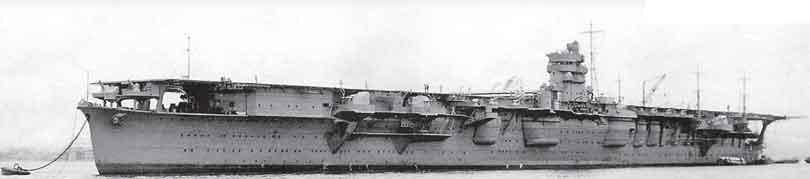
Hiryū at anchor in Yokosuka, shortly after completion in 1939
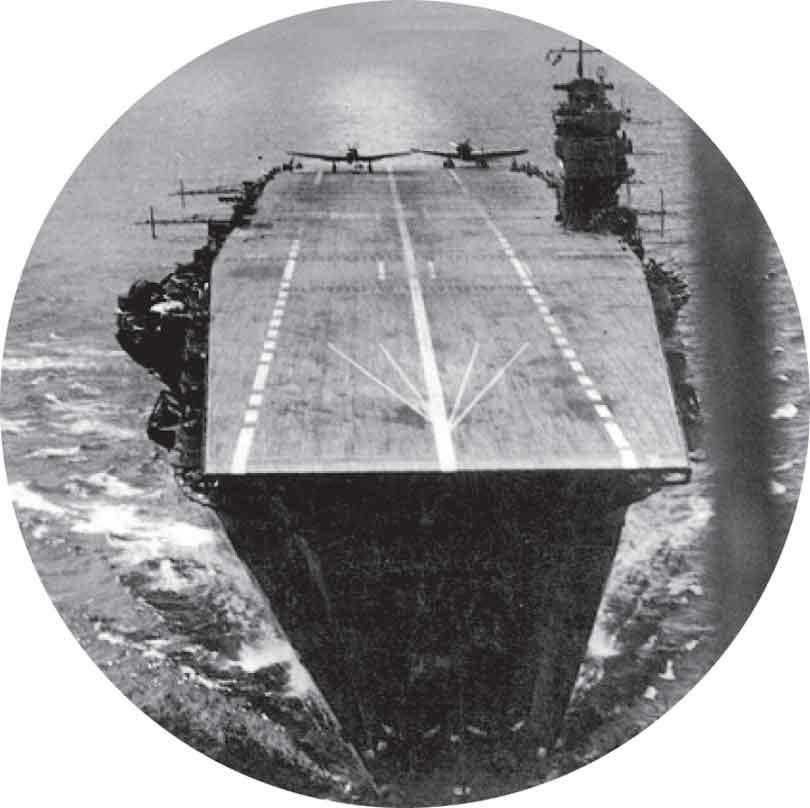
Akagi conducting flight operations, April 1942
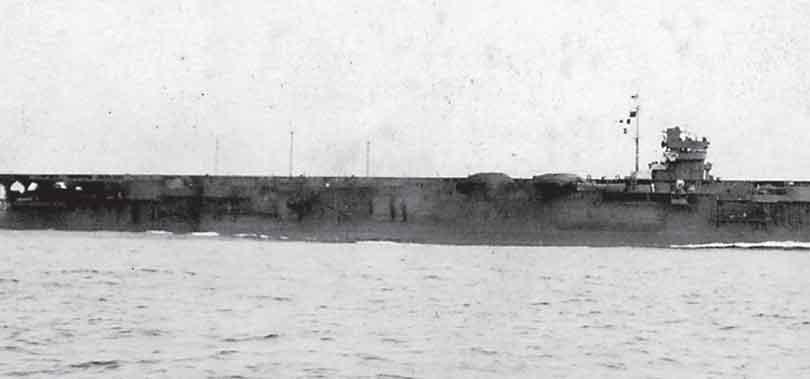
Sōryū on trials, January 1938
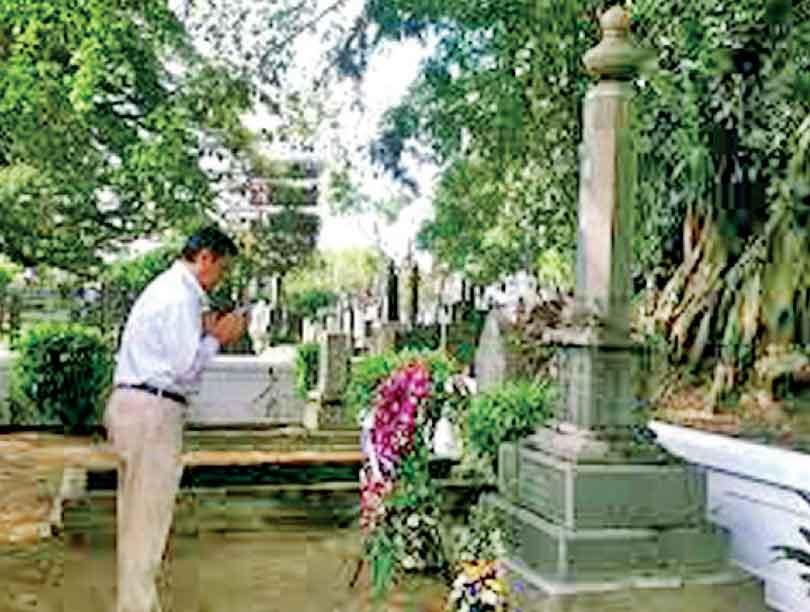
Japanese war graves in General Cemetery visited by the Japanese Ambassador in 2019
- The overall situation was still bad for the Allies. Britain had managed to contain German air power during the Battle of Britain and prevent a German invasion, but Europe was fully occupied by Germany, and British forces were fiercely battling Field Marshal Erwin Rommel’s Afrika Korps in North Africa
 Much has been written about the two Japanese air raids on Sri Lanka (then Ceylon) on Easter Sunday April 05, 1942. But these accounts are usually sourced from the Allied side, mainly focusing on the vital role played by Squadron Leader Leonard Birchall, who sighted the Japanese fleet and reported to Colombo before his Catalina flying boat was shot down.
But little has been written about the Japanese side – about the carrier strike force, its pilots and the types of aircraft they flew. These aircraft carriers were the key to Japan’s spectacular success and advances in the four months following the Dec. 7 1941 attack on the US Pacific Fleet at Pearl Harbour.
Japan’s initial plan was to attack the Soviet Union from Manchuria (in northeast China) and seize rich mineral deposits in Siberia. But Japanese forces were conclusively defeated at the battle of Khalkin Gol in Mongolia. The relative weakness of Japanese armour in the rolling Mongolian countryside was instrumental in this defeat. Thereafter, Japan’s military planners looked towards South East Asia, and Japan’s powerful Navy with its aircraft carriers, which played no role in the Manchurian misadventure, would be key to Japan’s spectacular success in Indonesia, the Philippines, Malaysia, Hong Kong and Singapore.
In April 1942, British defences in Sri Lanka were weak. They were being strengthened under Admiral Sir Geoffrey Layton. But he wisely decided to conceal his Eastern fleet in the Maldives. The island’s defences could not have successfully resisted a Japanese invasion. But that wasn’t Japan’s strategic goal. Japanese forces were now advancing through Burma (Myanmar) towards India. The Japanese naval strike force under Vice Admiral Chuichi Nagumo was looking for Layton’s fleet, unaware that it was far away in the Maldives.
The British fleet had five battleships, and a small number of cruisers and destroyers. But the vulnerability of battleships and cruisers against air attack was tellingly demonstrated In December 1941, when the battleship HMS Prince of Wales and the battle cruiser HMS Repulse, rushed to attack Japanese forces invading Malaysia, were sunk by Japanese bombers.
Thereafter, the British decided not to confront Japanese naval forces in the Indian Ocean. Strangely enough, for a country which pioneered the use of aircraft carriers, Britain’s carrier force could not match Japan’s at this critical hour. Adm. Layton’s fleet had two modern aircraft carriers without adequate aircraft. These were withdrawn from Sri Lanka, leaving the old carrier Hermes which was easily sunk by Japanese bombers on April 5.
The overall situation was still bad for the Allies. Britain had managed to contain German air power during the Battle of Britain and prevent a German invasion, but Europe was fully occupied by Germany, and British forces were fiercely battling Field Marshal Erwin Rommel’s Afrika Korps in North Africa. In Eastern Europe, the Germans were attacking Soviet forces, pushing them further East. The Americans too, were still on the defensive after losing the Philippines. The British, hurriedly strengthening their defences in India, simply did not have enough men, aircraft or war material to boost Sri Lanka’s defences significantly.
Japanese forces, too, were overstretched by now, but feeling powerful and confident. Japan’s naval forces, including its powerful carrier force with four modern aircraft carriers – Akagi, Kaga, Soryu and Hiryu – Seemed invincible. This was the same force which attacked Pearl Harbour, and these navy pilots were Japan’s best and among the best in the world.
They flew the Mitsubishi A6M or the ‘Zero’ fighter, a sleek, lightweight, highly maneuverable long-range aircraft. The Royal Air Force had only one fighter which could have faced this threat, the Super marine Spitfire. But they were badly needed in North Africa and Britain, and none were sent to Sri Lanka till 1945.
The slower, less agile Hawker Hurricane had to face the Zeros. The Royal Air Force had only 50-60 Hurricanes in the island, together with a handful of Fleet Air Arm Fulmars, while the Japanese carriers had over 100 Zeros. But only 36 Zeros were sent with the first wave on April 5, indicating that the Japanese did not take British air defence capabilities very seriously. The very slow Fulmar was useful in its reconnaissance role, but no match as a fighter to the Zero.
The Zeros acted as escorts to the 91 slow, single-engined bombers carrying pilot and tail gunner- 36 ‘Val’ dive bombers and 53 Nakajima ‘Kate’ torpedo/level bombers. These would have been easy prey for the Hurricanes but for their Zero escorts. The first wave was led by Commander Mitsuo Fuchida, who also led the attack on Pearl Harbour and the bombing of Darwin.
British defenders were saved from disaster by the timely radio message sent by Squadron Leader Leonard Birchall from his Catalina flying boat. Given their limited resources, the defenders put up a good fight. Estimates of aircraft losses on both sides vary, but Japanese losses are believed to be 18-27 during the first raid. Total losses including those incurred during the Trincomalee raid are cited as around 54 aircraft, which is relatively high. But the number of pilots lost is given as thirty two.
There is no doubt that the defenders would have been overwhelmed if the Japanese goal was an invasion of the island. But Vice Adm. Nagumo headed back to the Pacific after a futile search for the missing British Eastern Fleet, and his carrier force was to meet its doom in the crucial battle of Midway with the American Navy barely two months later, in June 1942. Nagumo committed suicide in July 1944 during the fierce battle for Saipan to avoid capture by the Americans.
12 Jun 2026 8 hours ago
12 Jun 2026 9 hours ago
12 Jun 2026 9 hours ago
12 Jun 2026 12 Jun 2026