28 May 2026 - {{hitsCtrl.values.hits}}
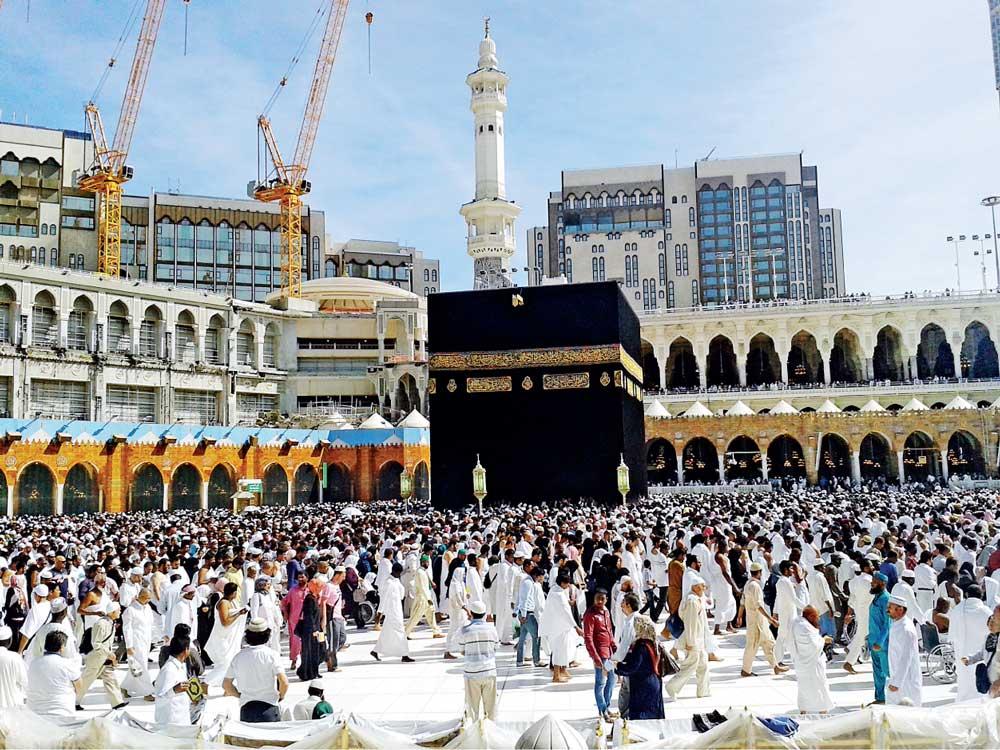
During Tawaf pilgrims also include Hateem- an area at the Northern side of Kaaba- inside their path. Each circuit starts and ends with a kissing or touching of the Black stone
 Tens of thousands of pilgrims from all colours-from blue eyed blonds to black skinned Africans- throng the city of Mecca in Saudi Arabia during the eighth to twelfth or thirteenth of Dhu of al-Hijjah, the last month of the Muslim calendar. Pilgrims do this to clean their souls from the worldly sins; which connotes both outward acts of a journey after death and outward acts of good intention.
Hajji/ Hajj/Haji/ Hadj/ Haj is associated with religious as well as social significance for Muslims. Islamic scholars suggest that Hajj should signify a Muslim’s religious commitment and should not be a measurement of their social status. It brings together and unites Muslims from different parts of the world irrespective of their race, colour and culture which acts as a symbol of equality.
Hajj pilgrimage is one of the five pillars of Islam along with Shahadah (statements of truth), salat (prayers five times a day), Zakat (give a portion of one’s possessions to the needy) and swan (fasting from sun rise to the sun set in the month of Ramadan)
Hajj is compulsory for every Muslim in their lifetime. It is performed over a specific time period during a designated Muslim month (Dhu al Hijji) and is time consuming.
Umrah is also a pilgrimage and holds a lower level of importance. It can be performed at any time and in less than a few hours while Hajj is time consuming involving more rituals.
In performing the rites of Hajj, pilgrims follow the model of Mahammad and also commemorate the events associated with Abraham.
Ihram is the name given to the spiritual state of holiness which marks the ritual of Hajj for each person. Ihram is initiated upon the arrival to the Migat or prior to reaching it on where they have come from.
Equality of all pilgrims
When pilgrims enter the state of Ihram they are required to abstain from certain actions. While in Ihram males are required to wear two white seamless clothes. One wrapped round the waist reaching below the knee, the other draped over the left shoulder and tied at the right side. Females should wear ordinary dress that fulfills the Islamic condition of public dress code with hands and face uncovered. Other prohibitions include clipping of nails, shaving any part of the body, having sexual relations using perfumes, damaging plants, killing animals, getting married and carrying weapons.
Upon arrival at Al-Masjid Al-Haram pilgrims perform an arrival Tawaf either as a part of Umrah or as a welcome Tawaf. During Tawaf pilgrims also include Hateem- an area at the Northern side of Kaaba- inside their path. Each circuit starts and ends with a kissing or touching of the Black stone. If kissing or touching is not possible because of the crowds pilgrims may simply point towards the stone with their right hand on each circuit. Eating is not permitted but they can drink water. They are encouraged to drink water to avoid dehydration. They are encouraged to perform the first three circuits at a hurried pace (Ramal) and the other four circuits at a more leisurely pace.
Tawaf is followed by Rakaat prayers at the place of Abraham (Muqam Ibrahim), a sit near Kaaba, inside the mosque.
This rite is said to be the manifestation of Tawhid, the oneness of God. During Tawaf everyone encircles Kaaba collectively.
Tawaf is followed by Sa’ay running of walking seven times between the hills of Safa and Marwah located near Kaaba. Previously this was in the open air but now it is entirely enclosed by the sacred mosque and can be accessed via air conditioned tunnels.
On the eighth al-Hijjah’ the pilgrims are reminded of their duties. They again don’t wear Ihram garments and confirm their intention to make the pilgrimage. The prohibitions of Ihram start thence.
On the day of Hajj, mount Arafat pilgrims wear Ihram at mount Arafat. After morning prayers on the eighth day, Dhu al Hijjah pilgrims proceed to Mina where they spend the whole day. On Friday instead of Dhuhr prayers at Mina special Friday prayers are offered and in addition to morning prayers, noon prayers afternoon prayers, evening prayers a night prayers are offered. Next morning after morning prayers they leave Mina for Arafat.
On the ninth, Dhu al Hijjah pilgrims arrive at Arafat before noon. Arafat is a baron and plain land about 30 Kilo metres to the East of Mecca. At Arafat they stand on contemplative vigil repenting for their sins and listening to Islamic scholars at the mount of mercy. This is regarded as the most significant rite of Hajj.
After performing morning prayers at Muzdalifah pilgrims move to Mina. At Mina pilgrims perform symbolic stoning of the devil (Rami al-jamarat) by throwing seven stones from sunrise to sunset at only the largest of the three pillars known as Jamarat al- Agabah. The remaining two pillars (Jamarat) are no stoned on this day.
After stoning the devil cattle (Surah 22-34-36) are sacrificed to commemorate the story of Ibrahim and Ismael. Traditionally the pilgrims slaughtered the animals themselves or oversaw the slaughtering. Today many pilgrims buy sacrifice vouchers in Mecca before the beginning of greater Hajj which allows an animal to be slaughtered in the name of God (Allah) on the tenth without pilgrim.
After sacrificing an animal another important rite is the shaving or trimming the head hair (known as Halak). All male pilgrims shave their head or trim their hair on the day of Eid al- Adha and females cut the tips of their hair.
On the same day or the following day pilgrims revisit the mosque in Macca for another tawaf known as the tawaf al Adha, an essential part of Hajj.
From noon to sunset on the eleventh day and on the twelfth day pilgrims throw Pebbles at each of the tree pillars in Mina. If unable to leave on the twelfth before sunset or opt to stay longer they perform the stoning ritual again.
22 Jul 2026 7 minute ago
22 Jul 2026 12 minute ago
22 Jul 2026 25 minute ago
22 Jul 2026 40 minute ago
22 Jul 2026 49 minute ago