18 Jul 2017 - {{hitsCtrl.values.hits}}
 Glyphosate is back in the spotlight. The herbicide and the active ingredient in globally used weed killers, was banned on June 11, 2015 owing to findings linking the chemical with kidney disease in Sri Lanka. In September 2016 Minister of Plantation Industries Navin Dissanayake called for re-import of the chemical citing the needs of the ailing plantations industry. Almost one year later, the Minister who once insisted that the ban won’t be lifted, is now reportedly seeking cabinet approval to lift it.
 Reports revealed that Minister Dissanayake called for the ban to be lifted as commercial agriculture has suffered great losses since the ban was implemented. Minister Dissanayake earlier said that he only wishes for an exemption for the tea plantations to be granted, where only 800,000 litres of the chemical will be imported with a 15 percent reduction of import volumes each year. When the Daily Mirror attempted to contact Minister Dissanayake to make clarifications, the Minister said that he doesn’t wish to comment on the issue adding, “Enough has been said on the matter”.
Our farmers have been cultivating rice for years, but at the same time are suffering from malnutrition
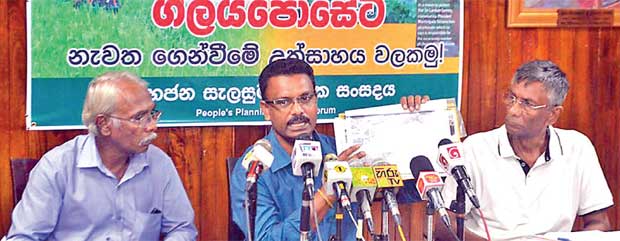
Meanwhile the People’s Planning National Forum, a collective of activists campaigning against this attempt, convened a media briefing recently to illustrate the consequences of the chemical being re-imported. The organisation comprises activists and members from the farming association across the country, intellectuals of varied expertise, including university lecturers and researchers. The team represents members who have dedicated to develop the agriculture industry over the past 20 to 25 years.
Speaking on the Glyphosate issue, Chintaka Rajapakse of the Movement for Land and Agricultural Reform elaborated on duplicity of government policies. “Since November 2016, a ten member Cabinet committee was appointed to review the import ban on Glyphosate.
The committee submitted their recommendations to the ministers recently while the subject Minister Navin Dissanayake is expected to present a Cabinet paper to relax the ban. Efforts are already underway to import the disastrous chemical again,” Rajapakse said.
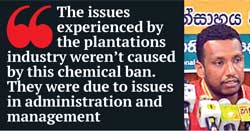
“The issues experienced by the plantations industry weren’t caused by this chemical ban. They were due to issues in administration and management. Glyphosate is now being used as a means to cover the real problem, without addressing the underlying issues. At this time, there are several corporates involved with this issue, along with some scientists and researchers who advocate the use of Glyphosate. This fund driven exercise is now attempting to change perceptions regarding this dangerous herbicide. This has been carefully planned and implemented by multinational organisations such as Monsanto and Bayer.”
 According to Rajapakse, Professor of Ecological Agriculture P.I. Yapa, of Sabaragamuwa University, the only professor in the subject, has made clear recommendations, where it states that Glyphosate shouldn’t be banned. “However he said that recommendations were stated before a final discussion on the committee. The government has no right to lift this ban citing the issues of the plantation sector. There are plenty of alternatives they can consider. Instead they have resorted to lift the ban and import this deadly chemical once again, based on the needs of a few. We condemn this move while questioning the government of their duplicity. The government is attempting to change the farming patterns of the country. Attempts to reverse this ban clearly showcase the ambivalence of this government. We request the President to discourage these attempts and seek alternatives for the resolution of these problems,” he said.
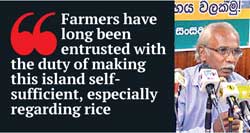
Terrence Gamini - An activist representing the farmers of the North Central Province strongly believes that Glyphosate has been associated with a number of ailments including Chronic Kidney Disease of unknown etiology (CKDu). “Farmers have long been entrusted with the duty of making this island self-sufficient, especially regarding rice. For the past two seasons, farmers couldn’t cultivate, mostly because of the absence of rainfall and water. However the low yield was portrayed as a result of not using the chemical Glyphosate. There was a severe dry spell which affected all crop plantations. People with vested interests are trying to use this as an excuse to import the chemical,” Gamini said.
“Our farmers have been cultivating rice for years, but at the same time are suffering from malnutrition. This is because they cannot cover the production cost with the profits. They sell their rice for Rs. 30 or 25 and are forced to buy imported rice from a shop along with Mysore Dhal and Soya Bean. This is a farmer’s diet now. Glyphosate has been used to destroy the natural greenery in our fields. It’s a chemical that leaves no weed or plant behind. A farmer’s malnutrition is directly caused by the use of this chemical. Earlier cultivators consumed green leaves such as gotukola and mukunuwenna which used to grow in their fields. But these plants have been destroyed by the use of Glyphosate and farmers no longer consume them,” Gamini lamented.
“During the short time the ban was implemented, cultivators quickly adapted to farming without this chemical. Every farmer now has equipment necessary for weeding. It also saves all the insects and harmless creatures that live within the soil. The scientists who carry out research on renal diseases have pointed out that the use of agro-chemicals has contributed to kidney disease plaguing many parts of the country. This chemical is responsible for the change in our food patterns which leads to diseases that have rendered our farmers helpless. All agro-chemicals should be banned for this reason alone, however we stress on the need to prohibit Glyphosate as it is the most used agro-chemical by our farmers. We have years of experience in cultivating so we can identify the nature of the soil. We condemn all attempts to bring back chemicals under false pretences,” charged Gamini.
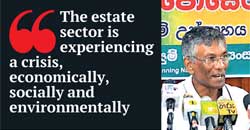 Speaking at the event, Buddhi Jayasuriya, an activist with over 35 years in of service in the state plantations corporation and expertise in plantation crops including tea and coconut, said the estate sector is experiencing a crisis, economically, socially and environmentally. “Economically tea plantations are no longer profitable. The local as well as the international demand for tea is low and this won’t change. Some 20 tea production companies involved in this business, on average face a loss of Rs. 57 with every kilogram of tea sold. When it comes to state plantations, they face a loss of Rs. 84 for a kilo of tea. These are the circumstances under which the tea plantation operates,” said Jayasuriya elaborating on the conditions present in the plantation sector.
“Sri Lanka also competes against Kenya, India and other emerging tea producers in Vietnam and Africa. However the market for the volumes of tea is limited and therefore won’t see demand increase. The tea plantations receive only 7 percent of the profits. 50 percent of profits go to intermediaries in the value chain, such as those involved in manufacturing, packaging and transport,” he said.
“Tea plantations were managed under the mono-crop concept for over 100 years. This is the root cause of all issues. The prolonged existence of a single crop in a given land area, with no other weed or natural insect inhabiting the place, is against nature and changes the ecological balance. This is why we need agrochemicals and fertiliser. Glyphosate can kill underground parts of many constant weeds when sprayed on the foliage. It’s used to eradicate infestations in tea fields. When uprooting and replanting, approximately 40 tons of soil are washed away due to the chemical’s reaction on the soil.”
“Not only does this destroy our eco-system, but it also changes our plantation and food patterns, as they are increasingly dependent on agrochemicals. With or without Glyphosate, the plantation industry is heading for disaster, but lifting the ban isn’t the solution. The root causes must be addressed,” Jayasuriya stressed.
We must pose the question whether the reversal of this ban is the only alternative
“Moreover the estate population of the country suffers from undernourishment, unsatisfactory levels of education and numerous other social problems. Their lives can be uplifted only through the plantation sector. The government needs an alternative plan to reform agricultural practices and uplift the livelihood of people in the hill country. Authorities must take responsibility and not resort to such trivial responses,” he opined.
 T. Ganeshalingam of the People’s Movement for Plantation Land Rights also speaking at the event echoed the facts underscored by Jayasuriya. “Over the past 15 to 20 years, Glyphosate was used in the tea plantations. Before the plantations were handed over to companies in 1992, tea was a profitable business. Today it’s running at a loss. Minister Navin Dissanayaka discards the claims that Glyphosate is linked with kidney disease. However we have information of people who have fallen victim to this disease in all estates. We even have the details of the Grama Seva Niladharis who are responsible for families with such patients,” Ganeshalingam revealed.
“The number of people suffering from malnutrition in our estates is on the rise. The EPF and ETF payments haven’t been made to the workers. An estate sector with such glaring issues can’t be made profitable with the use of a harmful chemical. There has been no evidence to suggest that the use of Glyphosate will contribute to profits. All these chemicals reach our waterways and the entire water network is polluted. Thus we request the government to solve issues in the estate sector instead of lifting this ban and aggravating our problems further,” he stressed.
According to the government there’s no substantial evidence that the herbicide is linked to CKDu. There are many who beg to differ. They also believe that Glyphosate is carcinogenic. This understandable because the government’s attempts to save an already plagued plantation sector.We must pose the question whether the reversal of this ban is the only alternative? It must be noted that Sri Lanka has had an inclination towards introducing ‘bans’, but its effectiveness remains questionable. While officials have stressed that if the reversal is implemented, the chemical should be imported only under strictly supervised conditions, Sri Lanka doesn’t have a reputation for maintaining effective regulations. The Tea Research Institute is reportedly looking into introducing an organic weedicide for tea plantations. The overall health of cultivators and their families certainly can’t be compromised upon the needs of a particular sector.
01 Jul 2026 6 minute ago
01 Jul 2026 30 minute ago
01 Jul 2026 49 minute ago
01 Jul 2026 54 minute ago
01 Jul 2026 1 hours ago