23 Apr 2026 - {{hitsCtrl.values.hits}}
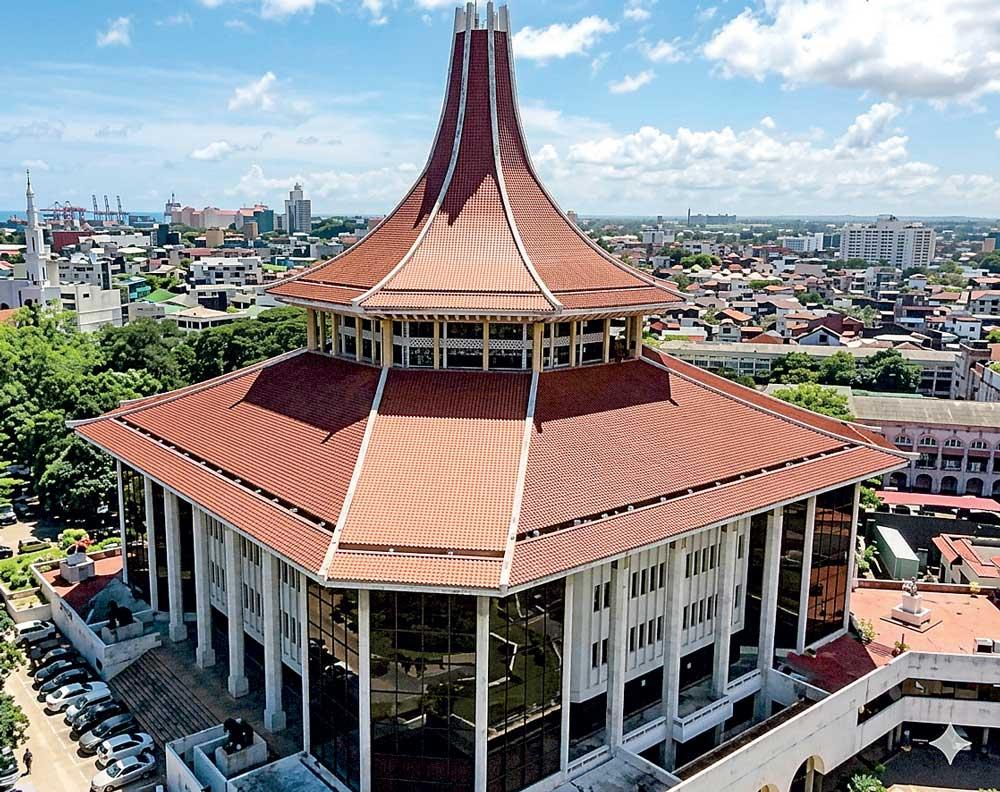
 The implementation of the Small Claims Courts’ Procedure Act, No. 33 of 2022, marks a transformative shift in Sri Lanka’s legal landscape, directly enhancing the nation’s “Ease of Doing Business” ranking. By providing a streamlined forum for disputes under Rs. 1.5 million, these courts bypass the procedural density of District Courts
Enforcement of the Small Claims Courts’ Procedure Act, No. 33 of 2022, has become an integral factor in improving and impacting positively towards Sri Lanka’s place in global indicators such as the Ease of Doing Business Index, particularly in relation to the enforcement of contracts. Small Claims Courts contribute to a more reliable legal environment, which is essential for the development of the economic growth and investor confidence. In a small claim action monetary jurisdiction is not exceeding 1.5 million, excluding interest. Section 29A and Schedule 7 of the Judicature Act No. 2 of 1978, certain types of actions fall within the jurisdiction of the Small Claims Court. These actions include claims relating to debts and the recovery of money. The court contains jurisdiction over claims for damages, such as those arising from personal injuries caused by accidents, as well as actions for the recovery of movable property. The court may also hear counterclaims that arise in relation to these matters. It can exercise any other jurisdiction that is conferred upon it by law. Jurisdiction of the small claim court complies according to section 2 the institution of an action subjected to the provisions of subject 3 of this act and chapter 5A of the Judicature order any pecuniary or other claim shall be instituted in a small claim court with the local jurisdiction.
In certain situations where the disputed amount is less than Rs. 500,000, individuals have the opportunity to seek justice through mediation under Section 3 of the Mediation Act No. 2 of 2024. In such cases, parties may bring their dispute before a Mediation Board, where they will enter in to a settlement based on the decision taken amicably between the parties. Furthermore if the mediation process is unsuccessful, the parties are then entitled to pursue a formal legal action.
Where in order to seek relief court litigation, they must first obtain a certificate from the Mediation Board confirming that mediation has failed. This process ensures that an attempt at peaceful resolution is made before resorting to the courts, thereby reducing unnecessary legal disputes and promoting efficient conflict resolution.
One of the distinguishing features of the Act is that it excludes specific types of legal actions from being filed in Small Claims Courts. In particular, actions falling under Chapter 53 of the Civil Procedure Code commonly known as summary procedure for liquid claims are not permitted within the Small Claims framework. Here as there are certain steps to be taken therefore it does not comply under the customary procedure conducted under small claim courts. And also summary procedure action, debt recovery action and mortgage actions if the value is less than 1.5 million these actions will not be heard under small claim courts. These types of cases follow a specialized procedure with distinct legal steps, making them incompatible with the simplified process adopted by Small Claims Courts. In the District Courts, litigants may rely on interrogatories written questions submitted to the opposing party under Sections 94 to 100 of the Civil Procedure Code to gather information before trial. However, this mechanism is not available in Small Claims Courts. The exclusion of interrogatories reflects the intention of the legislature to keep proceedings simple, informal, and expeditious.
In addition, other forms of actions such as summary procedure cases, debt recovery proceedings, and mortgage actions are also excluded from the jurisdiction of Small Claims Courts, even where the value of the claim is less than Rs. 1.5 million. Such matters must instead be instituted in the appropriate District Court. The specific feature in the small claim courts where pleadings can be limited to plaint answer replication should be filled. Whereas if there is grave or irremediable harm proved pleadings can be amended. Pleadings under small claim court differs from the pleadings in the district court. There is a special procedure outlines in this act where plaintiff has to file plaint affidavit and documents that are under your possession and if there are any witnesses you can annex the affidavits of the witnesses and also additional documents can be annexed which will be useful to prove the substantial evidence . It is stated that one who is interested in filling action regarding small claim can be represented by a registered Attorney where he will present a plaint where it should comply with section 40 and section 46 of the civil procedure code .when filling the plaint affidavit and exhibits can be attached in order to prove the substantial evidence, where eventually the opposing party will be notified through summons under the legal provision Chapter VIII of the Civil Procedure Code. Where on the summons returnable day the defendant will be asked whether he agrees or denies if he denies he will have to file and answer with supporting his evidence Under Section 12 of the Act, a defendant is required to support their answer with cogent evidence. This includes submitting an affidavit along with all relevant exhibits. Where a defendant raises a claim in reconvention, they must clearly set out the facts supporting that claim and produce all documents within their possession or control that are relied upon for their defence or counterclaim.
In a certain circumstance plaintiff shall have the right to abandon or relinquish a part of the claim or claims. As set out in the No 33 of 2022 small claims Act Under Section 12 of the Act, a defendant is required to support their answer by annexing an affidavit along with exhibits and also if there are witnesses their affidavits can be produced in order to prove cogent evidence. This is a special feature where answer should be filled in within one month. Where a defendant raises a claim in reconvention, they must give a brief explanation regarding the facts supporting that claim and produce all documents which are under their possession in certain circumstances additional documents also can be produced. If there is a crossclaim a replication can be filled according to the legal provision section 13 of No 33 small claim Act 2022 furthermore if the claim in reconvention monetary value is exceeding the monetary value of the small claim courts under that circumstance the small claim court notwithstanding the excess sum of monetary jurisdiction he sum of claim stated therein is in excess of the monetary jurisdiction of the Small Claims Court, hear such claim in reconvention and enter decree according to law, to avoid multiplicity of actions.
The other specific feature of the No 33 small claims Act 2022 is that section 33 where technical objections will not be raised where it is evident that it is easier and will be fast rather than the action be heard in the District Court.
There are two main instances under No. 33 of 2022 smalls claims Act, where the court can return the plaint based on the following circumstances. Under Section 5 of the No. 33 of 2022 smalls claims Act, if the court determines that it lacks proper jurisdiction to hear the matter, the plaint may be returned to be filed in the appropriate court based under section 47 of the civil procedure code.
As an example if a certain action is suitable to file in the district court but legal relief is sort in the small claim court, where the time period of returning of the plaint and the date of the institution of an action prescription time will be excluded. The other instance is where a plaint may be returned at the discretion of the judge for the purpose of amendment. Where the court identifies certain defects in the plaint, it may direct the party to take necessary steps to file, this ensures that cases proceed with clarity and in accordance with procedural requirements. The other difference is unlike in the district courts after filling the answer pretrial steps are not taken under the small claims procedure.
In a certain circumstance in scenario where a party to an action requests for commission reports certified copies and discovery of documents under section 17 of the No 33 small claims Act 2022 comply. The legal framework ensures that both parties are given a fair opportunity to present all necessary evidence in support of their claims, thereby upholding the principle of equality before the law. In addition, Section 27 of the Small Claims Courts’ Procedure Act, No. 33 of 2022, emphasizes the importance of efficiency by requiring that proceedings be concluded as expeditiously as possible. The court is expected to make every effort to resolve cases within 18 months from the commencement of proceedings, ensuring a swift and effective administration of justice.
In a certain circumstance if you are not satisfied with the decision that is given from the small claim court then under according to section 29 of the civil procedure code where a person aggrieved by small claim action is legally entitled to appeal to the high court of article 154p of the constitution based on error of fact or law. Furthermore in a scenario where in order to appeal leave should be granted within the time limit of 18 months. In comparison to the other primary court procedure unlike in the district court the special mechanism that is adopted is settlement between the parties but unlike in the primary courts no technical objections will be raised.
There are certain circumstances where when settlement fails if the judge is satisfied that final judgement can be produced baased on the pleadings and affidavits that are tendered to court and without oral submission based on section 21 (2) of No 33 small claims Act 2022. Where the other instance is where case will be fixed for trial unlike in the district court the trial conducted here differs because admissions will be recorded and issues will be recorded only on special matters.
In conclusion it is evident that when critically analyzing the comparison between the small claim court and the other primary courts adaptation of this act has encompassed to impact efficiency much faster than the regular courts where it enables to prevent unnecessary delay of the litigation procedure where it sets outs a time period within 18 months it should be settled.
12 Jun 2026 8 hours ago
12 Jun 2026 9 hours ago
12 Jun 2026 9 hours ago
12 Jun 2026 12 Jun 2026