21 Jun 2025 - {{hitsCtrl.values.hits}}
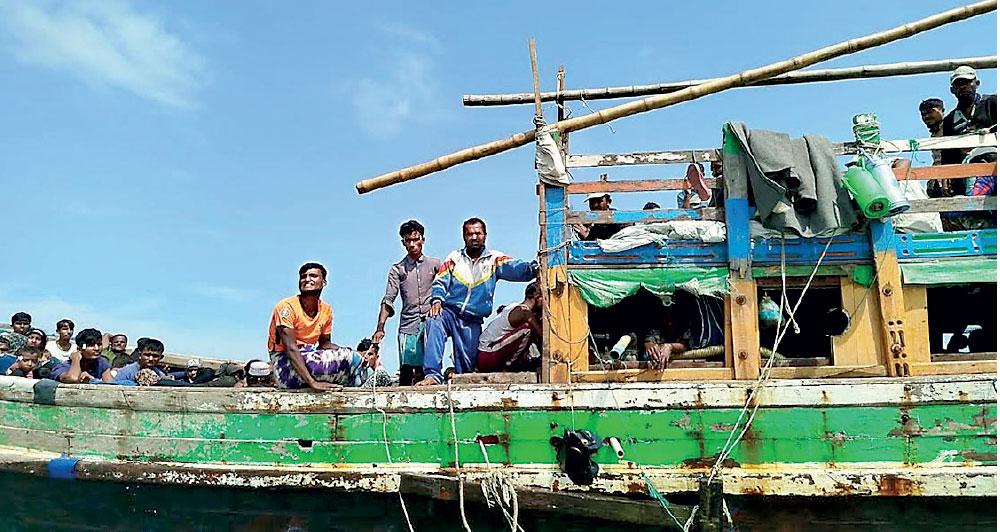
The Rohingya Refugees have faced everything life has thrown at them, from being stranded away 16 days at sea, encountering the worst of Mother Nature with torrential storms and even loss of life in this gruesome process

On December 19, 2024, fisherfolk in Mullaitivu, Northern Sri Lanka, observed a boat in the sea, a few hundred meters away from the shore, crowded with many people and children. The number was later confirmed to be 116, including 57 children. The fisherfolk had visited them in fishing boats, providing food and drinking water and also brought a doctor, local journalists and Navy officers. Despite pleas from fishermen to bring them ashore, and many in the boat being unwell and not having enough food, they were kept at sea most of the day by the Sri Lankan authorities. In the evening of the same day, the Navy had taken them to Trincomalee through a further journey by sea and was allowed to land in Sri Lanka only on the morning of December 20, 2024. 12 were remanded, and the other 104 were ordered to be handed over to the Department of Immigration and were temporarily detained at a school in Trincomalee till December 23.
Human Rights Commission’s observations and recommendations
The Human Rights Commission of Sri Lanka was denied access to the detention centre on December 26, 2024, despite having legal authority to access any place of detention and detained persons in Sri Lanka. The Commission expressed concern about this in a letter to the President and also summoned senior government officials to the Commission. Afterwards, the Commission was able to visit the detention centre on January 9, 2025. The Commission had continued to monitor the situation with further visits and discussions with state authorities. The Commission had also urged the Department to facilitate UNHCR’s access to the asylum seekers, which has yet to happen.
Testimonies of the asylum seekers
The group had been at sea for about 16 days, facing storms, and two of the three boats had sunk, and 6 people had died, with their bodies thrown to the sea. Their testimonies after landing in Sri Lanka clearly indicated the persecution they had faced in Myanmar, including the killing of family members, aerial strikes, bombings, burning of houses, lack of freedom of movement, lack of communication, large-scale displacement, and lack of access to UN and other aid agencies.
Responses of the Sri Lankan Government, Opposition politicians and Civil Society
Despite this, on December 29, the Deputy Minister of Foreign Affairs and Foreign Employment is reported to have said that the group of Rohingyas will be considered as “illegal migrants”. The Minister of Public Security was quoted in the media on January 3 as saying that they might be deported to Myanmar, and that the government had even shared details of the persons with the Myanmar government and was having discussions with them. On January 9, the Minister was quoted in media saying that according to investigations and intelligence information received as of then, it clearly shows that it is a human trafficking scandal and that they are not refugees. The Minister also stated intelligence reports indicated upto 100,000 maybe brought to Sri Lanka. This statement, though never realised, is likely to have led to fears amongst public about an influx of asylum seekers/refugees in Sri Lanka.
These statements also led to criticism and questioning, including by the Opposition leader and other opposition MPs. On 9th and 10th January 2025, protests were held in the Northern city of Mullaitivu, where the boat was first seen, and the capital Colombo, calling on the Sri Lankan government not to deport Rohingyas and treat them in line with international law.
On January 23, 2025, government Ministers assured parliament that no decision had been taken to deport the Rohingyas who came by boat in December and that the government would act humanely and in accordance with national and international laws. Significantly, the Sri Lankan Minister of Justice also recognised the persecution and displacement faced by the Rohingyas in parliament.
Challenges to Sri Lanka
Sri Lanka has provided limited care to a very small number of asylum seekers and refugees by tolerating their temporary stay while UNHCR processes their applications. Sri Lanka had also provided limited healthcare and protection when it faced hostility and violence. Asylum seekers and refugees have not been detained in Sri Lanka except on a few occasions for short periods. Sri Lanka has also not resorted to the deportation of asylum seekers except on a few occasions. Asylum seekers and refugees have not had to produce passports or visas to temporarily stay in Sri Lanka.
But there have been some alarming indications of intolerance and hostility towards asylum seekers and refugees from the government this year. These include repeated references to Rohingya asylum seekers as “illegal migrants”, detaining them for 6 months and denying UNHCR access to them. Concerned persons and groups who want to provide aid, journalists and lawyers have also been denied access to them. Refugee rights activists have also faced harassment and intimidation, with two organisers of the Mullaitivu protest being summoned by police for questioning in Colombo, from the Northern cities of Mannar and Mullaitivu.
In the short term, the Sri Lankan government must provide better care to refugees and asylum seekers, providing them employment opportunities, healthcare, education for children, housing, food and including them in the state’s social welfare schemes. Sri Lanka must also ensure asylum seekers and refugees will be entitled to fundamental rights such as non-discrimination, right to information, freedoms of expression, assembly, association, and not to be arbitrarily arrested. In the long term, Sri Lanka ensure fundamental rights chapter must ratify the 1951 Refugee Convention and its optional protocols and enact domestic legislation to facilitate the granting of refugee status and permanent resettlement to at least a small number of persons, as part of Sri Lanka’s commitment to address the global refugee crisis.
13 Jun 2026 7 hours ago
13 Jun 2026 7 hours ago
13 Jun 2026 9 hours ago
13 Jun 2026 9 hours ago
13 Jun 2026 13 Jun 2026