23 Apr 2026 - {{hitsCtrl.values.hits}}

The stress caused by the prevailing high temperatures has significantly affected not only humans but also animals, plants, and entire ecosystems. The picture shows a man severely affected by the heat of the sun
By Sudharika Gurusinghe
Sri Lanka is identified as one of the hottest countries in the world due to its location close to the equator. As a small tropical island, temperatures in Sri Lanka generally rise to around 30°C during the months from March to May and from August to October. According to meteorological data, the highest temperature was recorded in Trincomalee in September 2012, reaching approximately 39°C. In this year, the excessive heat affecting the Sri Lankan population has disrupted even daily activities and has also had a significant environmental impact. This is mainly due to the fact that many districts across the island have been recording considerably high and potentially dangerous temperature levels on a daily basis during this period.
As heat waves with extreme temperatures spread across Asia, temperatures in Sri Lanka also rise above normal levels. Along with the increasing humidity and its health risks, the Department of Meteorology has been issuing frequent warnings to the public regarding the high temperatures. Hot weather is a combination of high humidity and high temperatures, which causes severe discomfort, excessive sweating, and thirst in both humans and animals. The sun being directly overhead in Sri Lanka, the lack of wind, and the intense solar radiation reaching the ground are key factors contributing to this situation.
The United Nations’ weather agency has warned that the Earth’s climate is more imbalanced than at any other time in history. The World Meteorological Organization states that, due to the emission of greenhouse gases such as carbon dioxide, the Earth is absorbing far more heat energy than it can release. This recorded energy imbalance has caused the oceans to warm significantly over the past year. One of the most serious consequences of this is the continuous melting of glaciers. Many scientists also warn that the natural warming phenomenon known as El Niño, expected to begin later in the year, will bring even higher temperatures to the planet.
Responding to the report issued by scientists, United Nations Secretary-General António Guterres made a statement on the matter. He emphasised that countries must move away from fossil fuels and transition to renewable energy in order to ensure climate security, energy security, and national security. Despite his repeated appeals to other nations on this issue, a positive response hasn’t been received yet. Through a video message, he highlighted that the Earth is being pushed beyond its limits and that all major climate indicators have now reached red or dangerous levels.
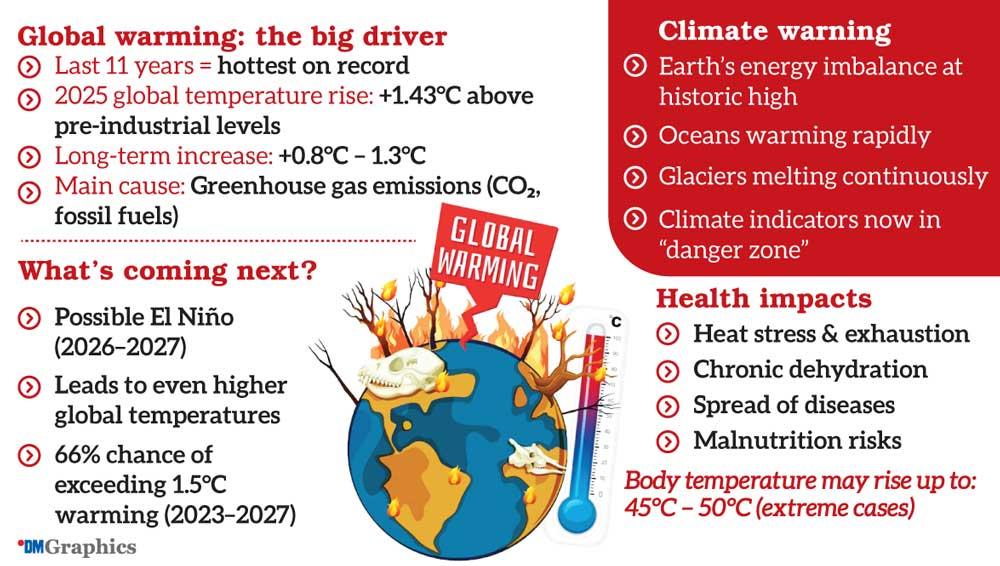
According to reports by the World Meteorological Organization, the past 11 years have been the warmest years on record. Due to the large-scale burning of fossil fuels by humans, the global average air temperature has risen above pre-industrial levels. In 2025, this increase reached approximately 1.43°C. Human activities have been the primary factor contributing to this disruption, significantly affecting the natural balance and pushing it toward imbalance.
Over the past century, global temperatures have increased by approximately 0.8°C to 1.3°C compared to the pre-industrial period, largely as a result of greenhouse gas emissions. A particularly important point of concern is the report issued by the Intergovernmental Panel on Climate Change (IPCC). The report states that climate change includes extreme weather events, disruptions to biodiversity and ecosystem functioning, and rising sea levels worldwide. The report further indicates that temperatures will continue to rise in the future. Furthermore, beyond these short-term and long-term impacts, the IPCC report shows that global warming adversely affects human health and well-being through various mechanisms, including rising temperatures, heat-related stress, chronic dehydration, increased spread of infectious diseases, and malnutrition.
Increasing frequency of heat waves
Global warming is not only affecting Sri Lanka, but also many countries around the world. The increasing frequency of heat waves is a clear contributing factor, as evident from the extremely hot weather conditions experienced in recent times. In other words, climate change and heat waves are now having increasingly complex and harmful impacts on weather patterns, crops, and livestock. This has been confirmed by scientists around the world through various studies.
The stress caused by the prevailing high temperatures has significantly affected not only humans but also animals, plants, and entire ecosystems. Even a slight increase in temperature can lead to the complete destruction of certain insects and sensitive species. In addition, rising ocean temperatures have had a severe impact on coral reefs, contributing to their death. The months of May and June, which are typically associated with intense heat, are often identified as periods when coral degradation is most severe. Due to the dry climatic conditions in Sri Lanka, there is also a high risk of wildfires. Forest fires, along with human negligence, further endanger animals that are already struggling to find even a drop of water to survive. Therefore, it is essential that wildlife, forest conservation authorities, and other responsible officials pay greater attention to this issue.
We are already experiencing both the direct and indirect effects of the prevailing dry weather conditions. With the increase in temperature, people tend to use more electricity to cool their homes and workplaces. When the rising demand for electricity cannot be met, it may lead to power cuts as well as water shortages. The National Water Supply and Drainage Board recently stated that water cuts may be necessary within the coming week. Additionally, there is insufficient water in the main reservoirs used for power generation. As a result, reliance on thermal power plants may increase, potentially leading to an energy crisis and further power outages.
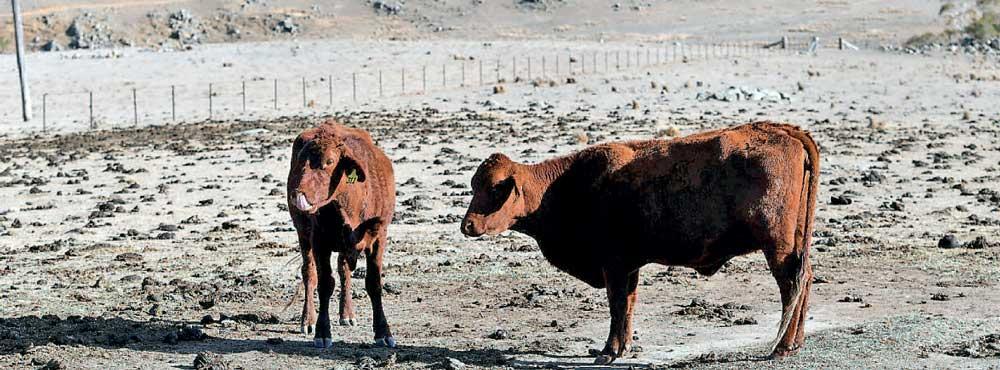
Cattle stand in a paddock on a drought-affected farm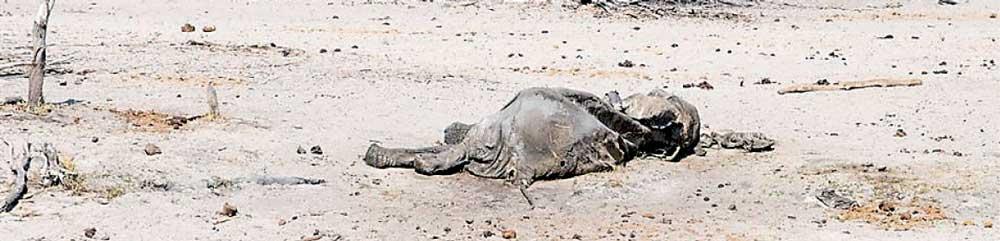
The picture shows a baby elephant dying due to a severe record breaking drought
Professor Celeste Saulo, Secretary-General of the World Meteorological Organization, states that human activities are increasingly disrupting the natural balance, and that we will have to live with the consequences of this for hundreds of thousands of years. Furthermore, an analysis by scientists of the World Meteorological Organization has revealed that extreme heat would not occur without human-induced climate change. Researchers studying this issue also indicate that a warming El Niño phase may develop in the second half of 2026. In addition to the ongoing human-driven warming trend, scientists warn that El Niño conditions could lead to even higher temperatures in 2027.
Scientists also predict that the rapidly warming world is likely to cross key temperature thresholds for the first time within the next few years. They estimate a 66% probability that the global temperature level of 1.5°C will be exceeded at least once between 2023 and 2027. This likelihood is increasing due to harmful emissions caused by human activities as well as the possible emergence of El Niño conditions later this year. El Niño is a phenomenon caused by the warming of surface waters in the Pacific Ocean. If the world surpasses this threshold, it means that current global temperatures will be 1.5°C higher than those recorded in the late 19th century, before the significant rise in fossil fuel emissions driven by industrialization.
Guidance on proper health practices
The Department of Meteorology issues daily notices regarding the high temperature levels affecting many districts. In addition, the health authorities provide guidance on proper health practices to be followed during this period. The Department of Meteorology advises the public to avoid strenuous outdoor activities and to drink water regularly. It has also warned that, due to the prevailing conditions, the body temperature could rise to between 45°C and 50°C, although this may vary from region to region. The Department further advises people to avoid keeping items such as lighters, carbonated drinks, gas products, perfumes, and electronic device batteries inside vehicles. It is also recommended not to completely fill fuel tanks. The Health Promotion Bureau has advised the public to avoid staying outdoors between 11:00 a.m. and 3:00 p.m., from late April to mid-May. Additionally, an adult should drink an adequate amount of water daily. At present, high temperatures are being recorded in major cities across Sri Lanka. Therefore, as a means of adapting to rising temperatures, heat-reduction strategies should be incorporated into urban planning. It is important to create environments that allow people to breathe clean air. Urban development plans should give priority to increasing green spaces. However, rising temperatures are not only affecting Sri Lanka but also many countries around the world. This has already become a major issue impacting both population growth and the overall quality of life in these countries.
Department of Meteorology urges the public to follow health guidelines
When this newspaper inquired about this matter from Meteorologist Udeni Weerasinghe of the Department of Meteorology, she stated that due to the prevailing hot weather conditions, body temperatures could rise to between 45°C and 50°C. She further confirmed that this may vary from person to person, as well as from region to region and province to province. She also urged the public to follow the guidelines and recommendations issued by the Department of Meteorology.
Continuous public awareness notices are being issued- Ministry of Health
When this newspaper sought information from the Ministry of Health regarding possible health issues caused by the current high temperatures, a spokesperson stated that continuous public awareness notices are being issued, and that the public should adhere to the instructions provided in those notices.
12 Jun 2026 8 hours ago
12 Jun 2026 9 hours ago
12 Jun 2026 9 hours ago
12 Jun 2026 12 Jun 2026